You dig through six drawers looking for a charger you swear you put somewhere safe. Your stomach turns every time you glance at your phone in the back seat. Your group chat needs a shared grocery list, so you switch apps, copy the items, and switch back. None of these problems are big. They’re just the kind of friction you learn to live with instead of fixing.
Google’s September Android Drop goes after several of them directly. Google announced the update on September 1, 2026, bundling five features across Gemini, Find Hub, and Google Messages into its regular monthly rollout. Nothing here is a keynote redesign. It’s a set of small, specific fixes for annoyances you run into constantly.
Here’s what’s actually new, what device you need for each one, and when it shows up.
When the September Android Drop Reaches Your Phone
Google confirmed the update through its official Android blog post on September 1, 2026. As with every monthly drop, availability depends on your device, your Android version, and sometimes your region.
Worth knowing: a couple of these features weren’t entirely new to everyone on launch day. Some outlets tracking the rollout noted that Motion Assist and the new Google Messages chat theme option had already started reaching devices in August, ahead of Google’s own announcement.
If you’d already noticed either one, that explains why. “New” in this drop means newly confirmed and rolling out broadly, not necessarily brand new to your specific phone.
Compatibility varies feature by feature:
- Find Hub Remembered Items needs Android 16 or later, in a region where both Gemini and Find Hub are supported.
- Motion Assist needs Android 17.
- Guided Vision in Gemini Live works on Android 9 and later, in countries where Gemini is available.
- Google Keep in Messages and the new chat themes don’t carry a specific version floor beyond an updated Google Messages app.
If you’re not sure what you’re running, check Settings > About Phone before assuming a feature applies to you. Our guide to the current Android version walks through exactly where to look.
Find Hub Finally Remembers Where You Put Things
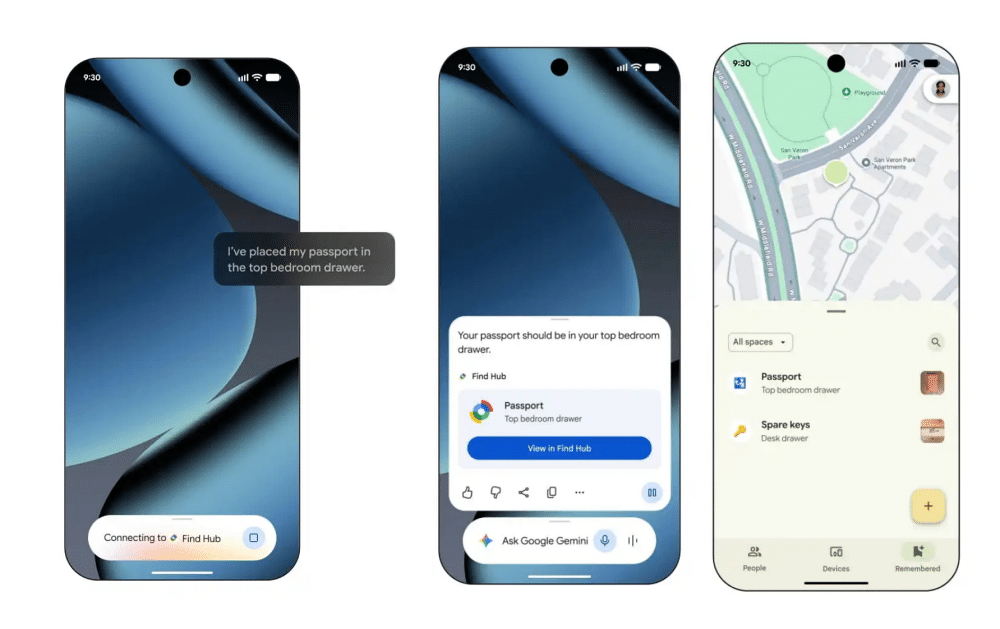
Start with the feature most people will actually use day to day. Find Hub already tracks your phone, your Bluetooth trackers, and devices on Google’s Find My Device network. What it couldn’t do, until now, is help with the stuff you never planned to tag in the first place.
With this update, you can just tell Gemini where you put something. Say “Hey Google, remember in Find Hub that I put my passport in the bedroom drawer,” and it saves that description, with an optional photo, to a new Remembered tab inside Find Hub. Ask Gemini later where your passport is, and it reads the note back to you.
This is not real-time location tracking. It’s a voice-powered note-to-self system layered onto an app you already open when something goes missing. That distinction matters: if you already tag your keys and wallet with a physical tracker like Google’s own Pixel Tag, you won’t need this for those items. It’s built for the passport, the spare charger, the gift you hid three weeks early and then forgot about, the things nobody tags because tagging every object in your house isn’t realistic.
Find Hub Remembered Items requires Android 16 or later, and it’s limited to countries where Gemini and Find Hub are both supported. Google says the rollout starts soon rather than all at once.
That Queasy Feeling on Your Phone in the Car Gets an Actual Fix
Losing track of an item is one kind of everyday annoyance. Feeling sick every time you check your phone in a moving car is a different, more physical one, and it’s the problem Motion Assist goes after.
Reading or scrolling in a moving vehicle is a reliable way to feel sick, and most people just put the phone down and stare out the window instead. Motion Assist tries to fix the actual cause instead of asking you to give up your phone.
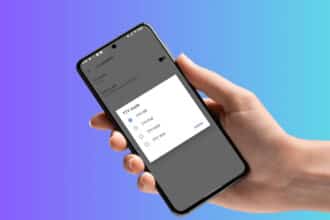
It adds a small bubble overlay to your screen that moves in sync with the vehicle. Your eyes track a moving reference point instead of a static one, which is the mismatch that triggers motion sickness in the first place. You can adjust the bubble’s shape, color, and opacity, turn on automatic detection so it appears when you’re in a car, bus, or train, and toggle it from Quick Settings when you want it on demand.
It’s a narrow fix for a specific, common complaint rather than a flashy addition, and that’s fine. Motion Assist requires Android 17, so it’s out of reach for anyone on an older build, but Google says it’s already available for eligible devices rather than still rolling out.
Gemini Live Can Now See What You’re Looking At
Google Gemini shows up twice in this drop, and the second appearance is the more significant one. Gemini Live already lets you talk to Gemini in real time. Guided Vision adds a camera feed to that conversation, and it’s the most genuinely useful accessibility feature in this drop.
Point your camera at a menu in a dim restaurant, a food label, or an object you can’t identify, and Gemini describes what it sees out loud. It goes a step further than most visual-AI tools by giving you spoken guidance to reframe the shot, telling you to move the camera left, right, or closer until the object it needs to read is actually centered.
That’s a meaningful difference for anyone with low vision, who can’t just glance down and check whether a photo came out usable. You can trigger it through an Accessibility shortcut or directly from the TalkBack menu, which is where Google has been building out most of its recent Gemini-powered features on Pixel.
Guided Vision works on Android 9 and later, which is a notably wide net compared to the Android 16 and 17 requirements elsewhere in this drop, in any country where Gemini is available. Google lists it as coming soon rather than live everywhere today.
Google Keep Moves Into Your Group Chats
Guided Vision is about Gemini looking outward, at the world around you. This next feature is about two Google apps finally talking to each other. If you’ve ever built a grocery list in Keep, then had to copy and paste it into a group chat so everyone could see it, this one is aimed squarely at you.
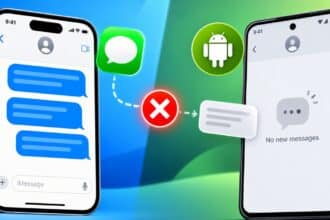
Tap the plus icon in Google Messages and you can now create or open a Google Keep list directly inside the conversation. It shows up inline as a shared, editable document instead of a static block of text, so anyone in the thread can check items off or add to the list without leaving Messages. It works well for the obvious cases (grocery runs, trip planning) and for anything a group needs to build together instead of one person typing it out and forwarding it around.
This is a small integration, but it removes a specific, recurring bit of app-switching friction, and Google says it starts rolling out today, September 1, 2026.
Every Chat Thread Can Look Different Now
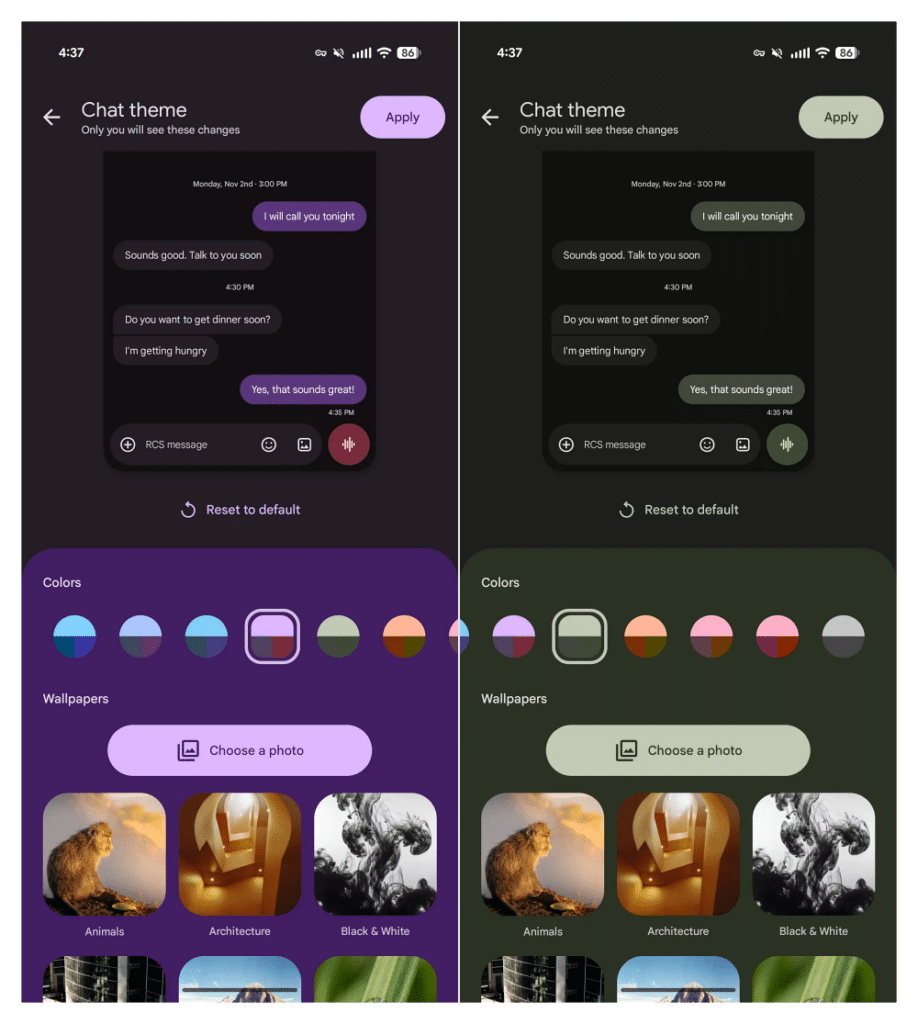
Keep integration changes what you can do inside Messages. This last feature changes how it looks. Messaging apps have offered per-conversation backgrounds and colors for years. Google Messages is catching up with chat themes, letting you set a custom background, curated wallpaper, or personal photo for an individual conversation, with matching bubble colors applied automatically.
The theme you pick is private to you. The person you’re texting doesn’t see your background choice; their side of the conversation keeps whatever they’ve set. It’s a cosmetic feature, and it’s fair to call it the least consequential item in this drop, but it’s also the kind of small personalization that makes a conversation you’re in constantly feel less generic.
It pairs naturally with Google’s existing screen-effect animations in Messages, which is Google’s other recent nod toward making RCS chats feel less like a bare-bones SMS thread.
Which Android Features You’ll Actually Notice Today
Five features, five different levels of usefulness. Not every feature in a monthly drop matters equally, and it’s worth saying so plainly instead of treating all five as equally significant.
Guided Vision is the one with real utility for people who need it, particularly anyone with low vision who relies on TalkBack. Find Hub Remembered Items and Google Keep in Messages solve small, real annoyances that most phone owners will recognize immediately. Motion Assist is genuinely useful, but only if you’re the kind of person who gets carsick using your phone, and it’s locked to Android 17 devices. Chat themes are a nice touch that changes nothing functional.
If you want everything on day one, you’ll need Android 17 for Motion Assist and Android 16 for Find Hub, with the rest gated more by region and app version than by OS. Everyone else gets most of this drop regardless, just not necessarily on September 1 itself.
Final Thoughts
None of these five features will make a keynote highlight reel, and Google isn’t pretending otherwise. What they add up to is a set of specific, recognizable annoyances getting fixed: losing track of things you didn’t tag, feeling sick while scrolling in a car, juggling apps to share a list.
That’s a smaller ambition than a flashy redesign, but it’s the kind of update that actually changes how your phone feels to use, once the rollout catches up to your device.
Worth Checking on Amazon: