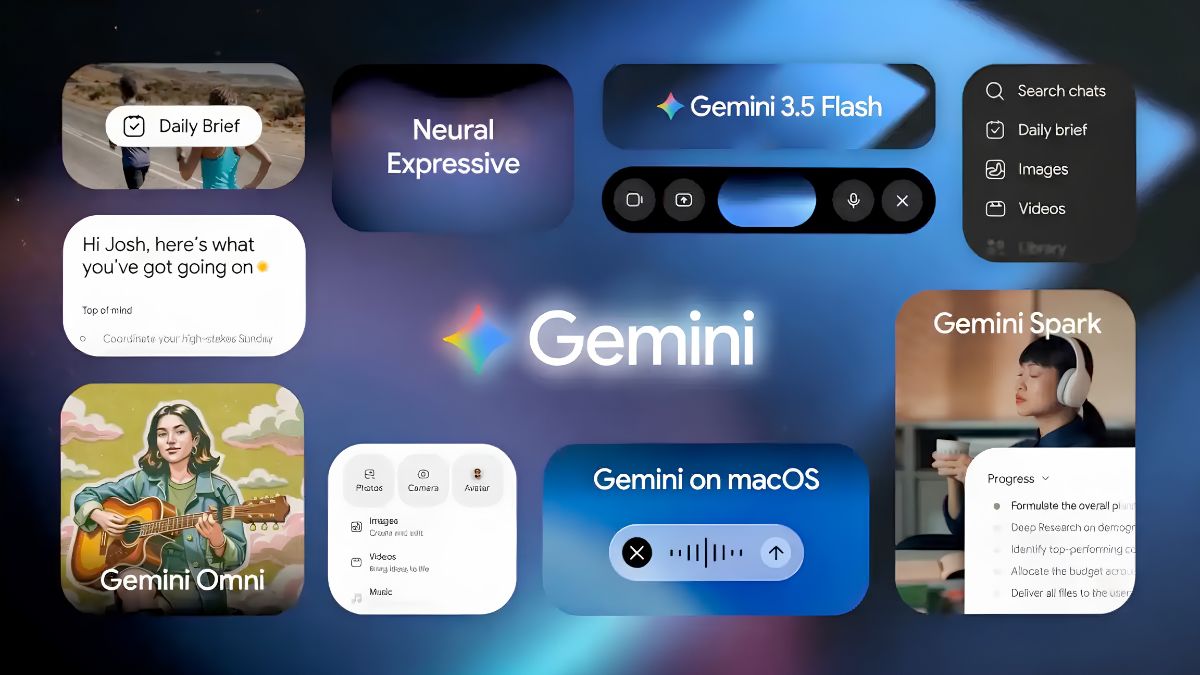
Google I/O 2026 felt different from the moment the keynote opened. This wasn’t a gentle upgrade cycle or a quiet feature refresh. Over two days at Shoreline Amphitheatre in Mountain View, May 19-20, Google essentially redrew the map of how its products work, handing the wheel to AI in ways that felt genuinely consequential rather than speculative. If you’ve been half-watching Google’s AI story for the past couple of years, this is the moment it snapped into focus.
Here’s everything that matters from Google I/O 2026, organized so you can actually absorb it, not just skim a bullet list.
Gemini 3.5 Flash Is Now the Brain Behind Everything
Let’s start where Google did: the model powering it all.
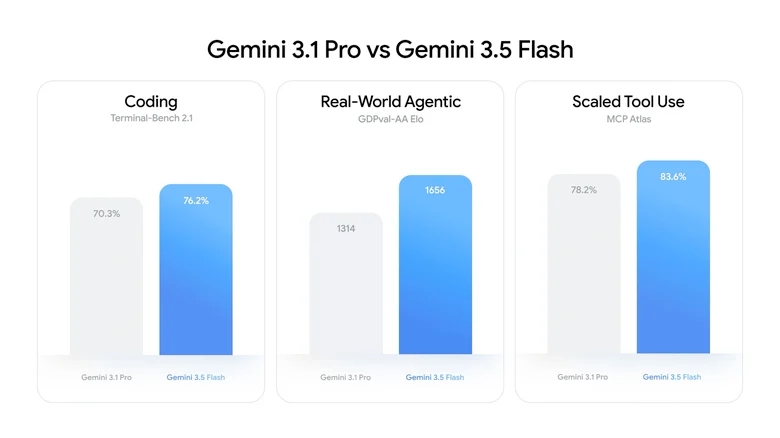
Gemini 3.5 Flash is now the default engine inside both the Gemini app and Search’s AI Mode, and the spec sheet is hard to argue with. It outperforms Gemini 3.1 Pro across coding, agentic, and multimodal benchmarks while running at roughly 4x the output token speed of other frontier models. Google’s pitch is essentially “smarter and faster, for less compute” and based on early impressions, that holds up.
It’s live today across the Gemini app, Google Search, and the Gemini API.
Gemini 3.5 Pro is currently in closed testing and arrives next month for those who want the ceiling, not the floor.
Meet Gemini Spark: Google’s Attempt at a True Personal Agent
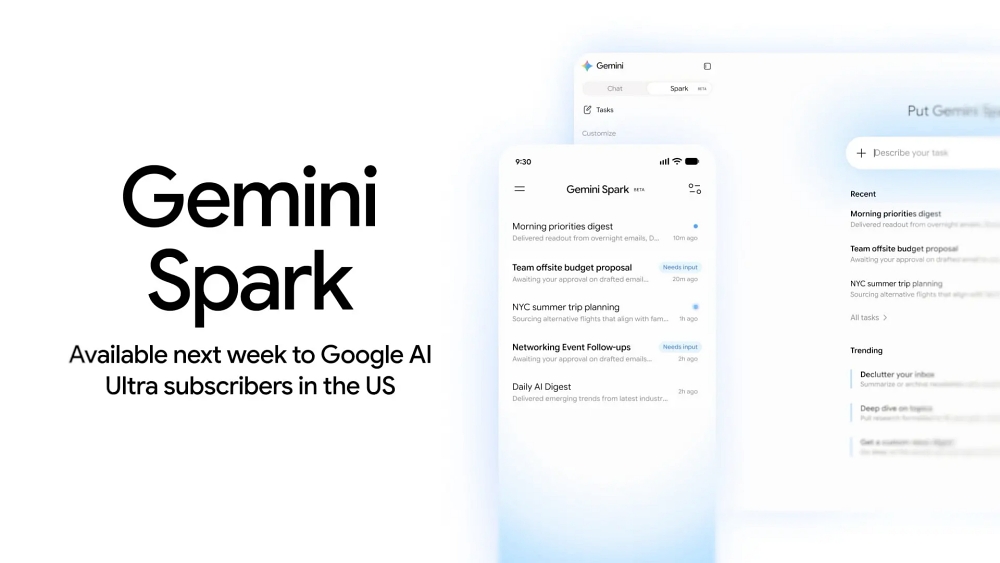
This is the announcement that generated the most conversation in the room, and for good reason.
Gemini Spark isn’t a chatbot upgrade. Google describes it as “your personal agent”, an AI that doesn’t wait to be asked but actively takes action on your behalf. Think: it drafts the email you’ve been putting off, builds your study guide from scratch, tracks your monthly spending patterns, and flags anything in your calendar that needs attention. It runs 24/7 via cloud VMs, meaning it’s working even when your phone is in your pocket.
At launch, it integrates with Gmail, Google Docs, and the broader Workspace suite, with third-party app support via MCP rolling out over the summer. Mac users will get local file access soon. Spark arrives next week for Google AI Ultra subscribers in the US.
The framing from Google was deliberate: “Gemini is transforming from an assistant that can answer your questions into an active partner that does real work on your behalf.” That’s a meaningful shift in posture and sets up everything else announced this week.
The Gemini App Gets a Full Visual Identity: “Neural Expressive”
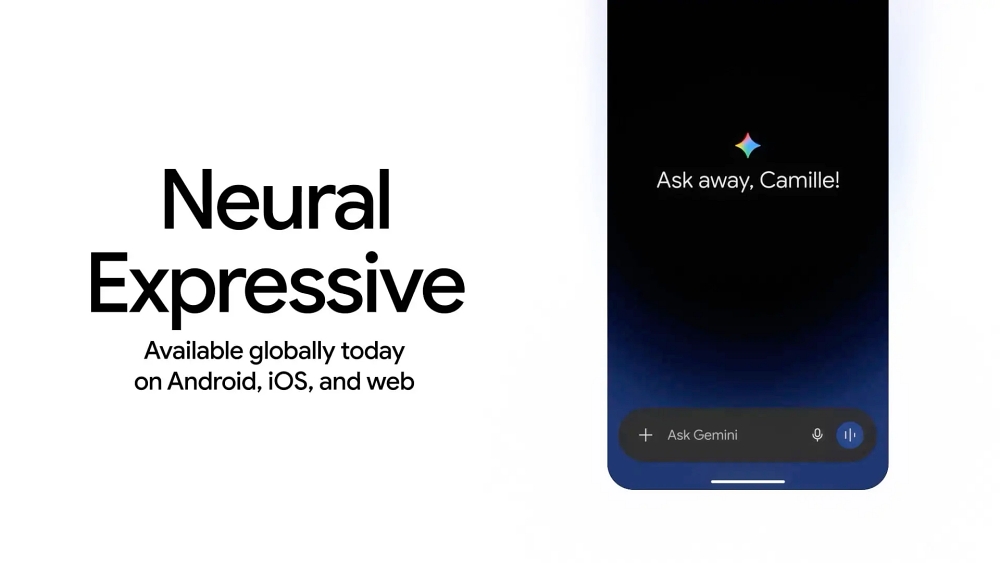
Alongside Spark, the Gemini app received its most substantial redesign yet under the name Neural Expressive — a new design language built around fluid animations, haptic feedback, vibrant color, and a completely reworked typography system.
Practically speaking: the prompt box is now pill-shaped, tools have been consolidated into a single “plus” menu on mobile, and Gemini Live no longer hijacks your screen with a fullscreen takeover; it sits inline so you can multitask naturally. Responses themselves are restructured to lead with the most critical information, with inline images, interactive visualizations, and narrated video woven in contextually.
Rolling out now to Android, iOS, and web.
A companion feature, Daily Brief, lands alongside it. It’s a personalized morning digest that synthesizes your Gmail, Calendar, and Tasks into a prioritized view of the day ahead, with suggested next steps. Available today for Google AI Plus, Pro, and Ultra users in the US.
Gemini Omni: When AI Generation Meets Real-World Grounding
Gemini Omni is Google’s new multimodal model family, and it’s worth understanding what makes it different from what came before.
Where earlier generation tools required you to pick a modality and stay in it, Omni accepts text, images, video, and audio simultaneously and generates video output grounded in real-world knowledge. The editing capabilities are genuinely impressive: you can add characters, change scenes, apply effects, and preserve performance across takes all conversationally.
Omni Flash is rolling out now to AI Plus, Pro, and Ultra users via the Gemini app, Google Flow, and YouTube Shorts. Google’s longer-term vision here is ambitious: “create anything from any input”, a single model that collapses the distance between idea and finished media.
Also worth noting: Google Flow and Flow Music are both now available as standalone mobile apps. Flow is in Android beta (iOS coming soon); Flow Music is live on iOS (Android coming soon).
Google Search Isn’t Just a Search Engine Anymore
The Google I/O announcements around Search were arguably the most structurally significant of the week because they signal what Google thinks search is now.
The redesigned search box expands as you type, reflecting how people actually query in 2026: longer, more conversational, less keyword-y. AI-powered query suggestions go beyond autocomplete; they’re trying to anticipate intent, not just complete sentences.
More interesting is the information agents feature: persistent background agents that monitor the web 24/7 on topics you specify, news sites, blogs, financial data, sports scores, social signals and surface changes relevant to your questions. It’s not a one-time search anymore; it’s a subscription to staying current. Available to AI Pro and Ultra subscribers this summer.
And then there are mini apps: custom dashboards and trackers that Search builds for repeated, continuous tasks. Need to track a competitor’s pricing? Monitor a shipping route? Google will build you a functional, persistent tool for it — no coding required. Coming to AI Pro and Ultra users in the US in the coming months.
Universal Cart Wants to Own Your Entire Shopping Journey
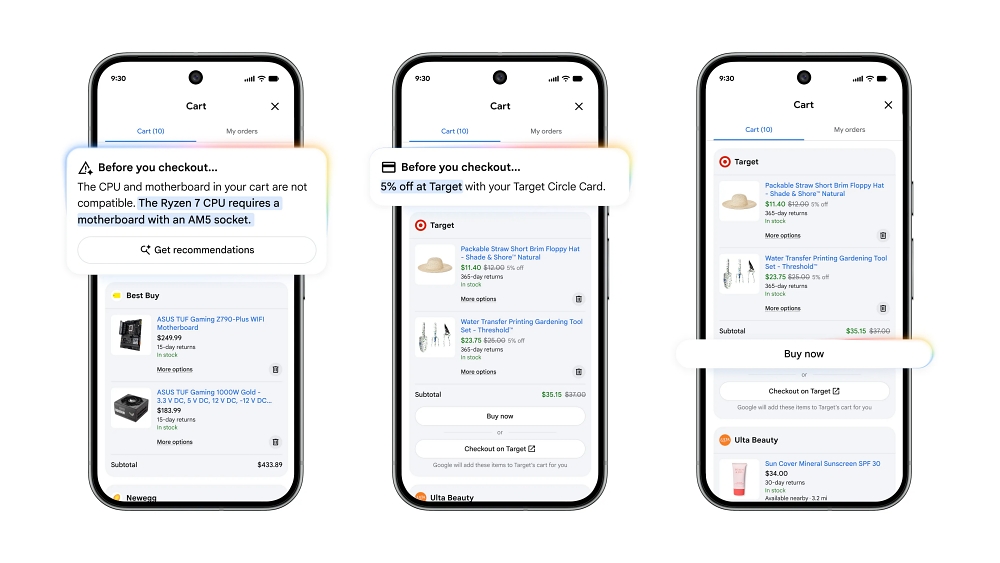
Universal Cart is Google’s most ambitious commerce play in years, and it’s genuinely well-designed.
Add a product anywhere across Search, the Gemini app, YouTube, or Gmail, and the cart becomes intelligent: it tracks price drops, surfaces price history, monitors stock alerts, and flags deal opportunities automatically. Building a custom PC from parts across multiple retailers? The cart will proactively identify compatibility issues and suggest alternatives before you check out.
It’s also integrated with Google Wallet, so it understands your payment method perks, loyalty program status, and merchant offers — helping you choose the optimal purchase path rather than just the fastest one.
Coming to Search and Gemini app users in the US this summer, with YouTube and Gmail following shortly after.
Android XR Smart Glasses
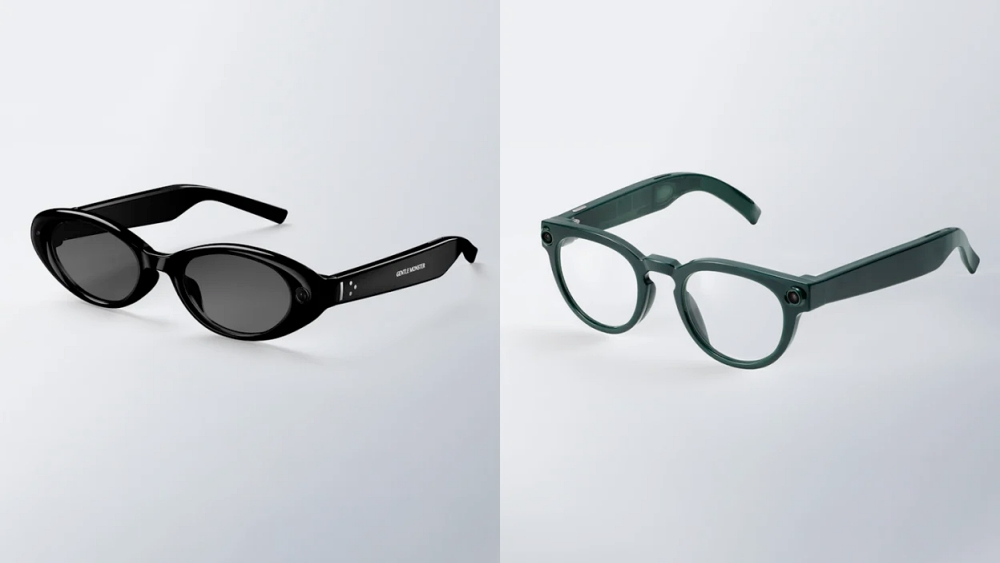
Let’s talk about the hardware, because this is where Google I/O 2026 got physically tangible.
Google has been building toward Android XR for a while, but this week it became concrete. Two distinct products are coming:
Project Aura display glasses (in partnership with Xreal/Samsung) feature an improved compute puck with a fingerprint sensor and deep Gemini integration: Calendar, Keep, navigation, real-time translation, and persistent widgets. They’re built for people who want a heads-up display that actually does something useful.
Audio-only smart glasses designed in collaboration with Warby Parker and Gentle Monster, skip the display entirely and focus on hands-free Gemini assistance through voice: directions, texts, photos, live translation, and notification management, all without pulling out your phone. They arrive fall 2026 and, notably, pair with both Android and iPhone.
If you’re planning ahead, it’s worth checking out the Gemini Intelligence hardware requirements to understand what device compatibility looks like across the XR ecosystem.
Google is calling this category “intelligent eyewear”, a deliberate branding choice that positions it less as a gadget and more as a utility layer for daily life. Based on hands-on coverage from The Verge and CNET, the glasses are lighter and less conspicuous than previous attempts in this space.
Android 17 and Gemini Intelligence: The Platform Gets Agentic
The Android update this year is less about cosmetic polish and more about architectural change.
Android 17 brings Gemini Intelligence features directly into the OS: agentic AI capabilities that work at the system level, not just inside individual apps. A redesigned Android Auto arrives with Material 3 Expressive, improved widgets, and better voice interaction. New tools like Create My Widget, Gboard Rambler, Pause Point, and 3D emojis round out the everyday feature set.
Android Halo is the new ambient agent layer, a subtle persistent indicator at the top of your screen that shows you what your agents are working on in real time, without interrupting what you’re doing. It’s a thoughtful UX solution to a real problem: how do you stay informed about background AI activity without being overwhelmed by it? Halo launches later this year alongside Gemini Spark.
For users who care about the under-the-hood changes, the full picture on Android 17 security and privacy covers what’s changing at the OS level for data handling and permissions.
Also new: Googlebooks premium Android-powered laptops with deep Gemini integration from Acer, ASUS, and Lenovo, launching this fall. Think of it as Google’s answer to Copilot+ PCs.
Google Workspace: AI Is Now Sewn Into Every Surface
The Workspace updates weren’t flashy, but they’re the kind of thing that changes how millions of people work.
Gmail Live lets you conversationally search and interact with your email, not just keyword-filter, but actually ask questions and get answers. Rolling out to AI Pro and Ultra users in the US this summer on Android and iOS.
Docs Live brings the same conversational creation and editing into Google Docs, also arriving on Android and iOS this summer for Pro and Ultra subscribers globally.
Google Keep gets a similar treatment: a voice-friendly mode that takes free-flowing spoken thoughts and organizes them into clean, structured notes. Available in the Android app this summer.
Google Pics is a new standalone app for AI image generation and iterative design built around a comments-based editing model where you refine images through conversation rather than sliders and settings.
YouTube and Ask Maps Get Smarter, Too
Ask YouTube handles complex, multi-part queries and returns structured, interactive results with the most relevant videos surfaced across the full catalog. It’s currently live for YouTube Premium subscribers in the US at youtube.com/new.
Gemini Omni is also integrated into YouTube Shorts Remix and the Create app for AI-assisted short-form video production.
And while it wasn’t a headline moment at the keynote, Ask Maps on Google Maps continues to evolve as part of Google’s broader push to make location search more conversational, letting you ask nuanced questions about places and get responses that feel more like a knowledgeable local than a database query.
Google AI Plan Changes: How the Pricing Is Shifting
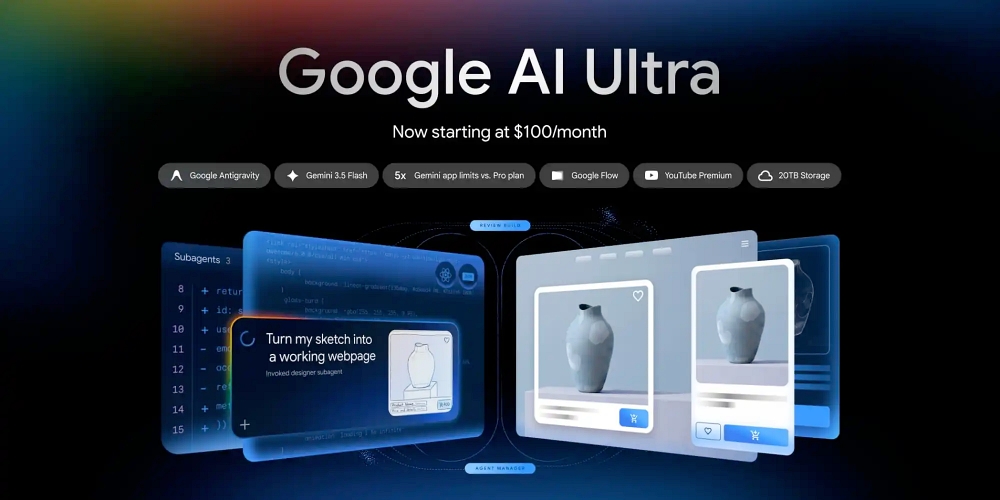
A few notable changes to how Google AI subscriptions work:
The Gemini app is moving away from daily prompt limits toward a compute-used model, meaning simple text queries barely dent your allocation, while complex video or coding tasks use more. Limits refresh every five hours until you hit your weekly ceiling. It’s a more equitable system in theory, and Google’s framing suggests it was driven by real usage data.
Google AI Ultra now starts at $100/month, offering 5x higher Gemini app usage limits than the AI Pro tier. The previous $250 plan has dropped to $200 with identical capabilities, a meaningful price cut for power users.
The Bigger Picture
Stepping back from the individual announcements, the story of Google I/O 2026 is really about infrastructure meeting interface. Google has spent years building the model capabilities; what this week showed is that those capabilities are now being woven into the specific, daily-use surfaces where people actually live: Search, Gmail, Maps, Docs and YouTube.
The agentic layer is the real bet. Gemini Spark, information agents, Universal Cart, Android Halo, these aren’t features that wait for you to open them. They work in the background, surface when relevant, and gradually shift your relationship with these products from tool to collaborator.
Whether that lands as genuinely useful or quietly overwhelming is the question the next six months will answer.
For keynote replays and full session recordings, visit io.google. Hands-on coverage from The Verge and CNET is worth reading for first impressions on the smart glasses in particular. Most features are US-first at launch, with broader regional rollouts through the rest of 2026.