
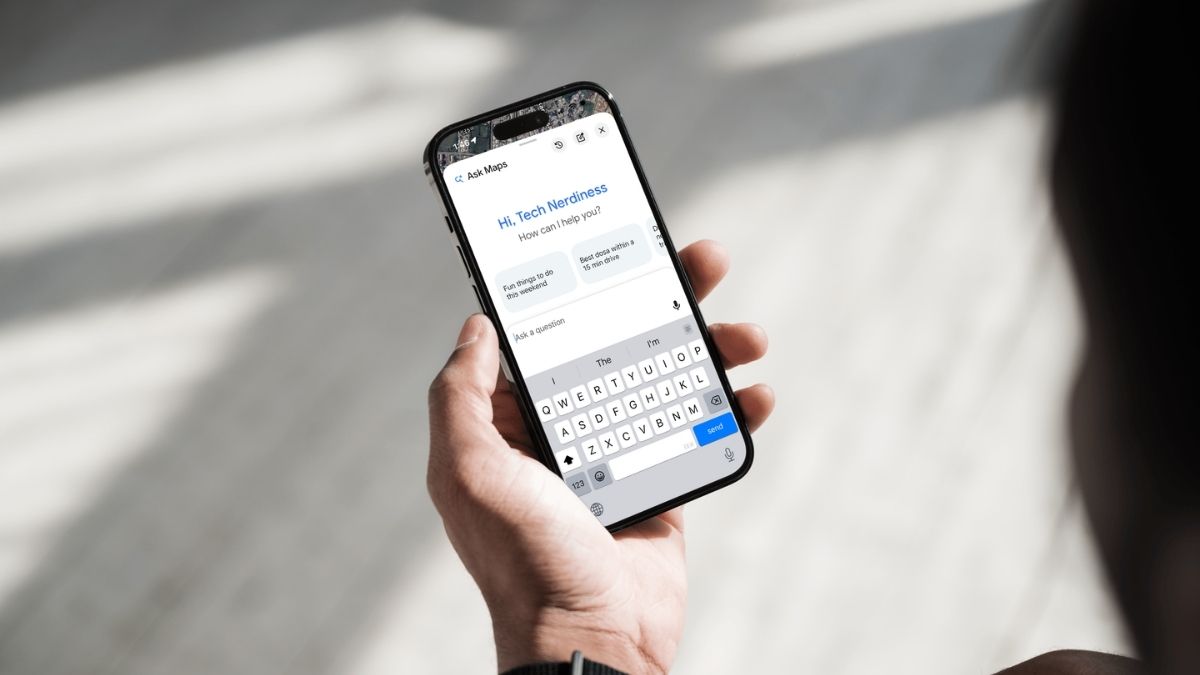
Google just rolled out what might be the most significant upgrade to Maps in over a decade, and if you haven’t tried it yet, you’re missing out on something genuinely useful.
The update introduces two standout features: Ask Maps and Immersive Navigation. Right now, the Ask Maps feature is the one available to users, and it’s already turning heads. Google describes it as a conversational experience that can finally answer the complex, real-world questions a traditional map was never built to handle.
Think about questions like: “My phone is dying – where can I charge it without waiting in a long coffee queue?” or “Is there a public tennis court with lights on that I can play at tonight?” These aren’t the kind of queries a search bar handles well. Ask Maps is built exactly for them.
The feature is currently live in the US and India, with English support available and Hindi coming soon.
Before You Start: Update Google Maps First
Google Maps’ Ask Maps feature won’t show up unless your app is on the latest version. Here’s a quick check before anything else:
- On Android: Open the Google Play Store, search for Google Maps, and tap Update if it’s available.
- On iPhone (iOS): Head to the App Store, tap your profile icon, scroll to Google Maps, and update it from there.
Once you’re updated, you’re ready to go.
How to Use the Ask Maps Feature on Google Maps
- Open Google Maps and look just below the search bar. That’s where the Ask Maps button lives.
- Tap it to open the conversational interface. You can type your question or speak it, whichever feels more natural.
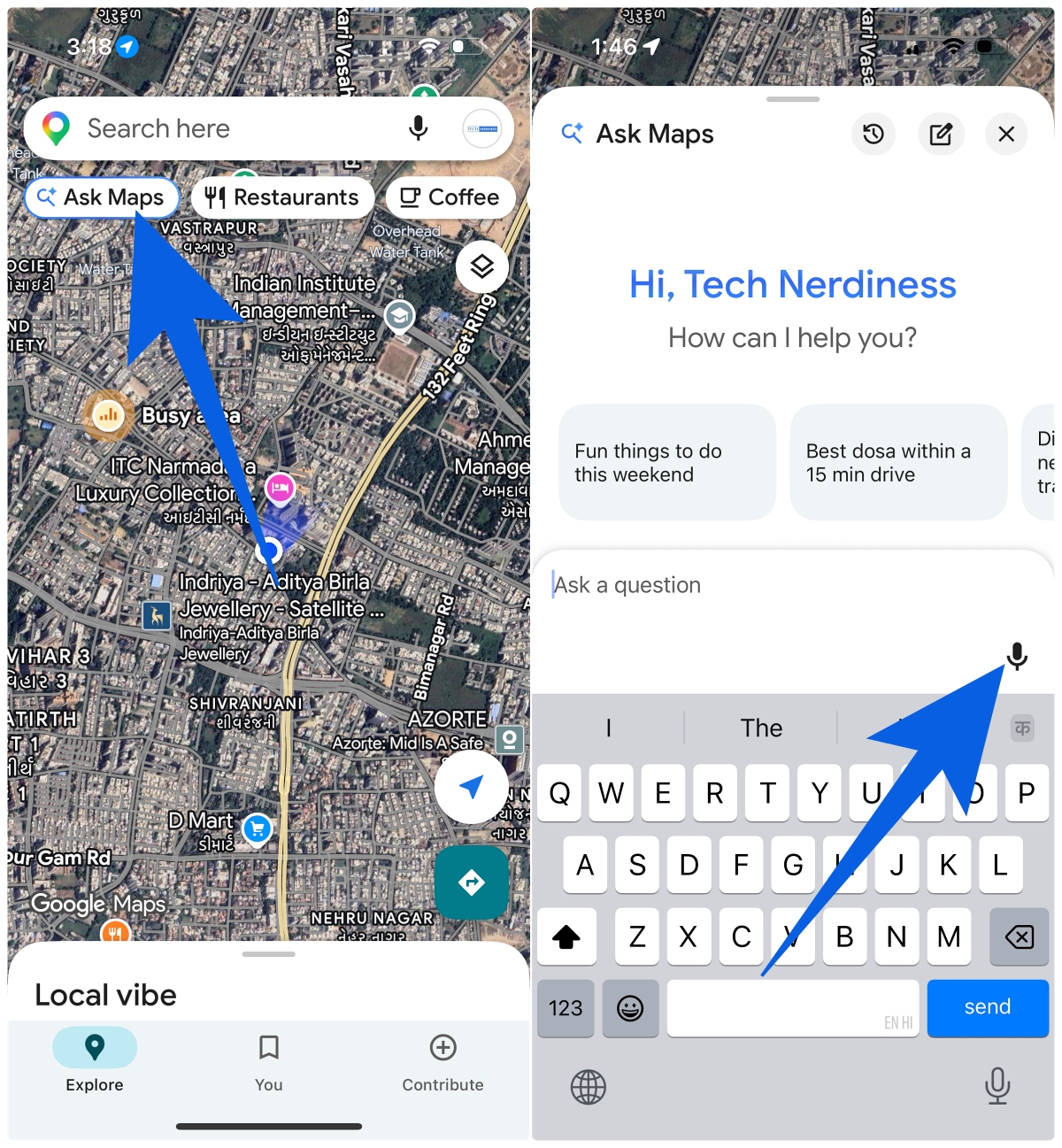
- Ask away. And here’s the part that actually matters, you don’t need to simplify your question or break it into pieces. Ask it the way you’d ask a friend who actually knows the city.
For example, instead of separately checking directions and then hunting for a coffee shop en route, just ask:
“I want to go to Noida Sector 18 from Mandi House. Between driving and taking the metro, what’s the better option right now? And where can I grab a coffee on the way?”
One question. One answer. No tab-switching.
If you’ve ever run into Google Maps showing the wrong location, Ask Maps’ conversational layer can actually help you cross-check and clarify what you’re looking for — especially in areas where pin accuracy can be inconsistent.
Use Ask Maps to Plan a Night Out
Finding the right spot for a special evening usually means scrolling through app after app, skimming dozens of reviews, and still second-guessing yourself. Ask Maps cuts through all of that.
Say a friend is visiting from abroad and you want to plan something memorable. Instead of piecing it together yourself, just ask:
“What are some places with good appetizers, serve alcoholic drinks, show live streaming of today’s football match, and have easy parking?”
Ask Maps pulls in real user reviews, web content, menu highlights, matchday atmosphere details, and parking availability, filtered to your exact criteria.
Then you can keep refining: “Which of these is closest to a metro station?” or “Which has the best-rated food?” and it adjusts its suggestions accordingly.
Use Ask Maps to Plan Trips for Specific Needs
This is where Google Maps’ Ask Maps feature really separates itself from a standard search. It doesn’t just find places, it factors in who you’re planning for.
Planning a visit for elderly relatives? Instead of guessing what works for them, ask:
“My parents, who are senior citizens, are visiting Mumbai this weekend for the first time. What are some places I can take them that are easy to manage?”
Ask Maps will prioritise venues with minimal walking, step-free access, and senior-friendly facilities. That kind of context-aware thinking simply isn’t possible with a regular search bar, and it’s the difference between a good trip and a stressful one.
While you’re getting familiar with the app, it’s also worth knowing what all those Google Maps icons and symbols mean especially when Ask Maps surfaces new location types you might not immediately recognise.
Not yet. It’s currently live in the US and India in English, with Hindi support coming soon. More regions are expected to follow.
No. It works alongside it. Use regular search for quick, straightforward lookups and Ask Maps when your question involves multiple conditions or context-specific needs.