
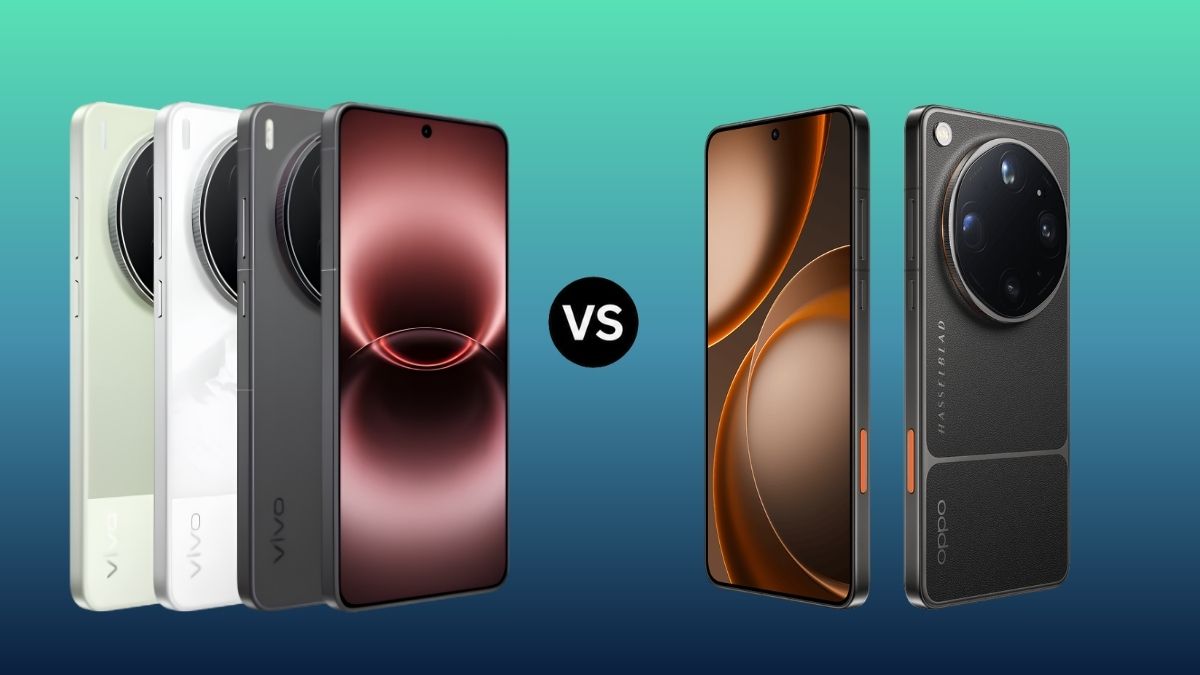
India’s premium smartphone segment just got significantly more interesting. The Oppo Find X9 Ultra launched in India in May 2026, and it’s going head-to-head with the Vivo X300 Ultra, which arrived a few weeks earlier in early April. Both are priced north of ₹1.5 lakh, both carry Hasselblad and Zeiss branding respectively, and both are gunning for the same buyer, someone who takes their mobile photography seriously.
But “both are great” doesn’t help you spend ₹1.6–₹1.7 lakh. So let’s get into what actually separates them.
OPPO Find X9 Ultra vs Vivo X300 Ultra: Full Specifications Compared
| Feature | Oppo Find X9 Ultra | Vivo X300 Ultra |
|---|---|---|
| Chipset | Snapdragon 8 Elite Gen 5 | Snapdragon 8 Elite Gen 5 |
| Display | 6.82” QHD+ LTPO AMOLED, 120Hz | 6.82” 2K LTPO AMOLED, 144Hz |
| Rear Cameras | 200MP main + 200MP 3x + 50MP 10x + 50MP UW | 200MP main + 200MP 3.7x + 50MP UW |
| Main Sensor | Sony LYT-901, 1/1.12″, f/1.5, 23mm | Sony LYT-901, 1/1.12″, f/1.57, 35mm |
| Telephoto | 200MP 3x (f/2.2) + 50MP 10x periscope (f/3.5) | 200MP 3.7x periscope (f/2.57) |
| Ultrawide | 50MP Sony LYT-600, 1/1.95″ | 50MP Sony LYT-818, 1/1.28″ |
| Selfie | 50MP | 50MP |
| RAM / Storage | 12GB LPDDR5x + 512GB UFS 4.1 | 16GB LPDDR5x + 256/512GB UFS 4.1 |
| Battery | 7,050mAh | 6,600mAh |
| Charging | 100W wired, 50W wireless | 100W wired, 40W wireless |
| OS | ColorOS 16 (Android 16) | OriginOS 5 (Android 16) |
| Connectivity | Wi-Fi 7, BT 6.0, USB 2.0 | Wi-Fi 7, BT 5.4, USB 3.2 |
| Water Resistance | IP66 + IP68 + IP69 | IP68 + IP69 |
| Dimensions / Weight | 163.16 × 76.97 × 8.65mm, 235g | 162.98 × 76.81 × 8.19mm, 232g |
Price in India: Which One Costs Less?
Here’s where things get interesting before we even talk about cameras.
The Vivo X300 Ultra is priced at ₹1,59,999, and for that, you get 16GB of RAM and 512GB of storage. The Oppo Find X9 Ultra costs ₹1,69,999, but ships with only 12GB of RAM for the same 512GB storage. On paper, Vivo gives you more RAM for ₹10,000 less.
That said, the Vivo’s accessory pricing deserves a mention. If you’re drawn to its Zeiss Telephoto Extender Gen 2 Ultra (which converts to a 400mm equivalent, genuinely useful for wildlife and concerts), that’ll cost you another ₹27,999. The Vivo Imaging Grip Kit is priced at ₹11,999. These aren’t essential purchases, but they do transform the X300 Ultra into something closer to a dedicated camera system, and that matters for a certain type of buyer.
Display: A Tie With One Small Difference
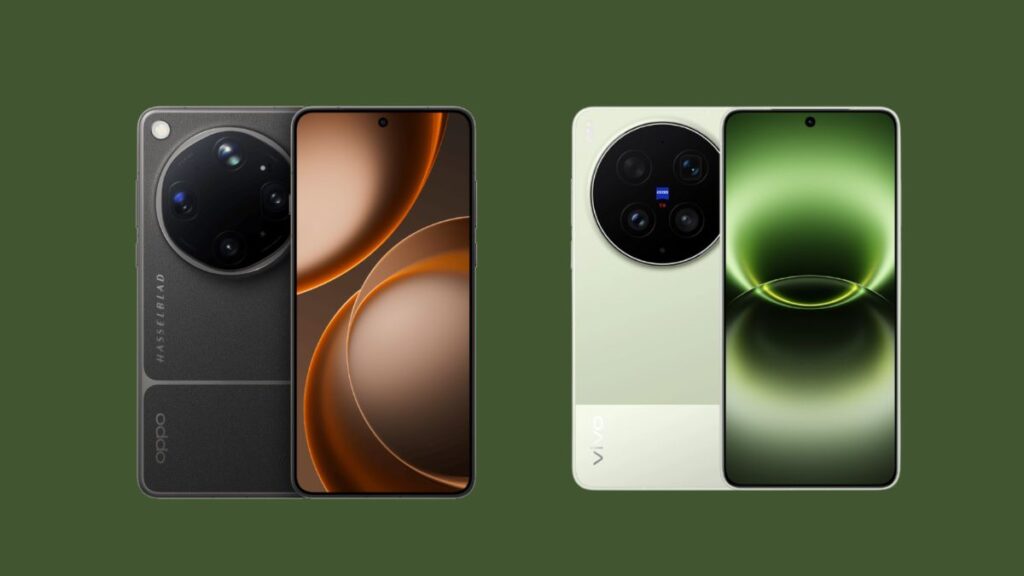
Both phones share the same 6.82-inch 2K AMOLED panel with 510ppi and LTPO technology, so adaptive refresh and battery efficiency are comparable. The Vivo X300 Ultra edges slightly ahead with a 144Hz refresh rate versus Oppo’s 120Hz, and its stated peak brightness of 4,500 nits beats the X9 Ultra’s 1,800 nits HBM figure by a wide margin (though real-world outdoor visibility between the two tends to be very close in practice).
Both have Corning Gorilla Glass protection. Software-wise, you’re looking at ColorOS 16 on the Oppo and OriginOS 5 on the Vivo, both built on Android 16. ColorOS tends to have a broader international footprint, which matters if you’re comparing global software support and update cadence.
Chipset and Performance: Identical Foundation, Different Extras
There’s no winner here on raw performance. The Snapdragon 8 Elite Gen 5 with Adreno 840 GPU powers both phones, and both use LPDDR5x RAM with UFS 4.1 storage. You won’t feel a difference in day-to-day app performance or gaming.
Where things diverge is connectivity. The Oppo Find X9 Ultra has Bluetooth 6.0 (a newer standard) and USB 2.0, the latter being a genuine downside at this price. The Vivo X300 Ultra has Bluetooth 5.4 but compensates with USB 3.2, which is far more useful if you’re transferring large video files off the phone. For a flagship camera phone in 2026, USB 2.0 on the Oppo is a notable miss.
The Oppo also holds a triple IP certification: IP66, IP68, and IP69 versus Vivo’s IP68 + IP69. That extra IP66 dust resistance layer is a minor but real advantage for outdoor photographers.
Camera System: Where It Actually Gets Complicated
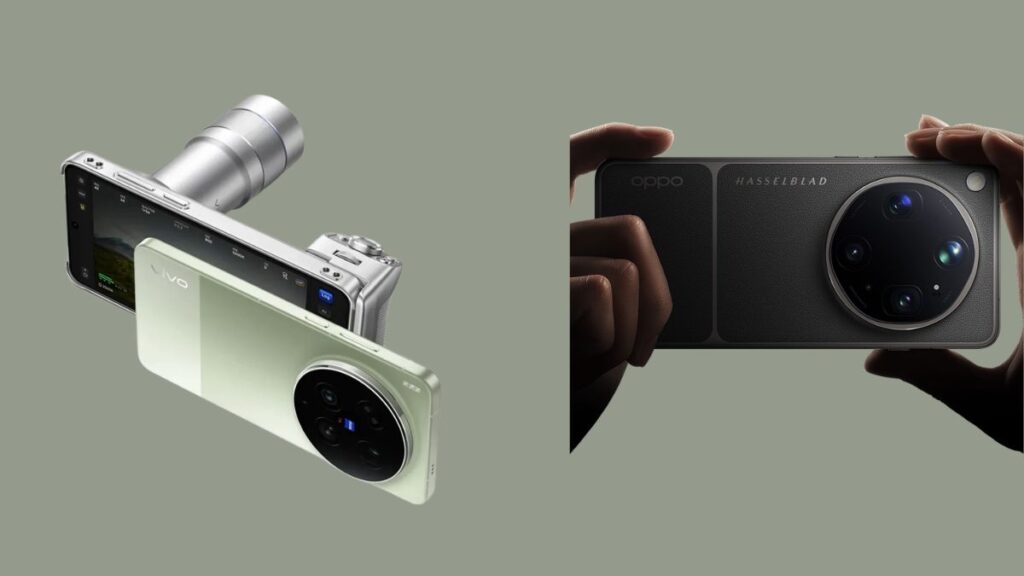
This is the heart of the comparison between the Oppo Find X9 Ultra and Vivo X300 Ultra, and the honest answer is: neither one is decisively better. They’re tuned differently, and what wins depends on what you shoot.
Main Camera
Both phones use the same Sony LYT-901 sensor at 1/1.12 inches, one of the largest sensors in any smartphone. The meaningful difference is in focal length: Oppo’s main lens is a 23mm f/1.5 (traditional wide), while Vivo’s is a 35mm f/1.57, a slightly compressed, more portrait-friendly perspective. Zeiss tuning on the Vivo tends to deliver a distinctive color character, while Hasselblad on the Oppo leans toward natural rendering. Which you prefer really comes down to taste.
Telephoto: Oppo’s Biggest Advantage
The Oppo Find X9 Ultra has a clear edge in zoom flexibility. It carries two telephoto lenses: a 200MP 3x and a dedicated 50MP 10x periscope at f/3.5. That 10x optical zoom is a significant differentiator. It’s genuinely useful for pulling in distant subjects with quality that no amount of digital zoom on the Vivo can match.
The Vivo X300 Ultra has one telephoto, a 200MP 3.7x periscope, which is excellent in the mid-range zoom envelope but doesn’t reach the same extreme distances optically. If long-range photography (birds, sports, architecture at distance) is a priority, the Oppo is the clearer choice here.
Ultrawide: Vivo’s Counterattack
The Vivo fights back with its ultrawide. The Sony LYT-818 at 1/1.28 inches is noticeably larger than the Oppo’s LYT-600 at 1/1.95 inches. In low-light ultrawide shots and when shooting at the edges of the frame, that larger sensor makes a real difference. Hands-on reviewers have consistently noted that the Vivo X300 Ultra’s ultrawide produces better images in challenging conditions.
Video
Stabilization and video feature depth are Vivo’s territory. Real-world video comparisons put the X300 Ultra ahead, especially in handheld situations where optical stabilization and processing work together. If you shoot a lot of video, especially at events, travel vlogs, or anything requiring smooth footage without a gimbal, this matters.
Battery Life: Oppo Wins Decisively
The 7,050mAh silicon-carbon battery in the Oppo Find X9 Ultra is one of the largest in any 2026 flagship. Paired with 100W wired and 50W wireless charging, you’re looking at genuinely all-day, and potentially two-day, endurance in real use. The 50W wireless charging is also faster than most competitors at this tier.
The Vivo X300 Ultra’s 6,600mAh battery is still excellent. It’s not small, but the gap is real enough to matter on a heavy shooting day. The Oppo’s 50W wireless charging vs Vivo’s 40W is a smaller gap, but still a win for Oppo.
For photographers who spend long days shooting without access to a power point, this could be the deciding factor.
OPPO Find X9 Ultra vs Vivo X300 Ultra: Which Should You Buy?
Based on everything in this comparison between the Oppo Find X9 Ultra and Vivo X300 Ultra, here’s the honest breakdown:
Choose the Oppo Find X9 Ultra if:
- Long zoom photography (wildlife, sports, travel landmarks) is a priority, that dedicated 10x periscope is irreplaceable.
- You want the longest battery life and fastest wireless charging.
- You prefer broader focal length flexibility with four distinct cameras.
- ColorOS and its global software support matter to you.
- Triple IP-rated durability is a plus for your use.
Choose the Vivo X300 Ultra if:
- You shoot a lot of video and want the best-in-class stabilization.
- The 35mm main camera perspective suits your portrait and street photography style.
- Zeiss color science appeals to you more than Hasselblad’s rendering.
- You want the accessory ecosystem, particularly the Telephoto Extender, which essentially gives you a second camera system.
- USB 3.2 matters for your workflow (it does if you’re offloading 4K or 8K footage regularly).
- Saving ₹10,000 at launch is meaningful, especially with more RAM included.
Both of these phones are among the very best camera smartphones of 2026, and they’ll outperform almost anything else in hardware flexibility. For context on how the Oppo pedigree stacks up against Samsung’s flagship, our Oppo Find X9 Pro vs Samsung Galaxy S25 Ultra comparison breaks down what’s changed across camera generations. And if you’re looking at the mid-range segment for a second device or a recommendation for someone else, the OnePlus Nord CE6 vs Vivo T5 Pro is worth a read.
One final note: global availability and after-sales support are worth factoring in. Oppo has a wider international service network, which can matter if you travel frequently or are buying outside India. Prices and regional availability shift, so check current deals before you pull the trigger.
You might also like: