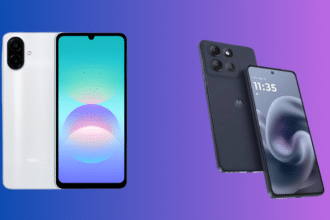
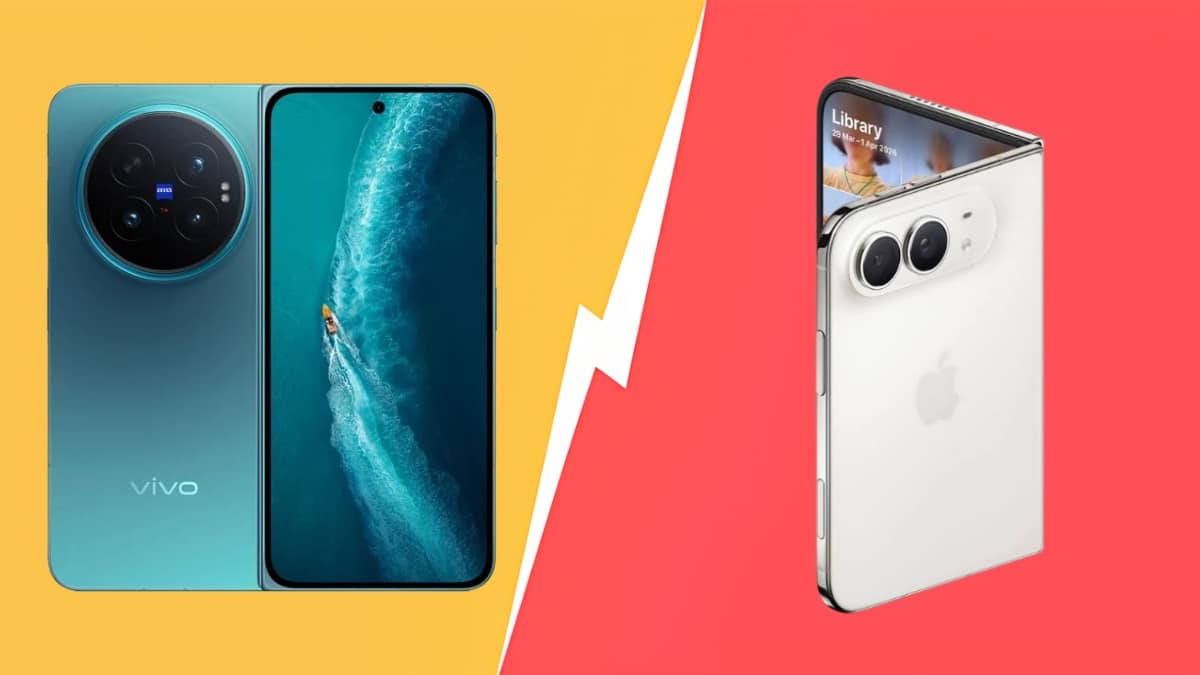
Rs 2,99,900 buys you Apple’s first foldable. Rs 2,19,999 buys you Vivo’s best one. That’s an Rs 80,000 gap, and the more expensive phone has the smaller battery, fewer cameras, and smaller screens.
Spec sheets don’t tell the whole story here, though. Apple announced the iPhone Duo on September 10, 2026, and it went on sale in India on October 23. Vivo launched the X Fold 6 in China on June 26, unveiled it in India on October 6, and started sales on October 13. Both are book-style foldables, but they’re built on opposite ideas of what a folding phone should be.
Here’s comparison between Vivo X Fold 6 and iPhone Duo, where each one wins, where each one cuts corners, and who should buy which.
Vivo X Fold 6 vs iPhone Duo: Specs at a Glance
| Specification | Vivo X Fold 6 | iPhone Duo |
|---|---|---|
| India price | Rs 2,19,999 (12GB + 512GB only) | From Rs 2,99,900 (256GB) |
| Inner display | 8.02-inch LTPO AMOLED, 120Hz, 5,000 nits peak | 7.6-inch OLED, ProMotion, 3,000 nits outdoor |
| Cover display | 6.51-inch LTPO AMOLED, 120Hz | 5.4-inch OLED |
| Chip | MediaTek Dimensity 9500 Super Edition | Apple A20 Pro (2nm) |
| Rear cameras | 200MP main, 50MP ultrawide, 50MP 3x periscope | 48MP main, 48MP ultrawide |
| Battery | 6,900mAh | 4,883mAh (two cells) |
| Charging | 80W wired, 40W wireless | 50% in about 20 min (60W adapter, sold separately); 50% in about 30 min via MagSafe |
| Weight | 228g to 235g | 254g |
| Thickness (folded / open) | 9.4-9.9mm / 4.4-4.8mm | 11.3mm / 5.2mm |
| Durability | IP5X dust, IPX8 + IPX9 water | IP68 |
| Unlock | Side fingerprint | Touch ID (side button) |
| SIM | Physical SIM + eSIM | eSIM only |
| Software | OriginOS 7 (Android 17) | iOS 27 |
Vivo’s figures come from its India launch listing. Apple doesn’t publish battery capacity on its spec page; the 4,883mAh figure comes from Apple’s EU energy label, reported by 9to5Mac. Prices are as of November 27, 2026.
Why the Vivo X Fold 6 vs iPhone Duo Price Gap Is Bigger Than It Looks
The headline gap is Rs 79,901. The real gap is wider.
Vivo sells only one model, with 512GB of storage. Apple’s Rs 2,99,900 Duo has 256GB. Match the storage and the 512GB iPhone Duo costs Rs 3,24,900, which puts it Rs 1,04,901 above the X Fold 6.
Launch offers push the gap further. Vivo offered up to Rs 26,400 instant cashback on select banks, while Apple’s bank offer was Rs 7,000. Then there’s the charger. The X Fold 6 ships with one in the box. The Duo only hits its fastest wired speed with a 60W-capable adapter you buy separately.
Worth knowing: the Duo costs roughly 58% more in India than its $1,999 US price converted, according to 91mobiles. That premium is steeper than the 45% Apple charges on the iPhone 18 Pro, so if you’re travelling to the US or UAE soon, buying abroad changes the math. Our iPhone Duo pre-order guide covers the launch timeline.
The Crease Decides How Each Phone Feels
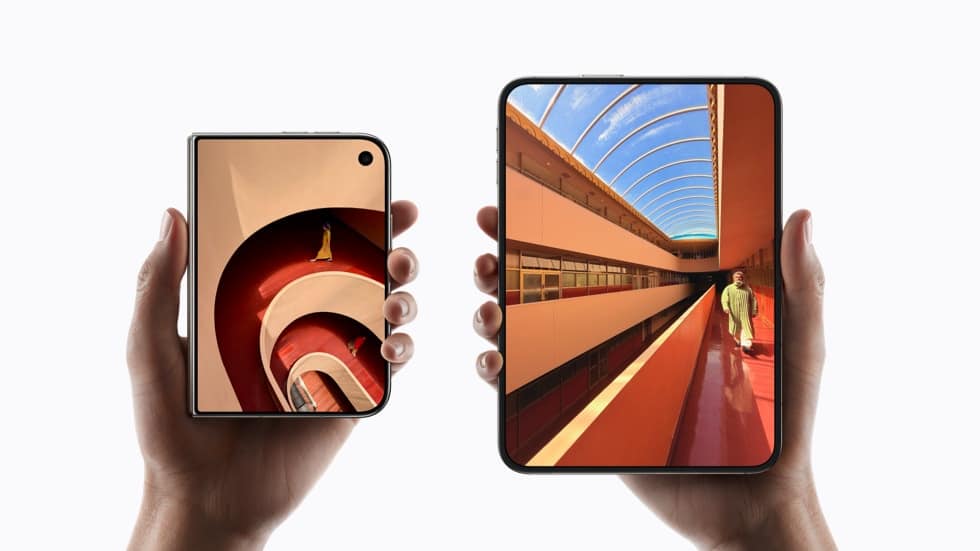
The iPhone Duo’s inner display has a nano-texture finish Apple says minimizes crease visibility. Reviewers mostly agree. Tom’s Guide said you can barely see it, and Macworld noted it’s easier to feel than see.
The X Fold 6 is a different story. Notebookcheck listed a visible and noticeable crease as a con, Beebom said it’s clearly visible and easy to feel, and Android Headlines called it just okay.
Open both phones on a train and you’ll notice it within seconds. On the Duo, a white webpage looks like one flat sheet. On the Vivo, your thumb finds a groove every time it swipes across the middle. If you plan to read or write a lot on the big screen, this matters more than any spec in the table above.
Two Different Shapes for Two Different Habits

The crease isn’t the only design split. Apple built the Duo as a wide foldable. Closed, it’s shorter and wider than a normal iPhone, close to a passport’s footprint, and its 5.4-inch cover screen covers about 90% of the iPhone 18 Pro’s screen area. Open, the 7.6-inch panel suits landscape video and the new Split View.
Vivo went the other way. 9to5Google noted that the X Fold 6 skips the wide format. Its 6.51-inch cover screen works like a regular tall phone, so you can type, scroll Instagram, and reply on WhatsApp without ever opening it.
So who wins? If you’ll use the phone folded most of the time, the Vivo’s cover screen feels more normal. If you bought a foldable to unfold it, the Duo’s wide inner screen and near-invisible crease make more sense.
Weight follows the same pattern. The Duo weighs 254g, heavier than the iPhone 18 Pro Max. When Japanese site gori.me asked Apple why, the answer was that the weight comes from building the phone to be durable. The Vivo comes in 19g to 26g lighter and up to 1.9mm thinner when folded.
Battery Life: Vivo Wins, and It Isn’t Close
The X Fold 6 packs 6,900mAh, about 41% more capacity than the Duo’s 4,883mAh. The China model goes even further at 7,000mAh.
Android Authority said the X Fold 6 has the best battery life of any foldable. In Digit’s PCMark test, it lasted 23 hours and 31 minutes. 91mobiles found it charges from 20% to 100% in 57 minutes, though heavy gaming drains it faster than ideal.
The Duo holds up better than its capacity suggests. Apple rates it for up to 44 hours of video playback on the cover screen, 31 hours on the inner screen, and 24 hours of typical mixed use. Apple splits that capacity across one cell in each half of the phone and balances the two with software. Reviews are mixed, though. Macworld called battery life the Duo’s biggest surprise, while PetaPixel said it was just barely good enough.
Here’s the practical read: unfold the Duo for hours of video and you’ll feel the smaller battery. Keep it closed most of the day and it lasts like a big iPhone. If you run into slow charging, our iPhone Duo charging fixes and MagSafe and Qi2 explainer cover what you need for full speed.
Vivo X Fold 6 vs iPhone Duo Cameras: Only One Has a Zoom Lens
This is the Vivo’s biggest win. It has a 200MP Samsung HPB main sensor, a 50MP ultrawide, and a 50MP Sony LYT-602 3x periscope telephoto, all with ZEISS T* coating. It also supports Vivo’s optional ZEISS Teleconverter G2 lens kit. Beebom and Android Headlines both called it the best camera system on a foldable, and TechRadar said it took better photos than an iPhone 18 Pro.
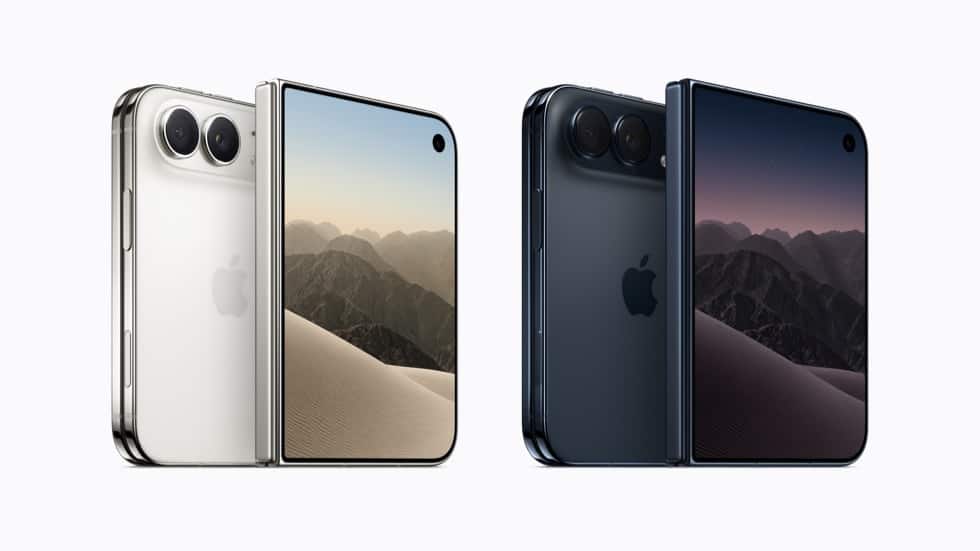
The Duo uses two 48MP Fusion cameras, main and ultrawide. There’s no telephoto. Apple offers an optical-quality 2x crop from the main sensor instead. Tech Advisor’s review pointed out that the cameras trail the iPhone 18 Pro.
Apple counters with software. Duo Preview shows your subjects the shot on the cover screen, so you can use the main cameras for selfies. Kid Cue puts Snoopy on the outer display to grab a child’s attention. There’s also a FaceTime camera under the inner display. Clever ideas, but they don’t replace a periscope lens. If you shoot concerts, wildlife, or distant buildings, the Vivo is the only choice here.
Performance and Software: Apple’s Lead Is in the Details
Macworld called the A20 Pro by far the fastest chip in any folding phone. Apple claims up to 35% better sustained performance than the iPhone 17 Pro, with a vapour chamber for cooling. Notebookcheck noted that the X Fold 6 failed its stress tests, so expect throttling during long gaming sessions. For benchmark numbers, see our A20 Pro vs Dimensity 9500 comparison.
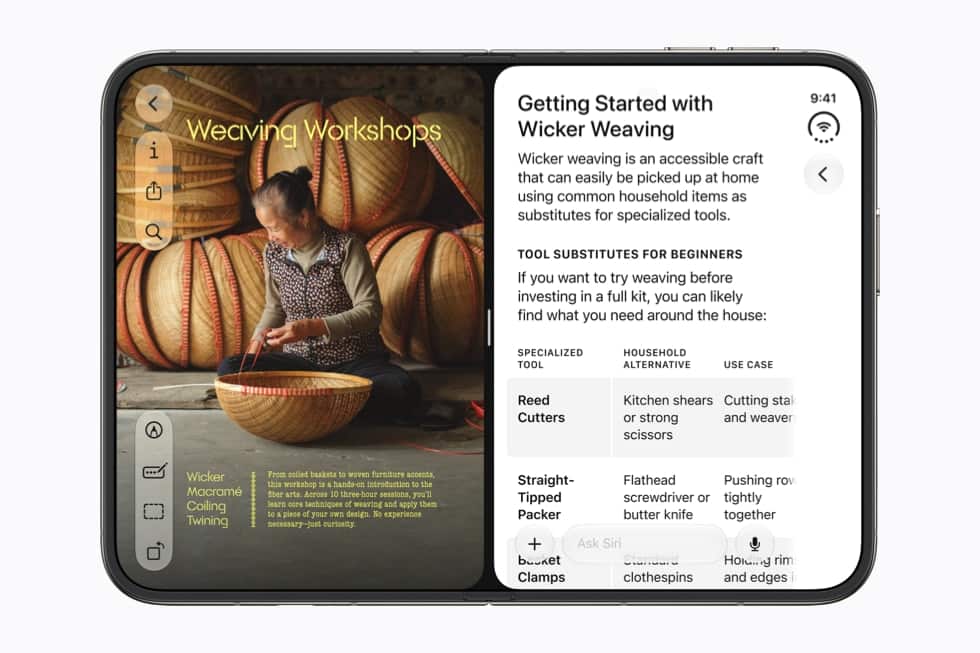
Raw speed matters less than how the software uses the big screen, though. iOS 27 on the Duo adds a side Dock, two Home Screen pages when open, a vertical Dynamic Island, StandBy on either display, and Split View, which is a first on iPhone. PhoneArena’s reviewer said the software is the most important part of the Duo experience. Our iOS 27 features roundup covers the rest.
Vivo’s OriginOS 7 is built on Android 17. Its Atomic Workbench can run several apps in separate windows, and reviewers praised its multitasking. Vivo promises 5 years of OS upgrades and 7 years of security patches.
The trade-off is simple. Split View on the Duo runs two apps side by side. Vivo gives you more windows. Apple gives you tighter integration with your Mac, iPad, and Apple Watch.
Durability and Daily Annoyances
Both phones resist water, but in different ways. The Duo’s IP68 rating covers full dust protection. The Vivo’s IP5X dust rating is a step lower, but its IPX9 rating adds resistance to high-pressure water jets, which the Duo doesn’t claim. Apple builds the Duo with a grade 5 titanium frame and a hinge made of over 100 components. If yours does get damaged, read our guide on what to do if your iPhone Duo screen cracks along the hinge.
A few smaller differences will show up in everyday use:
- No Face ID on the Duo. Touch ID moves to the side button. PetaPixel called it slow and clumsy.
- No SIM tray on the Duo. It’s eSIM-only worldwide. Jio and Airtel support eSIM, but switching phones takes more steps.
- IR blaster on the Vivo. It’s a small thing, but useful in Indian homes with older ACs and TVs.
- Apple Pencil support on the Duo. The Vivo has no stylus support.
None of these alone should decide your purchase. Together, they show the Duo is tuned for Apple users and the Vivo for people who want every hardware feature.
Vivo X Fold 6 or iPhone Duo: Which One Should You Buy?
- Buy the Vivo X Fold 6 if you want the best camera on any foldable, the longest battery life, a cover screen that works like a normal phone, and Rs 80,000 to Rs 1 lakh left in your account.
- Buy the iPhone Duo if you already use a Mac, iPad, or Apple Watch, you’ll spend most of your time on the inner screen, and a near-invisible crease matters more to you than zoom photos.
- Skip both if you mainly use the phone folded. A regular flagship costs less and does the job. Our iPhone 18 Pro vs iPhone Duo comparison and iPhone Duo vs Galaxy Z Fold 8 breakdown cover those options.
The Bottom Line
The iPhone Duo is the more polished foldable. The X Fold 6 is the more capable phone. Apple got the crease, the hinge, and the software right, and it charges a big premium in India for that. Vivo puts its money into hardware you can measure: more battery, a real zoom lens, faster charging, and bigger screens. If the crease is the one thing you can’t live with, pay for the Duo. For everyone else, the X Fold 6 is the smarter buy.
Which matters more to you in a foldable: a flat screen or a zoom lens?