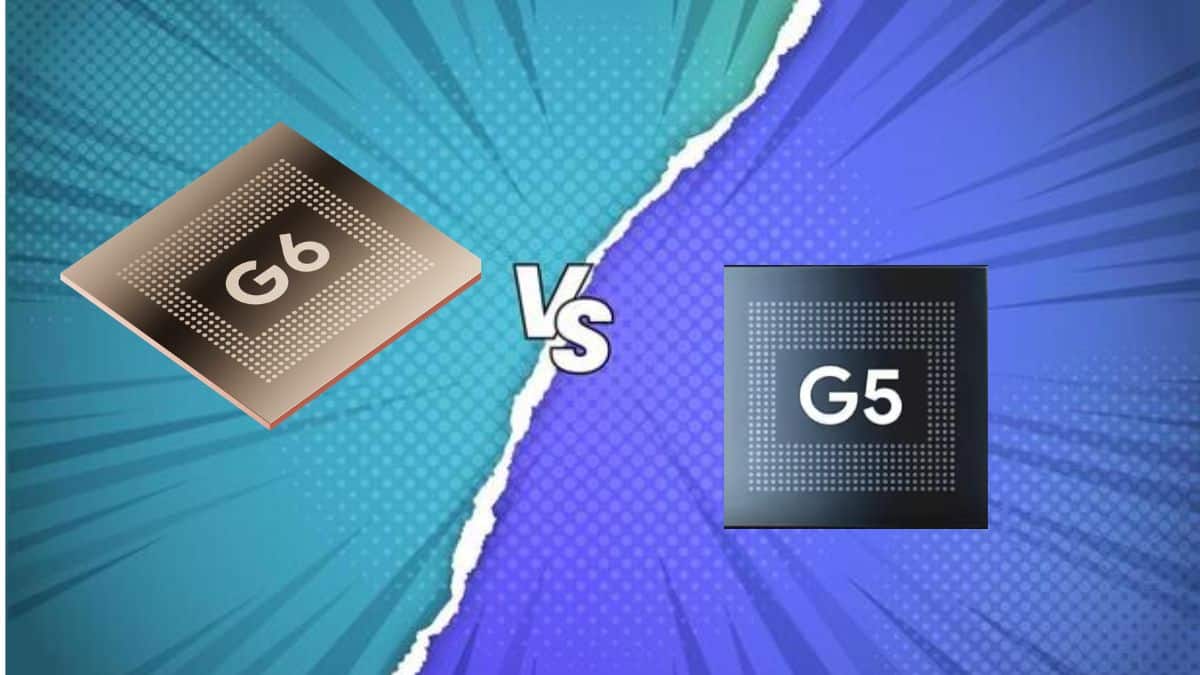
If you bought a Pixel 10 last year and told yourself you’d skip a generation, Google just made that decision harder. Tensor G6 arrived on August 12, 2026, alongside the Pixel 11 series, bringing faster everyday performance, substantially more AI compute, an upgraded image processor, and the new Titan M3 security chip.
But not every change is a straightforward upgrade. Some of the most interesting Tensor G6 architecture details, including its reported 2nm manufacturing process, 7-core CPU, PowerVR GPU, and modem supplier, still come from third-party reporting rather than Google’s published specifications.
So how much better is Tensor G6 than Tensor G5 in actual use? Here’s what changed and whether those improvements are enough to justify moving from a Pixel 10 to a Pixel 11.
Tensor G6 Release Date and Supported Pixel Phones
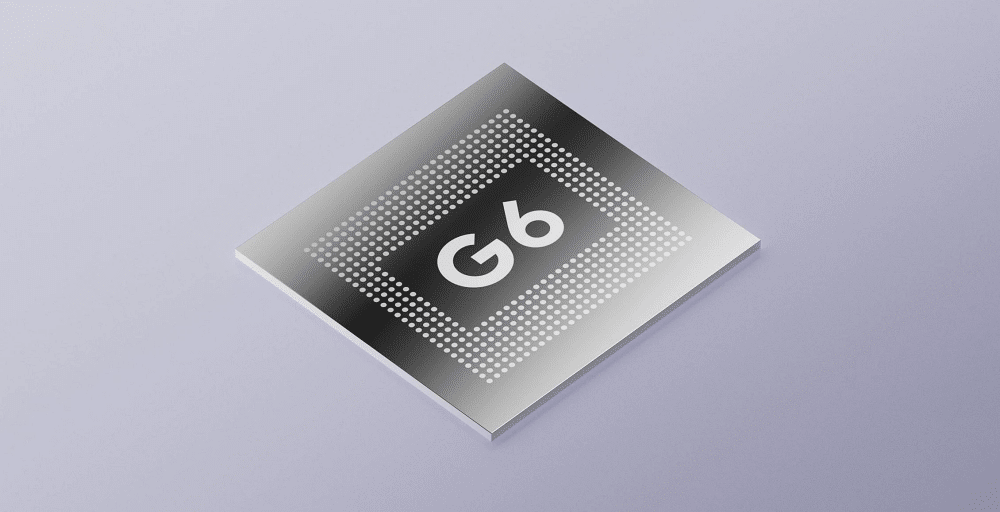
Google announced the Tensor G6 on August 12 at Made by Google 2026. It powers the complete Pixel 11 flagship lineup, including the Pixel 11, Pixel 11 Pro, Pixel 11 Pro XL, and Pixel 11 Pro Fold.
Preorders opened the same day, with all four phones reaching stores on August 20. Pricing starts at 899 USD for the Pixel 11, 1099 USD for the Pixel 11 Pro, 1299 USD for the Pro XL, and 1899 USD for the Pixel 11 Pro Fold.
Tensor G5 debuted with the Pixel 10 series in 2025.
Tensor G6 vs Tensor G5: Manufacturing Process
The manufacturing process is one of the most widely discussed Tensor G6 upgrades, but there’s an important distinction between reported and officially confirmed information.
Multiple reports say Tensor G6 is manufactured by TSMC using its newer 2nm process, compared with the 3nm process used for Tensor G5. If accurate, that would put Pixel 11 among the first flagship phones to use TSMC’s new node. Google, however, does not explicitly identify the fabrication node in its public Tensor G6 launch materials.
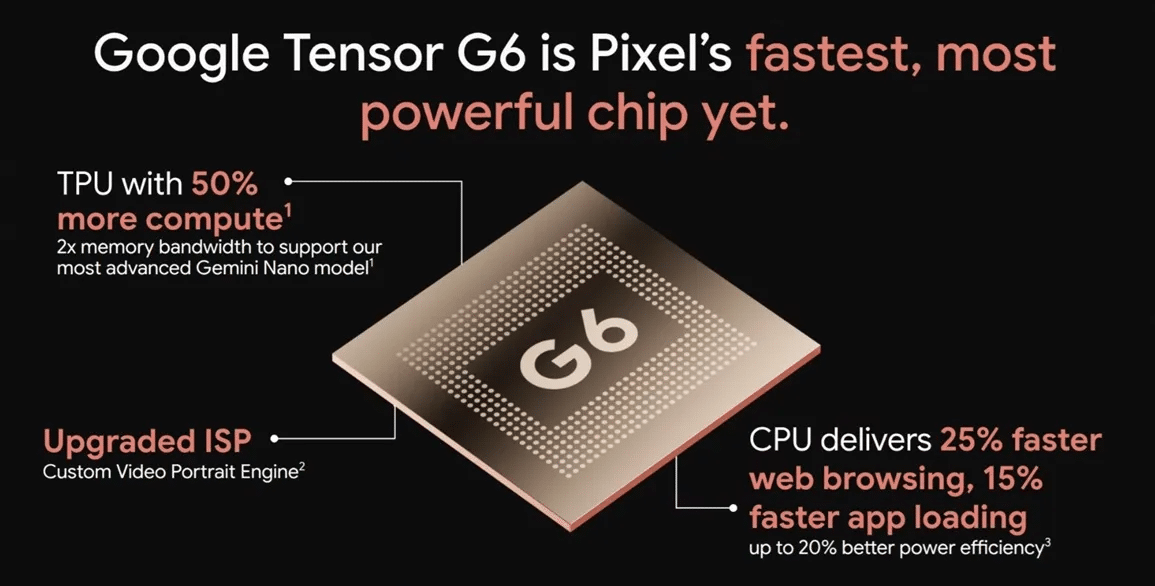
What Google does confirm is improved real-world performance. Tensor G6 delivers 25 percent faster web browsing and 15 percent quicker app launches compared with Tensor G5.
A smaller and more efficient manufacturing process could also help with power consumption and heat, two areas where previous Tensor generations often trailed competing flagship chips. But independent Pixel 11 testing will tell us more than the process node alone.
Tensor G6 vs Tensor G5: CPU Performance
The CPU configuration appears to have changed significantly between generations.
Tensor G5 uses eight CPU cores, including one Cortex X4, five Cortex A725 performance cores, and two Cortex A520 efficiency cores. Independent analysis of Tensor G5 confirmed this configuration after the Pixel 10 launch.
Leaks and architecture reports point to Tensor G6 moving to 7 CPU cores based on Arm’s newer C1 family, with one C1 Ultra core, four C1 Pro performance cores, and two additional C1 Pro cores running at lower frequencies. However, Google has not publicly confirmed that exact arrangement.
Dropping from eight cores to 7 may sound like a downgrade, but core count alone doesn’t determine performance. Newer cores, higher clock speeds, and improved efficiency can produce better responsiveness even with fewer cores.
Google’s confirmed 25 percent web browsing improvement and 15 percent faster app launches suggest that everyday single-app performance should be noticeably better.
I would still avoid using leaked Geekbench numbers as definitive proof that Tensor G6 is faster or slower in multicore performance. Retail firmware, cooling, and sustained workloads can change the picture substantially.
Tensor G6 vs Tensor G5: GPU
Graphics performance is one of the bigger question marks in this comparison.
Tensor G5 moved to an Imagination Technologies PowerVR D series GPU. Reports surrounding Tensor G6 suggest Google is again using PowerVR graphics, but potentially with a CXT-based design rather than a newer architecture.
That sounds unusual on paper, and early reporting raised concerns that graphics performance might improve less dramatically than CPU or AI performance. Google has not published detailed Tensor G6 GPU specifications, so precise compute unit counts and clock speeds should still be treated as unofficial.
For Pixel owners who mostly use social media, photography, browsing, streaming, and everyday apps, this may not matter much. Mobile gamers should wait for sustained gaming tests before assuming Tensor G6 has finally caught Qualcomm’s flagship Adreno GPUs.
Our Tensor G5 vs Snapdragon 8 Elite comparison shows why graphics performance has traditionally been one of Tensor’s weaker areas.
Tensor G6 vs Tensor G5: AI Performance
AI is where Tensor G6 delivers its clearest confirmed upgrade.
Google says the new TPU provides 50 percent more compute than Tensor G5. Paired with the latest Gemini Nano model, Tensor G6 can process supported on-device AI workloads up to 3.5 times faster while using up to 3.5 times less energy.
That efficiency improvement may matter more than the raw speed figure. Faster AI is useful, but AI features that consume less battery are easier to run throughout the day without turning them into another source of battery drain.
Tensor G6 powers features including expanded Live Translate, which can dub supported audio and video into another language using on-device generative AI.
It also supports Google’s wider Gemini Intelligence push across the Pixel 11 series, including proactive assistance, smarter Gboard tools, Circle to Search improvements, and camera features.
For a broader look at what Gemini can currently do across Android, see our Gemini Intelligence guide.
Tensor G6 vs Tensor G5: Camera Processing
Tensor has always been closely tied to Pixel photography, and G6 continues that strategy with an upgraded image signal processor.
Tensor G5 already brought major computational photography improvements to Pixel 10, but Tensor G6 pushes low-light photography and zoom further.
Google says Night Sight on the Pixel 11 Pro and Pro XL can now capture images up to 4.5 times faster than before while maintaining comparable quality.
The standard Pixel 11 gets a new 48-megapixel main sensor with 56 percent greater light sensitivity, while its 5x telephoto camera supports up to 30x Super Zoom. Pixel 11 Pro and Pro XL use an upgraded 48-megapixel telephoto sensor with 30 percent more light sensitivity and support up to 120x Pro Zoom.
The important part here is that those zoom improvements aren’t just about lens hardware. Tensor G6 combines the camera sensors with Google’s imaging models and upgraded ISP to produce the final image.
Tensor G6 Adds More Advanced Video Processing
Video is another area where Tensor G6 expands what Pixel hardware can process in real time.
Launch day coverage points to new computational video capabilities, including 4K Portrait Video on supported Pixel 11 models. The feature applies depth of field processing to video rather than limiting portrait effects to still images.
Not every Tensor G6 phone receives exactly the same camera features, though. The Pixel 11 Pro Fold has different camera hardware and physical constraints, so having the same processor doesn’t guarantee feature parity across the entire lineup.
That’s an important distinction when comparing Pixel models. Tensor provides the processing foundation, but sensors, thermals, and device design still determine which features Google enables.
Tensor G6 vs Tensor G5: Security
Security gets a more concrete hardware upgrade with Tensor G6.
Tensor G5 works alongside Google’s Titan M2 security chip. With the Pixel 11 series, Google has introduced Titan M3, which integrates with Tensor G6 as part of what the company calls its strongest Pixel defense system yet.
Google also confirms that the new security architecture brings post-quantum cryptography to Pixel’s secure boot process.
This isn’t something most people will notice while using the phone. Instead, it’s designed to prepare Pixel security for future threats, including advances in quantum computing that could eventually challenge some current encryption methods.
It’s a forward-looking upgrade rather than a reason by itself to replace a Pixel 10, but it strengthens the Pixel 11’s long-term security story.
Did Tensor G6 Switch to a MediaTek Modem?
The modem is another area where reported information needs to be separated from confirmed specifications.
Previous Tensor generations relied heavily on Samsung supplied modem hardware. Reports before the Pixel 11 launch said Google was testing a MediaTek modem for Tensor G6, with later FCC information adding support to the possibility of a supplier change.
Google has not publicly named MediaTek as Tensor G6’s modem supplier in the launch information I’ve reviewed, so I wouldn’t call the MediaTek M90 confirmed yet.
If Google has changed modem suppliers, the real test will be signal reliability, battery consumption on 5G, heat and performance in weak coverage areas.
If your current Pixel is already having connectivity problems after updating Android, our Android 17 WiFi troubleshooting guide covers several common causes and fixes.
Tensor G6 vs Tensor G5: Key Differences
Here’s the comparison that matters most based on confirmed information and clearly identified reports.
- Manufacturing process: Tensor G6 is reported to use TSMC 2nm, while Tensor G5 uses TSMC 3nm.
- CPU: Tensor G6 is reported to have 7 newer Arm C1-based cores, compared with Tensor G5’s eight-core Cortex configuration.
- Everyday performance: Google claims 25 percent faster web browsing and 15 percent faster app launches with Tensor G6.
- AI performance: Tensor G6 gets 50 percent more TPU compute and runs supported on-device AI workloads up to 3.5 times faster while using up to 3.5 times less energy.
- Camera processing: Tensor G6 adds an upgraded ISP, faster Night Sight, improved zoom processing, and new computational camera features.
- Security: Tensor G6 pairs with Titan M3 and adds post-quantum cryptography to secure boot, replacing the Titan M2 setup used with Tensor G5.
- Modem: A move away from Samsung toward MediaTek has been reported but is not officially confirmed.
Should You Upgrade From Tensor G5 to Tensor G6?
If you’re using a Pixel 9 or older, Tensor G6 makes a much stronger upgrade case. You’re getting improvements from multiple generations at once, including faster AI, better camera processing, newer security hardware, and improved everyday performance.
For Pixel 10 owners, the decision is less obvious. Tensor G6’s TPU upgrade is substantial, and faster app launches, improved Night Sight, new camera hardware, and Titan M3 all add up. But Tensor G5 is only a year old and remains perfectly capable for most everyday tasks.
I wouldn’t upgrade from Pixel 10 purely because Tensor G6 exists. The better question is whether the Pixel 11 features built around it, particularly the cameras, Gemini Intelligence features, battery behavior, and security improvements, are valuable enough for how you use your phone.
Final Thoughts
Tensor G6 looks like a meaningful step forward from Tensor G5, but not because it suddenly turns Pixel into the fastest gaming phone on the market.
The greatest confirmed improvements are 50 percent more TPU compute, up to 3.5 times faster on-device AI processing, lower energy use for those workloads, faster web browsing and app launches, an upgraded ISP, and the new Titan M3 security system.
Meanwhile, the reported 2nm process, 7-core CPU configuration, PowerVR GPU details, and potential MediaTek modem make the architecture more interesting, but I would wait for teardowns and independent testing before treating every leaked specification as final.
For Pixel 9 owners and anyone using an older Pixel, the combined improvements make Pixel 11 much easier to justify. Pixel 10 owners have less reason to rush. Tensor G6 is clearly newer and more capable in key areas, but waiting for independent battery, gaming, thermal, and modem tests is still the smarter move before upgrading after only one generation.