
If you installed Android 17 QPR2 Beta 4 hoping the reboots and camera crashes were finally behind you, Beta 5 is the release that earns that hope. Google pushed it to eligible Pixel phones on September 15, 2026, and unlike most beta drops, it isn’t chasing new features. It’s cleaning up the mess the last few builds left behind.
That’s a deliberate choice. QPR2 hit Platform Stability back in Beta 4, which means the APIs developers build against are locked for this cycle. Everything from here forward is about making the software that’s already decided on work right. Beta 5 delivers on that with eight fixes that touch Bluetooth, the camera, HDR, and Google Wallet, plus a couple of Quick Settings tweaks that landed without much fanfare.
Here’s what actually changed, what’s still rough, and when to expect this to reach your phone as a stable update instead of a beta you have to opt into.
When Android 17 QPR2 Beta 5 Arrives, and Which Pixels Qualify
Beta 5 ships as two separate builds depending on your hardware. Pixel 6a, the Pixel 7 series, Pixel Fold, and Pixel Tablet get build CP41.260828.005.A6. Pixel 8 through the Pixel 11 lineup, including the Pixel 11 Pro Fold, get CP41.260828.004.A8. Both carry the same August 5, 2026 security patch and ship alongside Google Play services 26.28.33.
Worth knowing: the Pixel 6 and Pixel 6 Pro don’t get this build at all. Both phones exited Google’s software support window earlier this year, so if you’re still running one, QPR2 simply isn’t coming your way.
If you’re already enrolled in the Android Beta Program, the update should show up as a standard over-the-air download in Settings.
If you’d rather flash it manually, Google publishes the full system images on the Android Beta Program site, and the official release notes list every build number if you want to confirm you’re on the right one before you start.
Quick Settings and the Battery Menu Both Got Reshuffled
The feature changes in Beta 5 are small, but you’ll notice them the first time you pull down your notification shade. Quick Settings picked up a new Audio streams tile, while the tile-layout customization option that let you rearrange your panel manually has been pulled, at least for now.
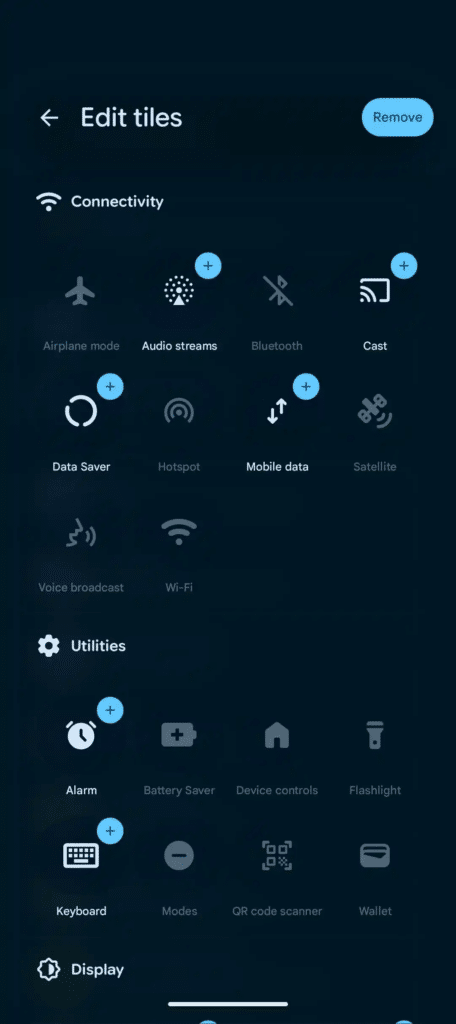
Google hasn’t said whether it’s coming back before QPR2 goes stable, and its own release notes don’t mention it, so treat that one as unconfirmed rather than gone for good. The voice broadcast tile also moved out of its old spot and into the Connectivity section, which is a more sensible home for it anyway.
Dig into Settings and you’ll find the battery section has been renamed to “Battery & charging,” folding what used to be scattered charging preferences into one menu. That consolidation started on the Pixel 11 series and is now spreading to older supported phones.
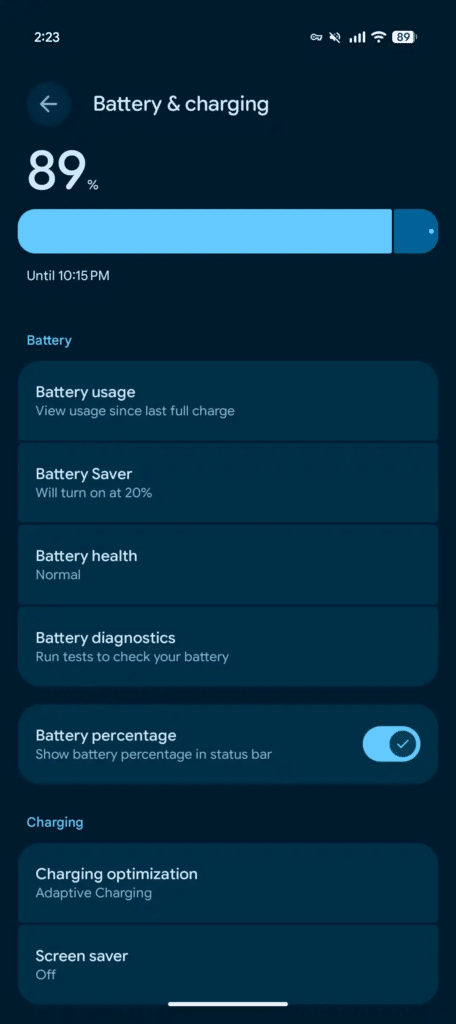
It’s a small change, but if you’ve ever hunted through three different submenus to find your charging limit toggle, this is the fix nobody asked for out loud but everyone will use.
The Bug Fixes That Matter More Than Any New Feature
This is where Beta 5 earns its keep. Google lists eight fixes, and several of them address problems that made the last few betas genuinely hard to live with day to day.
- System stability. The most disruptive bug in recent builds caused unexpected reboots during extended scrolling in media-heavy apps, the kind of crash that hits you mid-scroll through Instagram or a long group chat. That’s patched now.
- Bluetooth. Two separate issues get fixed here: device-type icons failing to update correctly in Settings, and audio noise or distortion showing up after phone calls end. If your earbuds have sounded off right after you hang up, this build addresses it.
- Camera. Panorama mode was crashing mid-capture for some users. That’s resolved, along with the touchscreen going unresponsive after launching Google Wallet through the power-button shortcut, an odd but real bug that made the phone briefly unusable until you rebooted it.
- Display and privacy. Enhanced HDR mode was staying on even after you turned it off in Settings, a bug that drained battery on OLED-heavy content. Search fields were also rendering incorrect background highlights, and navigating out of Private Space after unlocking it had its own set of glitches. Both are fixed. So is a casting bug where the volume slider disappeared entirely when you tried to adjust media volume with the hardware buttons.
None of these are headline features. But if you’ve been putting off the QPR2 beta because of exactly these problems, Beta 5 is the build that makes it livable again.
QPR2 Is Quietly Tightening Call-Forwarding Security
Buried in the release notes is a change that has nothing to do with Beta 5 specifically, but it’s worth understanding because it’s part of the same QPR2 cycle and it addresses a real scam vector. Android 17 QPR2 restricts how apps can programmatically trigger call forwarding through USSD codes, the short dial strings like *#21# that carriers use to redirect calls.
Here’s the mechanism: apps that only hold the CALL_PHONE permission can no longer call TelephonyManager.sendUssdRequest() for call-forwarding codes in the background. Attempt it and the system returns a USSD_ERROR_NOT_ALLOWED callback instead of silently executing the request. If a user manually dials a forwarding code themselves, Android now shows an OS-level confirmation dialog before it goes through.
Why now? Call-forwarding hijacks are a known technique in phone-verification fraud, where a malicious app redirects your incoming calls, including one-time verification calls, to a number the attacker controls. This closes that door at the OS level rather than relying on individual apps to behave. Mobile-money and account-balance USSD checks aren’t affected, so the restriction is narrowly scoped to forwarding specifically.
Developers relying on the old behavior need to handle the new error code or switch to an ACTION_DIAL intent instead, according to Google’s own QPR2 release notes.
When Does QPR2 Actually Go Stable?
Based on Google’s quarterly cadence and the Platform Stability milestone Beta 4 already hit, QPR2 is on track to land as a stable release in December 2026, bundled with that month’s Pixel Feature Drop. Google hasn’t published an exact date, so treat December as an expected window rather than a locked commitment.
What is confirmed is the pattern: with the APIs frozen, the remaining betas between now and stable are almost certainly going to keep leaning into fixes and polish rather than new functionality, the same direction Beta 5 already took.
That’s consistent with how Android’s September feature drop rolled out separately from the QPR2 beta track. Feature work happens on its own schedule. QPR2’s beta cycle is now firmly in cleanup mode.
Signing Off
Beta 5 isn’t exciting, and that’s exactly the point. After a Beta 4 that introduced customizable status bar icons and smarter notifications but also left some real stability problems in its wake, this build spends its entire budget on fixing what was broken.
If you’re on a supported Pixel and have been holding off on QPR2 because of the reboot bug or camera crashes, this is the beta that makes it safe to jump in. Everyone else can reasonably wait for December and get the same fixes without the beta risk.