
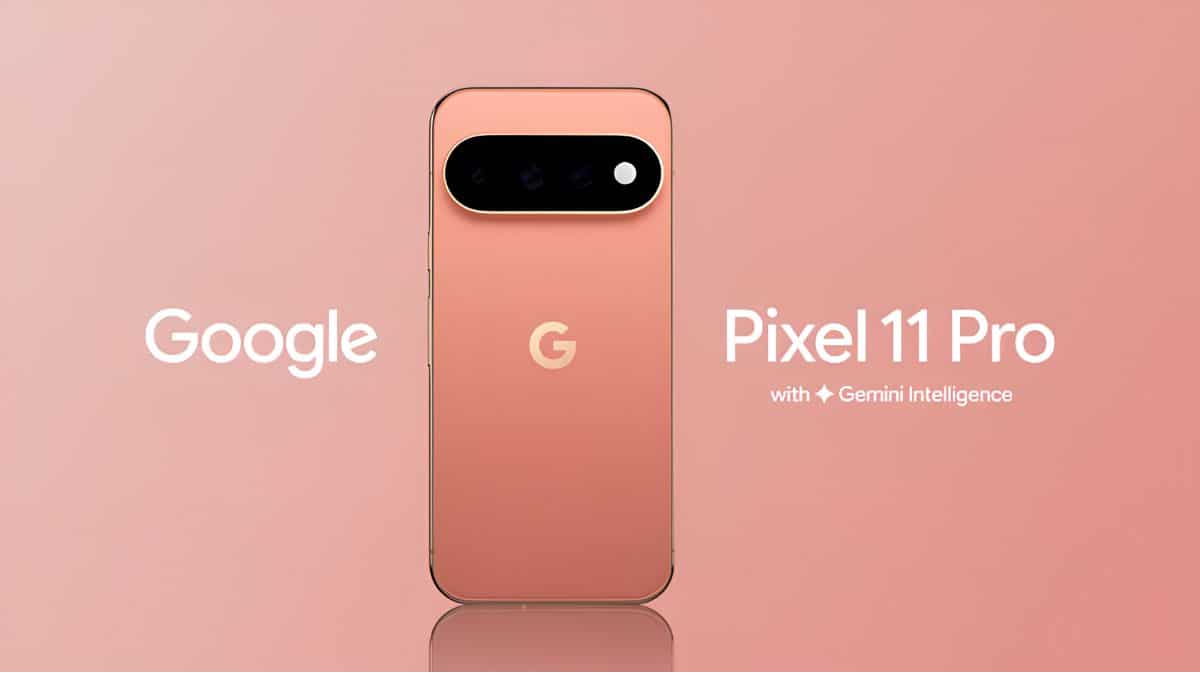
If you held off on the Pixel 10 last year hoping for a bigger upgrade, Google may have finally given you one. The Pixel 11 series arrived at Made by Google 2026, bringing changes across nearly every part of the lineup: a new chip, a redesigned camera bar, magnetic charging that finally gives Pixel users a MagSafe-like experience, and a foldable that Google describes as “nearly impossible to crack.”
Google unveiled the phones on August 12, 2026, during its Made by Google event in New York City, hosted by comedian Trevor Noah. This isn’t simply a yearly refresh with a new number attached. Every model gets Tensor G6, redesigned camera hardware, and 256GB of storage as standard. There is a trade-off, though: every model also starts $100 higher than its Pixel 10 counterpart.
Google has made everything official; here’s what you need to know about the Pixel 11, Pixel 11 Pro, Pixel 11 Pro XL, and Pixel 11 Pro Fold.
When the Pixel 11 Series Launches and How Much It Costs
Google confirmed that all four Pixel 11 phones will ship on the same day this year. That’s a welcome change from 2025, when the Pixel 10 Pro Fold arrived weeks after its siblings.
Announced: August 12, 2026
Preorders open: August 12, 2026, through the Google Store, Amazon, and Best Buy
Ships: August 20, 2026
| Model | Starting price (256GB) | Storage options |
|---|---|---|
| Pixel 11 | $899 | 256GB, 512GB |
| Pixel 11 Pro | $1,099 | 256GB, 512GB, 1TB |
| Pixel 11 Pro XL | $1,299 | 256GB, 512GB, 1TB |
| Pixel 11 Pro Fold | $1,899 | 256GB, 512GB, 1TB |
Worth knowing: that’s a $100 increase across the entire lineup. The Pixel 10 started at $799, the Pixel 10 Pro at $999, the Pixel 10 Pro XL at $1,199, and the Pixel 10 Pro Fold at $1,799.
Google’s justification is easier to understand when you look at storage. The 128GB tier is gone, and every Pixel 11 now starts with 256GB. Whether doubling the base storage justifies the extra $100 will depend on how much storage you actually use.
Google is also offering trade-in deals. According to Google’s Pixel 11 specifications page, the Pixel 11 can effectively start from $399 and the Pixel 11 Pro from $499 with an eligible trade-in.
Tensor G6: What the New Chip Actually Changes
Every Pixel 11 model runs on the same Tensor G6 chip, built on a 2nm process and paired with Google’s new Titan M3 security coprocessor.
Titan M3 is designed with future security threats in mind, including attacks that could eventually become possible with sufficiently powerful quantum computers. That’s unlikely to change how you use your phone today, but it shows where Google is putting some of its long-term security effort.
The more noticeable upgrade comes from Gemini Nano 4 running directly on the device. Google says Tensor G6 delivers 50% more TPU compute and twice the memory bandwidth compared with last year’s Tensor G5. The company claims that translates into some on-device AI workloads running up to 3.5 times faster while consuming less power. Google also claims 15% faster app loading and 25% faster web page rendering.
Those numbers will need real-world testing before we know how noticeable the difference is in everyday use. Still, the extra AI performance matters because more Gemini features can operate locally instead of constantly sending requests to the cloud.
That’s particularly important for Gemini’s on-device features, including live transcription, call-related features, and contextual suggestions.
Tensor G5 could already run Gemini Nano. Tensor G6 is about making those interactions faster and practical enough that you don’t notice the processing happening in the background.
Pixel 11: Specs and Biggest Upgrades
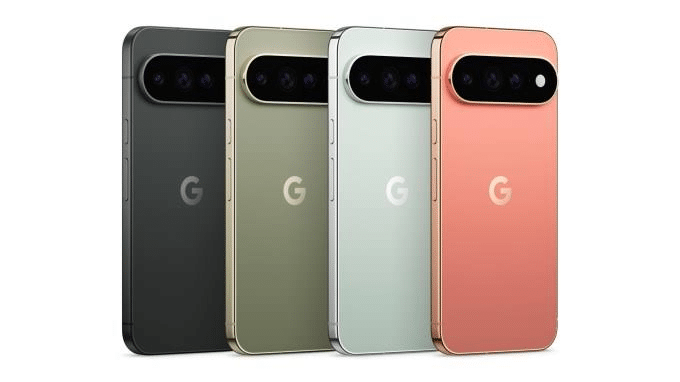
The standard Pixel 11 receives one of the most noticeable camera-bar redesigns in years. Google has moved to an all-glass housing that’s considerably slimmer than the previous generation.
Here are the key specifications:
- Display: 6.3-inch Actua OLED, 1080 × 2424 resolution, 60-120Hz refresh rate, up to 3,000 nits peak brightness
- Chip: Tensor G6
- RAM: 12GB
- Storage: 256GB or 512GB
- Main camera: 48MP wide, f/1.7
- Ultrawide: 13MP
- Telephoto: 10.8MP with 5x optical zoom and Super Zoom up to 30x
- Front camera: 10.5MP with a 95-degree field of view
- Battery: 4,985mAh, rated for more than 30 hours
- Wired charging: Up to 30W
- Wireless charging: Up to 25W Qi2
- Durability: IP68 and Gorilla Glass Victus 2
- Colors: Frost, Pistachio, Hibiscus, and Obsidian
- Software: Android 17 with seven years of OS, security, and Pixel Drop updates
The wireless charging upgrade is particularly useful. The Pixel 10 supported up to 15W wireless charging, while the Pixel 11 can reach 25W with Google’s new Pixelsnap magnetic charging system.
More importantly, Pixelsnap gives Pixel owners the magnetic accessory ecosystem that iPhone users have enjoyed with MagSafe for years. Chargers, stands, cases, and other magnetic accessories should be much easier to attach and align correctly.
Pixel 11 Pro vs. Pro XL: What’s Different?
The Pixel 11 Pro and Pixel 11 Pro XL share most of their hardware. The main differences come down to display size, battery capacity, and charging speed.
The 6.3-inch Pixel 11 Pro is the better option if you want flagship hardware without carrying a huge phone. The 6.8-inch Pro XL is aimed at buyers who prioritize screen size and battery capacity over pocketability.
Key specifications include:
- Display: Super Actua LTPO OLED with a 1-120Hz adaptive refresh rate and up to 3,600 nits peak brightness
- Chip: Tensor G6
- RAM: 12GB or 16GB, depending on configuration
- Storage: 256GB, 512GB, or 1TB
- Main camera: 50MP wide, f/1.68
- Ultrawide: 48MP
- Telephoto: 48MP with 5x optical zoom and Pro Zoom up to 120x
- Front camera: 42MP with autofocus
- Pixel 11 Pro battery: 4,850mAh
- Pixel 11 Pro XL battery: 5,115mAh
- Pixel 11 Pro charging: Up to 30W wired
- Pixel 11 Pro XL charging: Up to 45W wired
- Durability: IP68
- Colors: Obsidian, Canyon, Fog, and Olive
Google says the Pro XL can reach more than 70% charge in around 30 minutes with a compatible charger. One feature you’re likely to notice immediately is HiLight, a thin ring of ambient LEDs surrounding the camera bar. It replaces the temperature sensor found on previous models.
HiLight can illuminate during Gemini interactions and can be configured for certain contacts, letting you identify some incoming calls without immediately checking the display. It’s a relatively small addition, but it’s also the kind of hardware feature that gives the new Pixels a little more personality.
Pixel 11 Pro and Pro XL buyers also receive six months of Google AI Pro, which adds some value if you were already considering Google’s paid Gemini tier.
You can find the complete hardware specifications on Google’s official Pixel 11 Pro specifications page.
Pixel 11 Pro Fold: Google’s Toughest Foldable Yet
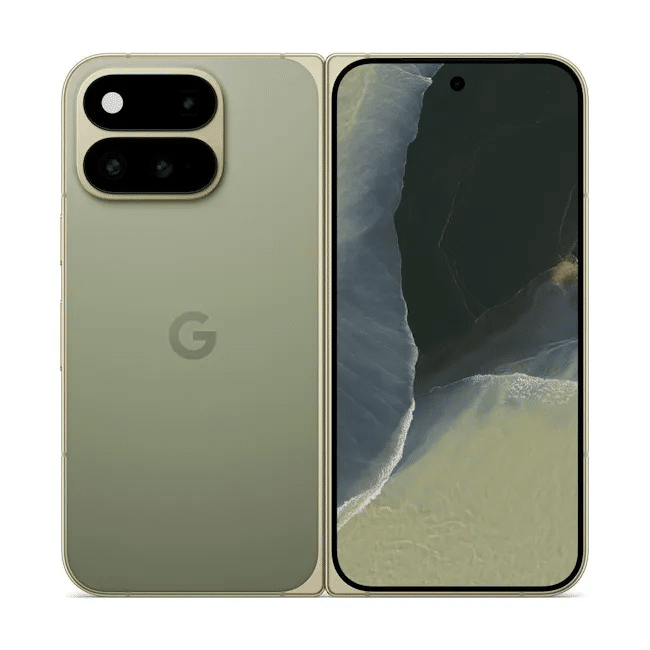
Google’s foldable also gets a substantial update. The Pixel 11 Pro Fold starts at $1,899 for the 256GB configuration with 16GB of RAM, making it $100 more expensive than its predecessor.
It’s lighter this time, though. The new model weighs 239 grams compared with 258 grams for the Pixel 10 Pro Fold. At approximately 10.1mm when folded, it’s also thinner.
Key specifications include:
- Displays: Outer and inner Super Actua displays, both reaching up to 3,600 nits
- Chip: Tensor G6
- RAM: 16GB
- Storage: 256GB, 512GB, or 1TB
- Main camera: 48MP
- Ultrawide: 10.5MP
- Telephoto: 10.8MP with 5x optical zoom
- Battery: Around 4,800mAh, rated for more than 24 hours
- Wired charging: Up to 30W
- Wireless charging: Up to 25W Qi2
- Durability: IP68 with a redesigned gearless hinge
- Colors: Olive and Obsidian
Durability is arguably the bigger story than raw specifications.
Google says the redesigned glass-fiber composite back is three times more durable than the previous generation and describes it as “nearly impossible to crack.”
That is a bold claim, and independent durability testing will tell us much more than a launch presentation. Still, it’s clearly aimed at one of the biggest concerns people continue to have about foldables: fragility.
The Pixel 11 Pro Fold also gets Live Transcribe with American Sign Language support and Sign-to-Text, features that can take advantage of the larger inner display in ways that aren’t as practical on a conventional phone.
The Pixel 11 Camera and Gemini Features That Matter
Google also introduced several camera and AI features across the Pixel 11 lineup, and some look more useful than the usual collection of launch-day software tricks. Magic Capture analyzes hundreds of frames around the moment you press the shutter and attempts to select the best exposure and expression for an HDR+ image.
That could be particularly helpful when photographing children, pets, sports, or anything else that refuses to stay still long enough for the perfect shot. Camera Looks takes a different approach. It provides built-in photographic styles, ranging from a more natural default appearance to stylized options such as Editorial and Velvet.
Google is also expanding manual camera controls, including adjustments for focus, shutter speed, and ISO on supported models. Gemini is becoming more capable of completing multi-step actions across apps, too. Google demonstrated scenarios in which the assistant can handle more of a task instead of simply telling you how to do it.
Gboard’s new Rambler feature is designed to clean up filler words and messy sentences while you’re dictating. Live Translate is also expanding beyond conversations to support real-time audio translation and dubbing in content such as podcasts and YouTube videos.
For perspective on how quickly Google’s AI strategy has changed, compare these additions with the Pixel 10’s AI features from last year.
Pixel Watch 5, Pixel Tag, and Other Google Announcements
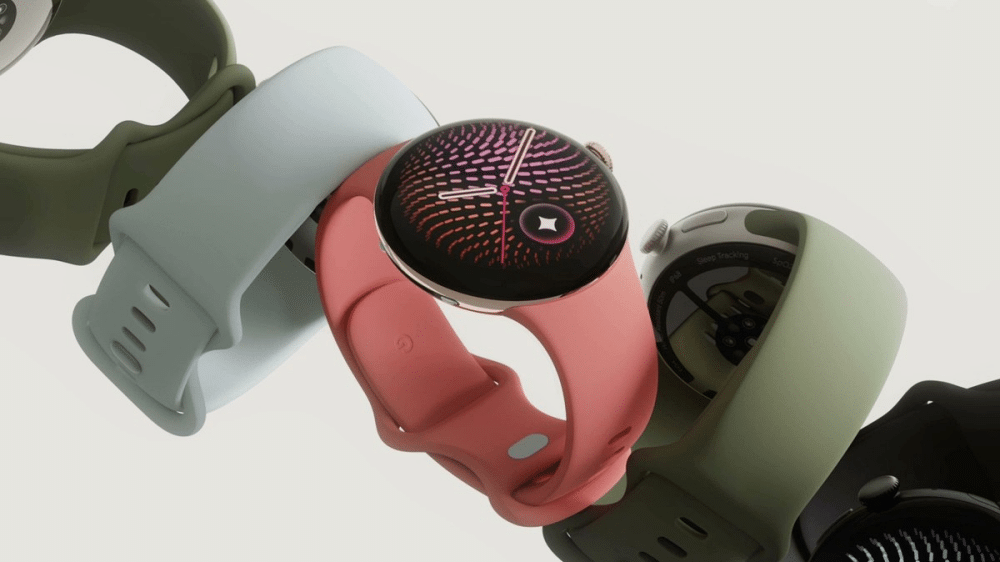
Made by Google 2026 wasn’t only about smartphones. The Pixel Watch 5 starts at $399 for the 41mm Bluetooth model, $50 more than its predecessor. It moves to the Snapdragon W5 Gen 2 platform, doubles storage, and expands Google’s health-tracking features.
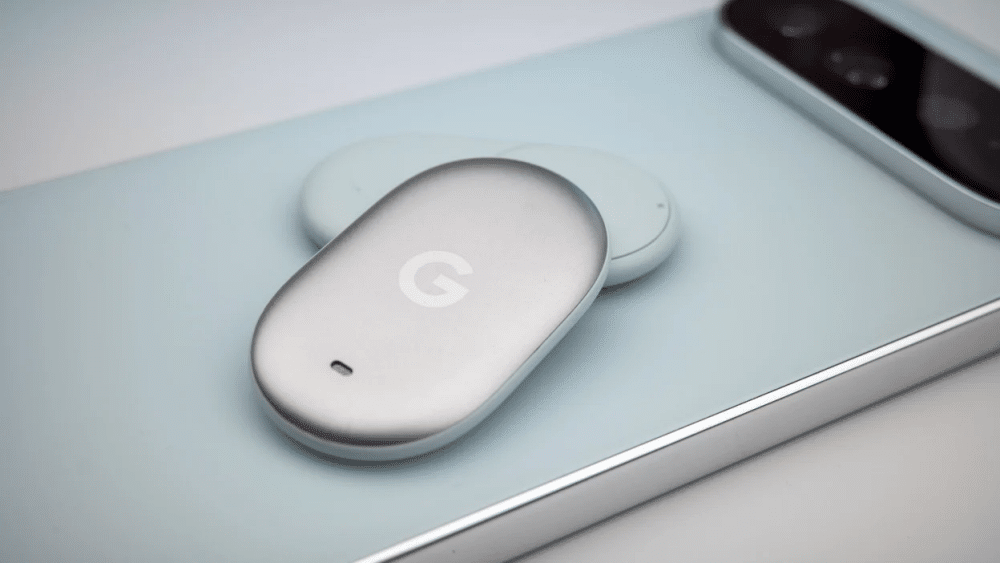
Google also announced Pixel Tag, its answer to Apple’s AirTag. It costs $29 individually or $99 for a four-pack, although availability doesn’t begin until November 11, 2026.
Pixel Buds Pro 2 gets a new Olive finish, while a September firmware update is expected to improve noise cancellation and Gemini voice controls. Google is also launching new Pixelsnap cases and a magnetic ring stand alongside the Pixel 11 lineup, giving the new magnetic charging hardware an accessory ecosystem from day one. Even the Pixel 11 wallpapers that leaked before the event match the final devices.
None of these accessories alone is a reason to switch phones, but together they show Google building a much more connected Pixel hardware ecosystem.
Should You Upgrade to the Pixel 11?
If you bought a Pixel 10 last year, I’d probably keep it. Tensor G6 is faster, Pixelsnap is useful, and Google’s new AI features are interesting, but those improvements are difficult to justify when upgrading from a flagship that’s only a year old, particularly when the Pixel 11 now starts at $899.
The decision becomes much easier if you’re using a Pixel 8 or something older. You’re getting several generations of camera improvements, faster on-device AI processing, Qi2 magnetic charging, longer remaining software support, and 256GB of storage as standard. Those upgrades will be much easier to notice than moving from a Pixel 10.
The Pro models make the most sense for buyers who care about photography, zoom, brighter displays, or additional storage. The regular Pixel 11 should still be the sweet spot for most people if you don’t need those extras.
The Pixel 11 Pro Fold is a different decision entirely. If you’ve been interested in foldables but stayed away because of durability concerns, Google’s redesigned hinge and tougher construction make it more interesting than its predecessor. I’d still wait for independent durability testing before treating Google’s “nearly impossible to crack” claim as settled fact.
Pixel 11 Series: The Bottom Line
The Pixel 11 series isn’t a reinvention of Google’s smartphone lineup. Instead, it fixes and improves several things that were already heading in the right direction.
Tensor G6 gives Google more room to run Gemini features locally, Pixelsnap finally brings proper magnetic charging and accessories to Pixel, the camera hardware continues to improve, and the Pro Fold addresses one of the biggest concerns surrounding foldable phones: durability.
The $100 price increase across every model is difficult to ignore. Starting at 256GB softens the blow, but Pixel 10 owners still have little reason to upgrade after only a year.
For anyone holding onto a Pixel 8 or older phone, or considering switching from another platform, the argument is much stronger. On paper, this is Google’s most complete Pixel lineup yet. The bigger question now is whether Tensor G6 performance, battery life, cameras, and that supposedly tougher foldable live up to Google’s claims once the phones are used outside a launch event.
Worth checking on Amazon: