
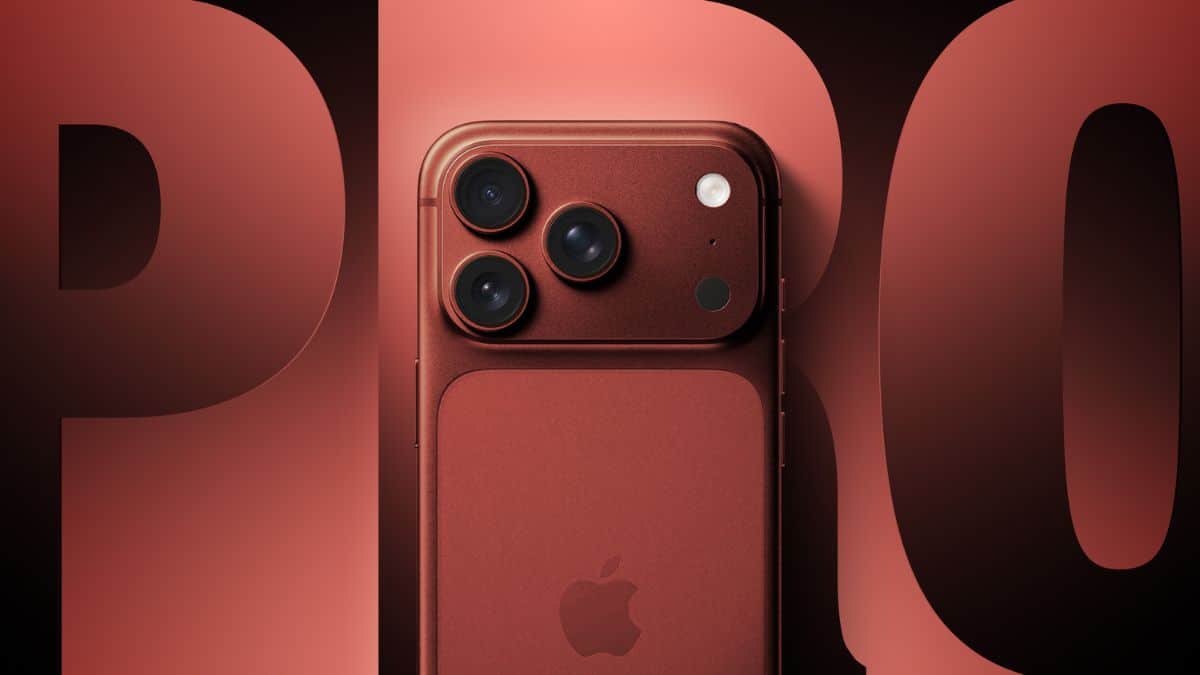
The iPhone 18 series India launch is official. Apple used its “Surprise and Shine” event on September 9, 2026 to unveil the iPhone 18 Pro, iPhone 18 Pro Max, and its first-ever foldable phone, which turned out to be called the iPhone Duo rather than the iPhone Fold or iPhone Ultra that rumors had predicted for months.
This was also the first major keynote led by CEO John Ternus, who took over from Tim Cook on September 1, 2026. Cook has moved into the role of executive chairman and did not run the show this time. Ternus used his debut to make Apple’s biggest hardware bet in years: a redesigned Pro lineup and a folding iPhone a decade after the rumors began.
Here is what actually launched, what it costs, and when you can buy it.
When Did Apple Hold the iPhone 18 Event?
Apple streamed the keynote on September 9, 2026, starting at 10 am Pacific Time from the Steve Jobs Theater in Cupertino. That converted to:
- 10:30 pm IST in India
- 1 pm ET on the US East Coast
- 6 pm BST in the UK
As with recent launches, this was a prerecorded video available through Apple’s website, the Apple TV app, and Apple’s YouTube channel. No invite was needed.
What Apple Announced, and What It Skipped
Apple split the iPhone 18 generation across two launches this year, and that plan held. The September event covered only the iPhone 18 Pro, iPhone 18 Pro Max, and the iPhone Duo. The standard iPhone 18 and the budget iPhone 18e are being held back for a second event in spring 2027, alongside a rumored iPhone Air 2.
That is a real shift in strategy. Apple front-loaded its most premium hardware into September and pushed the mainstream models to spring, likely to stretch the news cycle across two launches instead of one. If you were hoping to see an affordable iPhone 18 this month, that phone is still months away.
Apple also confirmed the Apple Watch Series 12, Apple Watch Ultra 4, and AirPods 5 at the same event. A refreshed Apple TV 4K and an updated HomePod mini, both rumored ahead of time, did not appear in the final lineup.
iPhone 18 Pro and iPhone 18 Pro Max: What Changed
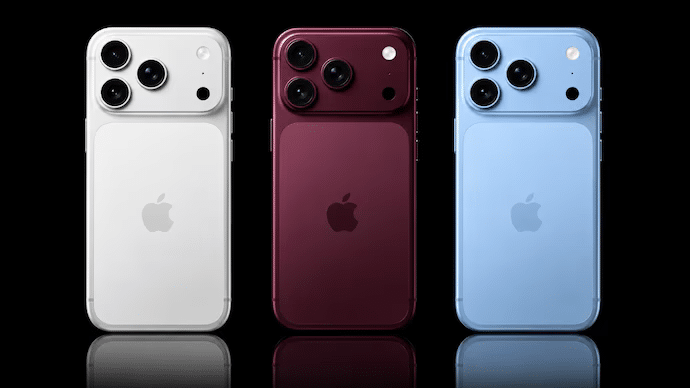
The headline upgrade sits inside the phone. Both Pro models run Apple’s A20 Pro chip, the company’s first iPhone processor built on a 2-nanometer process, paired with Apple’s second-generation C2 modem for more efficient 5G.
The camera is where Apple made its boldest move. The 48MP main camera now has a variable aperture with physical aperture blades, letting you control depth of field the way a dedicated camera does. That is a first for any iPhone.
Design changes are smaller but noticeable. The Dynamic Island has shrunk and can now display up to three Live Activities at once. Apple confirmed four official colors: Burgundy, Glacier, Silver, and Black.
| Detail | iPhone 18 Pro | iPhone 18 Pro Max |
|---|---|---|
| Chip | A20 Pro (2nm) | A20 Pro (2nm) |
| Modem | C2 | C2 |
| Main camera | 48MP, variable aperture | 48MP, variable aperture |
| Dynamic Island | Smaller, up to 3 Live Activities | Smaller, up to 3 Live Activities |
| Colors | Burgundy, Glacier, Silver, Black | Burgundy, Glacier, Silver, Black |
| US starting price | $1,199 | $1,299 |
| India starting price | Rs 1,64,900 | Rs 1,79,900 |
That is a $100 increase over the iPhone 17 Pro and iPhone 17 Pro Max in the US, which is a smaller hike than the $150 to $300 many analysts had expected once the 2-nanometer chip pushed manufacturing costs up.
If your current iPhone is holding up fine, this generation reads more like a refinement than a must-have jump, at least until camera samples and real-world battery tests start rolling in.
iPhone Duo: Apple’s First Foldable iPhone
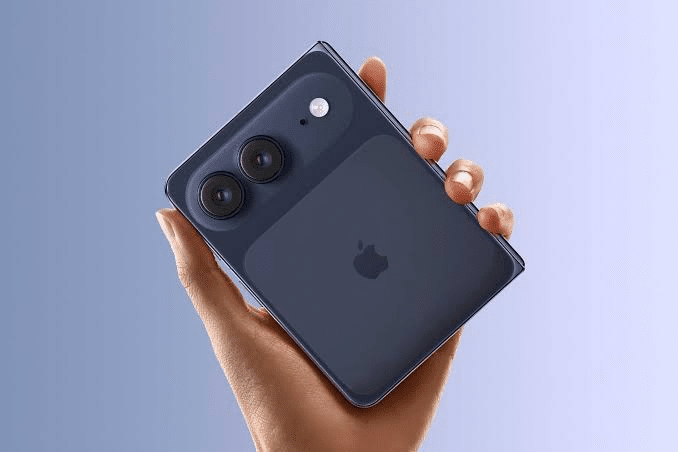
The foldable was the part of the keynote most people tuned in for, and Apple confirmed its name only hours before the event: iPhone Duo, not iPhone Ultra or iPhone Fold.
The design follows a book-style layout that opens into something closer to a small tablet. It runs the same A20 Pro chip as the Pro models, which Apple says delivers up to 35 percent higher sustained performance than the iPhone 17 Pro, paired with the in-house C2 modem. The rear camera setup carries over a 48MP Fusion main sensor with 2x telephoto and a 48MP Fusion ultra-wide borrowed from the iPhone 18 Pro, so this is not a stripped-down camera system the way early rumors suggested.
The front camera is where Apple made its real surprise move. It sits under the inner display, making this the first iPhone with an under-display FaceTime camera, while the outer cover screen keeps a conventional 12MP Center Stage camera. There is no Face ID on this model. Apple moved authentication to a side-button Touch ID sensor instead, which also supports unlocking with an Apple Watch. The phone drops the physical SIM tray entirely and runs on eSIM only, worldwide.
Battery life comes from a dual-cell design, one cell on each half of the phone working as a single unit. Apple rates that at up to 31 hours of video playback using the inner display, stretching to 44 hours if you stay on the outer screen. Durability gets similar attention: a matte nano-texture finish to cut glare and hide the crease, multi-layer lamination with adhesives that slide like book pages when folding, a titanium bottom plate, carbon fiber support plates, and a hinge built from more than 100 precision components. The whole thing carries an IP68 rating, with Ceramic Shield 2 on the front and Ceramic Shield on the back.
| Detail | iPhone Duo |
|---|---|
| Chip | A20 Pro (2nm), up to 35% faster sustained performance than iPhone 17 Pro |
| Modem | C2 |
| Inner display | 7.6-inch Super Retina XDR |
| Outer display | 5.4-inch |
| Front camera | Under-display, first on iPhone |
| Main camera | 48MP Fusion, 2x telephoto |
| Ultra-wide camera | 48MP Fusion |
| Outer camera | 12MP Center Stage |
| Battery | Up to 31 hrs video (inner) / 44 hrs (outer) |
| SIM | eSIM only, no physical tray |
| Authentication | Side-button Touch ID, no Face ID |
| Durability | IP68, Ceramic Shield 2 front, Ceramic Shield back |
| Colors | Star White, Night Sky |
| Storage | 256GB, 512GB, 1TB, 2TB |
| US starting price | $1,999 (256GB) |
| India starting price | Rs 2,99,900 (256GB) |
Apple positioned this as its thinnest iPhone yet once unfolded, with a hinge designed to keep the crease as unobtrusive as possible. It is also, unsurprisingly, Apple’s most expensive iPhone to date, and in India it becomes the most expensive consumer smartphone ever launched in the country at nearly Rs 3 lakh.
iPhone 18 Series Price: What It Costs
Confirmed US pricing puts the iPhone 18 Pro at $1,199, the iPhone 18 Pro Max at $1,299, and the iPhone Duo at $1,999 for the base 256GB model.
Apple has now confirmed official India pricing for the entire lineup as well, and it lands well above most pre-event estimates:
| Model | India Price | iPhone 17 Equivalent |
|---|---|---|
| iPhone 18 Pro | Rs 1,64,900 | Rs 1,34,900 |
| iPhone 18 Pro Max | Rs 1,79,900 | Rs 1,49,900 |
| iPhone Duo | Rs 2,99,900 | No direct predecessor |
That puts the Pro at a Rs 30,000 jump and the Pro Max at a Rs 30,000 jump over last year’s equivalents, both steeper than the roughly Rs 10,000 to Rs 20,000 hikes most analysts had predicted.
The iPhone Duo’s Rs 2,99,900 price tag makes it the most expensive consumer smartphone ever launched in India, well above the Rs 1.9 lakh to Rs 2.1 lakh range that pre-event estimates had suggested.
Pre-Orders and Release Dates
The iPhone 18 Pro and iPhone 18 Pro Max opened for pre-order on Saturday, September 12, a day later than Apple’s usual Friday slot. September 11, 2026 marked the 25th anniversary of the September 11 attacks, and Apple shifted its schedule to avoid that date. Retail availability follows on Friday, September 18.
The iPhone Duo runs on its own calendar. Apple confirmed pre-orders open October 16 at 5 am Pacific Time, with the phone reaching stores on October 23 in more than 70 countries and regions, including India. A second wave of 28 additional markets follows on October 30.
That is a meaningfully longer wait for the foldable than for the Pro models, so buyers hoping to get an iPhone Duo alongside their Pro upgrade will need to plan for two separate delivery windows.
Also Read: iPhone 18 Pro Colors: Which One Should You Choose?
iPhone 18 Pro Price in India After Cashback, EMI and Trade-In
The Rs 1,64,900 sticker price on the iPhone 18 Pro isn’t what most buyers will actually pay at checkout, and Apple’s own India page makes that clear without ever stating a single all-in number.
Here’s the part worth doing the math on yourself. Apple’s site lists six-month no-cost EMI on the 256GB iPhone 18 Pro starting at Rs 26,316 a month. Multiply that out and you get Rs 1,57,896, almost exactly Rs 7,000 below the list price. That’s not a coincidence. It lines up with the instant cashback Apple is offering through American Express, Axis Bank, and ICICI Bank cards, and the same Rs 7,000 gap shows up at every storage tier on both the Pro and Pro Max. Apple never actually writes “Rs 7,000 off” on the page. You have to reverse-engineer it from the EMI figures, which is a strange way to advertise a discount, but it’s a real one.
Worth knowing: Apple’s India terms describe a Rs 15,000 cashback ceiling across product categories generally, not an iPhone-specific number, and cap it at two transactions per card in any rolling 90-day window with a Rs 10,001 minimum spend. The Rs 7,000 figure is what’s actually landing on iPhone 18 Pro orders this launch, based on Apple’s own published EMI math, not a number pulled from a press release.
No-cost EMI only looks free if you read it that way. Banks aren’t waiving interest out of generosity. The interest still gets calculated; Apple or the bank absorbs it upfront instead of adding it to your bill. That’s why the six-month plan lands so close to the cashback price.
Standard EMI is a different story entirely. Stretch the same Rs 1,64,900 phone across a standard 12-month plan at a typical 15.99% rate, and the monthly payment drops to around Rs 14,961, but the total repayment climbs to roughly Rs 1,79,532. That’s nearly Rs 15,000 more than the sticker price for the privilege of paying slower. If a longer tenure is the only way you can make the purchase work, that’s a legitimate reason to buy, but budget from the total repayment figure, not the monthly number Apple shows you.
Trade-in credit is the least reliable part of the math. Apple’s India trade-in page doesn’t publish per-device values the way the US site does. You’ll see retailer estimates online claiming credit up to Rs 81,500 for a qualifying device, but that figure comes from resellers and analysts, not Apple’s own page, and most trade-ins will land well below the ceiling. Run your specific phone through Apple’s trade-in estimator before you count on a number.
Stack all three and the real-world cost of a base iPhone 18 Pro can drop from Rs 1,64,900 to somewhere in the Rs 75,000 to Rs 1,00,000 range for someone trading in a recent flagship on an eligible card, or stay close to full price for someone financing over 12 months with no trade-in. Same phone, wildly different actual cost, depending entirely on how you pay.
What Changes on Sale Day, September 18
Pre-orders opened on September 12. Sale day is different, and it’s worth treating it that way if you didn’t already lock in an order.
Apple’s online store and its retail partners both go live September 18, and stock allocation between the two isn’t guaranteed to move in sync. If a color or storage tier shows a later delivery date online, checking pickup availability at a nearby Apple Authorised Reseller is often the faster route back to a same-week phone, the same pattern that’s held for every Apple launch in India for years. The instant cashback and no-cost EMI offers apply at both online and in-store checkout, but retailer-specific terms, like six and twelve-month NBFC financing options through partners such as Bajaj Finance and HDB Financial, only show up at physical stores and authorised resellers, not on Apple’s own page.
If you’re buying in person, carry ID for the trade-in evaluation and confirm your card is actually on the eligible list before you’re standing at the counter. Amex, Axis Bank, and ICICI Bank cards qualify for the instant cashback; a card from any other issuer means you’re paying the full sticker price regardless of which EMI tenure you choose.
iOS 27 Landed First, Not With the Phones
Here’s a detail that’s easy to miss: iOS 27 arrived on September 14, four days before the iPhone 18 Pro and Pro Max even go on sale. Anyone with a compatible iPhone already has it. The new hardware won’t be doing anything the software isn’t already doing on last year’s phones.
That matters for anyone weighing whether to upgrade. The headline feature, a rebuilt Siri AI built with help from Google’s Gemini models, runs on any iPhone from the 15 Pro onward, not just the 18 series. If Siri AI is the reason you’re eyeing an upgrade, it’s worth installing iOS 27 on your current phone first and spending a few days with it before deciding the new hardware is actually necessary. Our complete iOS 27 feature breakdown covers what’s new in detail, and our iOS 27 compatibility list confirms whether your current phone qualifies.
Worth knowing: Apple hasn’t published bank offers for the iPhone Duo yet. Those typically surface closer to its own pre-order window, which opens October 16, so don’t expect the same cashback structure to carry over automatically.
Other Products From the Event
The iPhone was not the only announcement. Apple Watch Series 12 arrived with an updated processor and a new recording feature, starting at Rs 56,900 in India. Apple Watch Ultra 4 received a smaller internal refresh rather than a redesign, priced from Rs 1,09,900. AirPods 5 launched at Rs 14,900 for the standard model and Rs 17,900 for the version with a wireless charging case, with pre-orders open immediately and retail availability from Friday, September 18.
Yes. The device leaked for years under names like iPhone Fold and iPhone Ultra, but Apple confirmed the official name as iPhone Duo on the morning of the event.
Apple split its iPhone 18 lineup into two launches. The Pro models and the iPhone Duo arrived in September 2026, while the standard iPhone 18, the iPhone 18e, and a rumored iPhone Air 2 are expected in spring 2027.
No. Apple moved authentication to Touch ID on the iPhone Duo, likely because the slim foldable hinge left no room for Face ID hardware.
Pre-orders are expected to open September 12, 2026, with retail availability following on September 18, though Apple had not published official India dates at the time of writing.
The iPhone Duo is set for pre-order on October 16, 2026, with release on October 23, 2026, as part of Apple’s first wave of more than 70 countries and regions.
Up to Rs 7,000 through instant cashback on eligible Amex, Axis Bank, or ICICI Bank cards, paired with six-month no-cost EMI. Add a device trade-in and the total can drop further, though trade-in values vary by device and condition and aren’t published by Apple in advance.
Not exactly. The bank still calculates interest; Apple or the bank absorbs that cost upfront instead of billing it separately. Standard EMI plans beyond the no-cost window carry real interest, and a 12-month standard plan can cost close to Rs 15,000 more than paying in full.