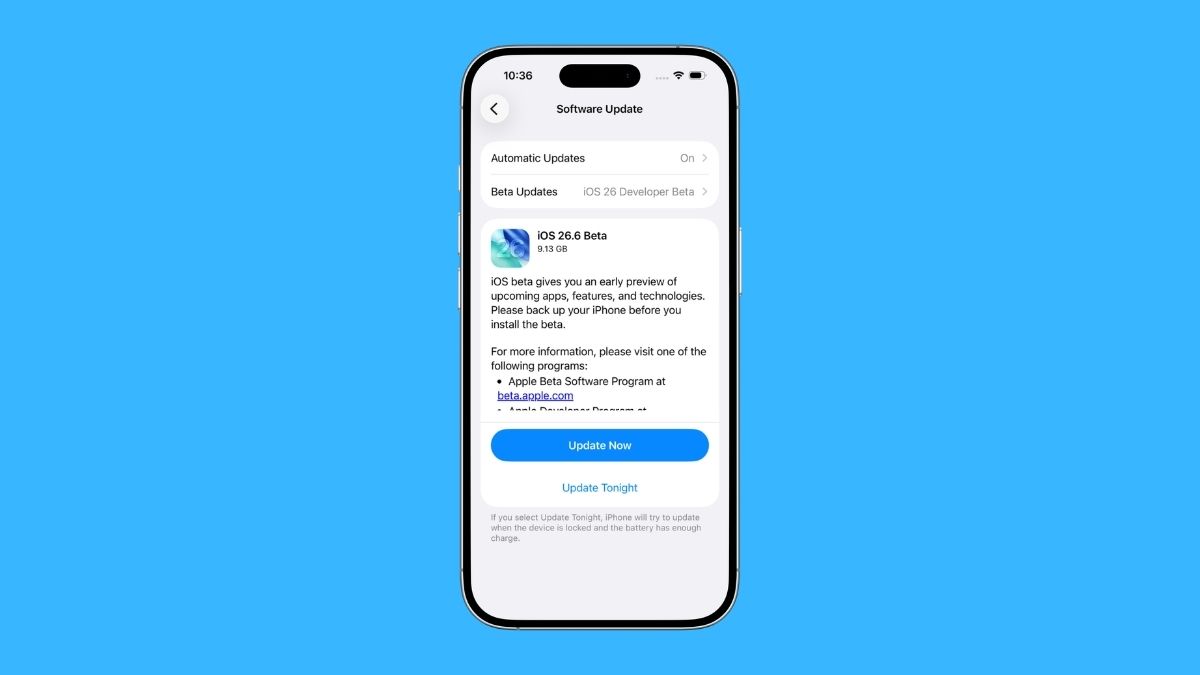
Apple isn’t quite ready to close the book on iOS 26. Just days after shipping iOS 26.5 to the public, the company quietly pushed out the first developer beta of iOS 26.6, and while it won’t set the internet on fire, it carries a couple of genuinely meaningful changes that deserve more attention than a changelog footnote.
Yes, everyone’s already mentally checked out waiting for iOS 27 to debut at WWDC 2026. But before we get there, let’s talk about what Apple actually shipped this week.
What’s New in iOS 26.6 Beta 1: The Changes That Actually Matter
Build number 23G5028e landed in developers’ hands on May 26, 2026. On the surface, iOS 26.6 follows the familiar pattern of a late-cycle .6 update: tighten things up, squash lingering bugs, and shore up security. No dramatic redesigns, no headline features, and honestly, that’s fine. What this beta does include are two under-discussed additions that real users will notice.
You Can Now Block Up to 20,000 Contacts, and iOS Will Tell You When You’ve Hit the Limit
This one sounds niche until you think about who actually needs it.
Anyone who manages a business line, runs a podcast with a public number, or has dealt with coordinated harassment campaigns knows that iOS’s blocked contacts list can quietly fill up with zero feedback. You’d tap “Block this Caller,” assume it worked, and have no idea the block never registered because you’d already hit the ceiling.
Apple releases iOS 26.6 beta 1 with a fix for exactly that frustrating silence. The new alert, titled “Blocked Contacts Limit Reached,” surfaces a clear message:
“You’ve reached the maximum number of blocked contacts. To block additional callers, remove a blocked contact in Settings.”
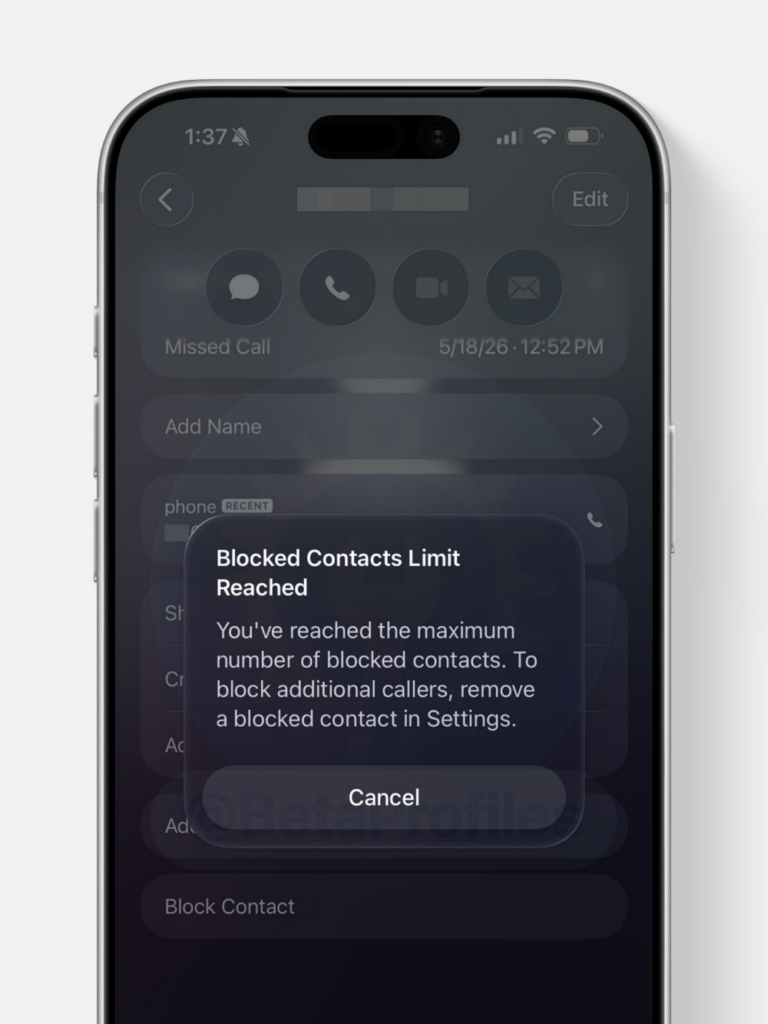
From there, users navigate to Settings > Apps > Phone > Blocked Contacts to manage their list. It’s a small UX fix with a disproportionately large impact for the people who need it most. The confirmed limit sits at 20,000 contacts, which sounds like plenty until it isn’t.
Worth noting: iOS already flags duplicate contacts and offers cleanup suggestions, so the platform is clearly moving toward a more actively managed contacts experience rather than a passive one. This alert fits that direction.
Apple Maps Gets the BlastDoor Treatment: A Quiet Security Upgrade With Big Implications
This is the more technically significant change in the first iOS 26.6 beta for iPhone, even if it’s the one getting the least attention.
To understand why it matters, a bit of history: back in iOS 14, Apple introduced BlastDoor as a sandboxing layer for iMessage. The problem it solved was severe: zero-click exploits that could compromise a device simply by receiving a message, with no user interaction required. BlastDoor isolated the message-parsing process entirely, making it exponentially harder for attackers to reach deeper parts of the operating system. Apple described it as creating “a significant obstacle for attackers to overcome” through sandbox restrictions and memory-safe validation.
What iOS 26.6 beta 1 introduces is a Maps BlastDoor framework, a parallel architecture applied to Apple Maps. Apple hasn’t published documentation on it yet, but the parallel to iMessage’s BlastDoor is hard to ignore. Maps handles a substantial amount of untrusted external data: location pings, business listings, third-party overlays, and routing data. A dedicated isolation layer for how Maps parses that data is exactly the kind of defensive architecture that protects users without them ever knowing it’s there.
It won’t show up in a screenshot. You won’t feel it. But if you care about what’s happening beneath the surface of your iPhone’s most-used navigation app, this is a real and welcome addition.
Everything Else Under the Hood in iOS 26.6 Beta 1
Beyond those two headliners, what’s new in iOS 26.6 includes the kind of systemic work that defines a mature point release:
- 183 new system files added across the build.
- Updated AI models (MD8): Incremental improvements to on-device intelligence.
- New NFC services: Specifics TBD, but likely groundwork for future functionality.
- RCS messaging refinements, building on the end-to-end encryption improvements introduced in the iOS 26.5 cycle.
- Performance and stability improvements: Early beta testers are reporting a generally smoother feel, potential battery life gains, and CarPlay fixes.
- Possible Safari and Games app adjustments surfaced in framework comparisons, though not yet confirmed as user-facing changes.
As with any early developer beta, some bugs will exist. This isn’t a build for your daily driver. It’s for developers and testers who can absorb rough edges.
Where iOS 26 Goes From Here
Apple releases iOS 26.6 as what’s almost certainly the final feature-bearing update in the iOS 26 lifecycle. Once the beta cycle wraps and the stable release ships, iOS 26 enters security-patch-only territory, the standard end-of-life pattern for a major iOS version.
That makes this beta a quiet kind of milestone. It’s the last time Apple will meaningfully add to a software cycle that introduced significant visual changes, deepened AI integration, and laid groundwork for what comes next.
And what comes next is significant. iOS 27 is expected to bring sweeping changes, including a rebuilt Siri, expanded third-party AI support, and architectural improvements that reflect where Apple wants the platform to go. The WWDC 2026 keynote kicks off June 8, and iOS 27 enters developer testing from there.
For now, though, iOS 26.6 beta 1 is doing exactly what a good late-cycle update should: fixing the things that were broken, protecting the things that matter, and leaving the stage clear for what’s coming next.
Public betas for iOS 26.6 are expected to follow shortly. Enrolled developers can access the build now through the Settings app.