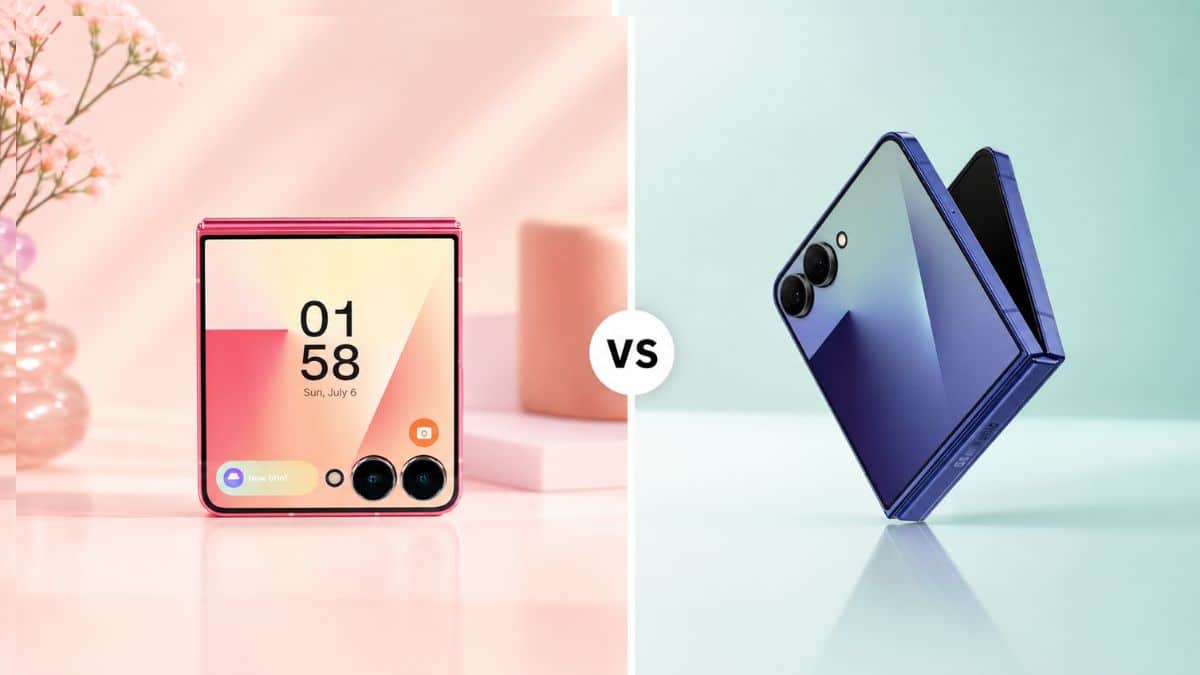
You’ve had the Galaxy Z Flip7 for a year. It still snaps shut with that satisfying click, the cover screen still turns heads at dinner, and then Samsung goes and announces a new one anyway. That’s the flip-phone treadmill: barely a year between refreshes, and every July you’re left wondering whether this is the version that finally justifies trading in a phone that already works perfectly well.
Samsung unveiled the Galaxy Z Flip8 at Galaxy Unpacked on July 22, 2026, in London, alongside the Galaxy Z Fold8, Galaxy Z Fold8 Ultra, and the new Galaxy Watch9 lineup.
Compared to the Fold8’s more dramatic redesign, the Flip8 feels like the safer, more incremental update. It keeps the same display sizes and camera hardware while slimming down the body and delivering a noticeably smarter experience through its upgraded cover screen software.
Whether that’s enough to justify upgrading depends entirely on how you use your Galaxy Z Flip7 today.
Here’s everything that changed, what stayed the same, and whether the Galaxy Z Flip8 is worth your money.
Galaxy Z Flip8 Release Date, Price, and Colors
Preorders opened on July 22, 2026, immediately following Samsung’s Galaxy Unpacked keynote. The Galaxy Z Flip8 is scheduled to begin shipping and arrive in stores on August 7, 2026.
Pricing starts at:
- Galaxy Z Flip8 (256GB): $1,199.99
- Galaxy Z Flip8 (512GB): $1,399.99
That’s a straightforward $100 increase over last year’s Galaxy Z Flip7, which launched at $1,099.99 for the 256GB model.
Samsung also refreshed the color lineup. The Galaxy Z Flip7 was available in Blue Shadow, Coral Red, and Jet Black. For the Galaxy Z Flip8, Samsung replaces those with Graphite, Cream, and Pink, while keeping Mint exclusive to Samsung’s online store.
The new finishes look great, but color alone isn’t a compelling reason to upgrade.
Galaxy Z Flip8 vs. Galaxy Z Flip7: Design Comparison
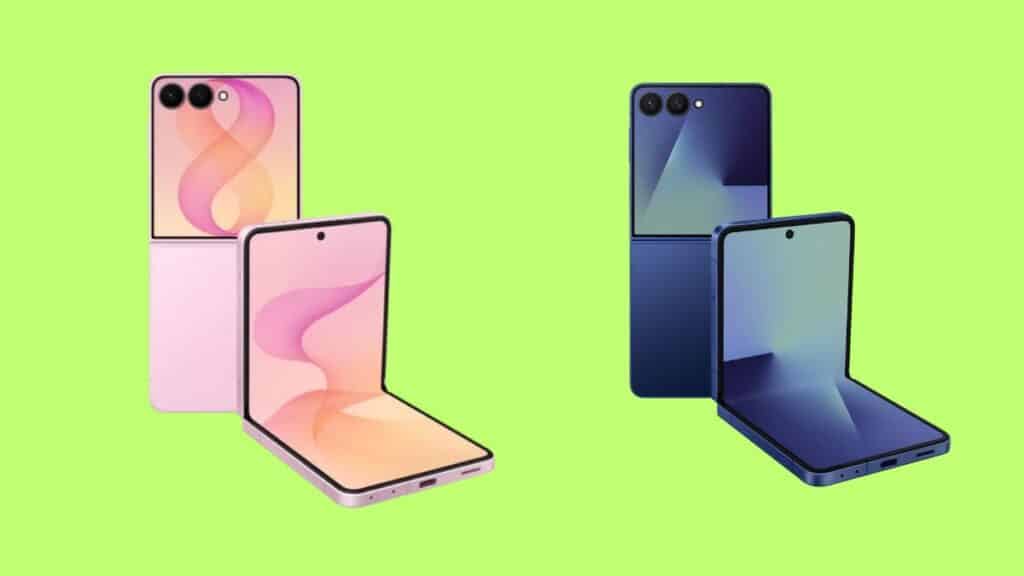
This is the first upgrade you’ll notice the moment you pick up the Galaxy Z Flip8.
Samsung has managed to make the phone noticeably slimmer without sacrificing battery capacity or durability.
The Galaxy Z Flip8 measures 6.1mm when unfolded compared to 6.5mm on the Galaxy Z Flip7.
Folded, it’s 13.1mm thick versus 13.7mm on last year’s model.
Samsung also shaved off 8 grams, bringing the Flip8 down to 180g from 188g.
On paper, those numbers don’t look dramatic.
In your hand, though, they make a bigger difference than you might expect. A thinner foldable slips into a pocket more comfortably, feels easier to grip, and makes one-handed use noticeably more pleasant.
| Feature | Galaxy Z Flip8 | Galaxy Z Flip7 |
|---|---|---|
| Thickness (Unfolded) | 6.1mm | 6.5mm |
| Thickness (Folded) | 13.1mm | 13.7mm |
| Weight | 180g | 188g |
| Durability Rating | IP48 | IP48 |
Samsung achieved much of that reduction through several engineering refinements rather than one dramatic change.
The company adopted a silicon-carbon battery, allowing it to fit the same battery capacity into a physically smaller space than a traditional lithium-ion battery.
The frame also features more pronounced beveled edges, making the Flip8 slightly easier to open with one hand.
Samsung says the hinge now uses a new high-strength material. While the company hasn’t shared many technical details, early hands-on reports suggest a titanium-alloy reinforcement beneath the display, helping reduce crease visibility over time while improving overall rigidity.
One thing that hasn’t changed is durability. Both phones continue to carry an IP48 dust and water resistance rating.
That means they’re protected against water immersion but still aren’t officially rated for fine dust the way many flagship slab phones now are. If you were hoping Samsung would finally move to IP68, you’ll have to keep waiting.
Galaxy Z Flip8 Cover Screen: The Biggest Everyday Upgrade
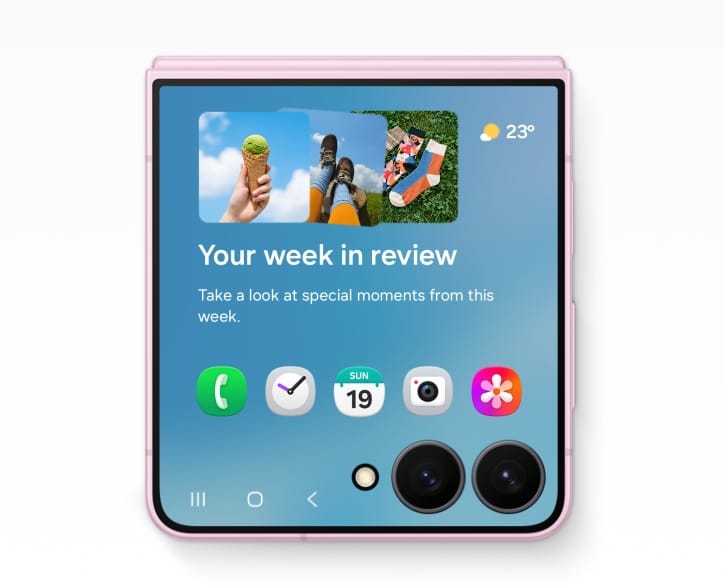
If there’s one area where the Galaxy Z Flip8 feels genuinely different from the Galaxy Z Flip7, it’s the cover screen experience.
The hardware itself hasn’t changed.
You still get a 4.1-inch Super AMOLED FlexWindow with a 948 × 1048 resolution, 120Hz refresh rate, and 2,600 nits of peak brightness.
Instead, Samsung focused almost entirely on improving what the cover display can actually do. With One UI 9, the FlexWindow becomes far more useful thanks to a redesigned Now Brief experience.
Instead of simply displaying notifications, it now surfaces weather, calendar appointments, reminders, and alerts as customizable cards that you can rearrange to suit your workflow.
Samsung has also integrated Gemini much more deeply into the cover display. You can launch Gemini Intelligence without opening the phone and even hand off more advanced tasks, such as building a travel itinerary from a collection of photos.
Another welcome addition is Gemini Notebook, which turns photos, documents, and voice recordings into concise summaries, infographics, and organized notes.
If you spend most of your time interacting with the Flip while it’s closed—checking notifications, replying to quick messages, or controlling music—this is the upgrade you’ll notice every single day.
It’s the difference between a cover display that simply shows information and one that actively helps you get things done.
Galaxy Z Flip8 vs. Galaxy Z Flip7 Performance
This year’s performance story is a little more complicated than a typical year-over-year chipset upgrade.
The Galaxy Z Flip7 shipped globally with Samsung’s Exynos 2500, marking the first time the company used its own flagship chip across every region instead of splitting processors between Qualcomm and Exynos variants.
The Galaxy Z Flip8 changes that strategy.
In the United States, Samsung equips the Flip8 with the Snapdragon 8 Elite Gen 5 for Galaxy, as confirmed through FCC filings. In most other markets, including Europe and South Korea, the phone runs on Samsung’s new Exynos 2600, built on a more advanced 2nm process.
That means your upgrade experience depends on where you buy the phone.
For buyers in the US, the Flip8 delivers Qualcomm’s latest flagship processor, bringing faster CPU and GPU performance, improved AI processing, and better power efficiency.
For buyers elsewhere, the Exynos 2600 still represents a meaningful step up over the Flip7’s Exynos 2500, even if it isn’t the same chip found in the US model.
RAM remains unchanged at 12GB, while storage options continue to be 256GB and 512GB. There’s still no microSD card slot.
If raw performance is the main reason you’re considering an upgrade, it’s worth checking which chipset your region gets before making a decision.
Galaxy Z Flip8 vs. Galaxy Z Flip7 Cameras
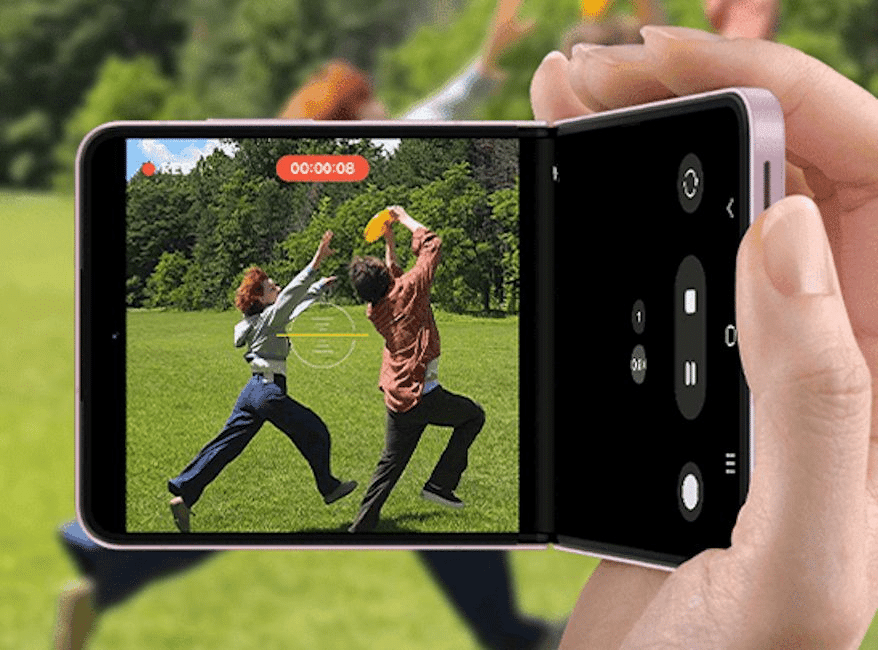
If you were hoping for new camera hardware, Samsung didn’t make that move this year.
The Galaxy Z Flip8 uses the same camera setup as the Galaxy Z Flip7:
- 50MP main camera (f/1.8) with Optical Image Stabilization (OIS)
- 12MP ultra-wide camera (f/2.2)
- 10MP front-facing selfie camera
Considering the Flip8 costs $100 more than its predecessor, that’s a perfectly fair point of criticism.
Instead of upgrading the sensors, Samsung focused on improving the software experience.
One of the biggest additions is a new Horizontal Lock mode that keeps handheld video level even when your hands aren’t perfectly steady.
Samsung has also introduced an AI-powered framing feature that automatically tracks a selected subject throughout a recording, making it especially useful for creators filming themselves without another person behind the camera.
Mirror Mode has also been improved.
The FlexWindow now runs at a higher frame rate while acting as a preview monitor, making it easier to frame selfies, check your appearance, or record videos using the main cameras.
None of these features change the quality of the photos the Flip8 captures.
Instead, they reduce the amount of effort it takes to capture better-looking content.
Battery Life: Same Capacity, Smarter Technology
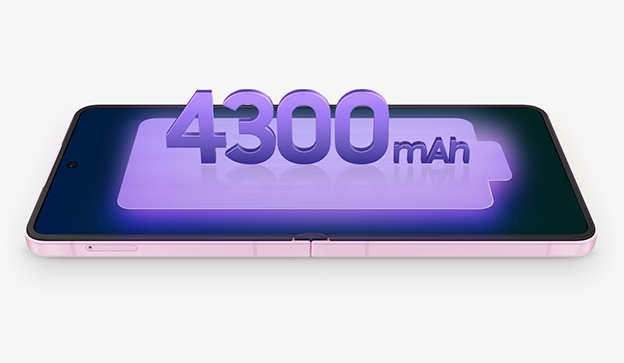
On paper, battery specifications look almost identical.
Both phones include a 4,300mAh battery.
Charging speeds also remain unchanged:
- 25W wired charging (around 55% in 30 minutes)
- 15W wireless charging
- 4.5W reverse wireless charging
The real improvement isn’t capacity—it’s efficiency.
Thanks to the new silicon-carbon battery, Samsung fits the same battery into a noticeably thinner and lighter chassis.
That doesn’t necessarily mean dramatically longer battery life. Instead, it means you get similar endurance while carrying around a smaller, lighter phone.
It’s not the kind of upgrade you’ll notice on a spec sheet, but it’s an impressive engineering achievement nonetheless.
What Hasn’t Changed?
While Samsung made several meaningful improvements, plenty of core hardware remains exactly the same.
Both phones feature:
- The same 6.9-inch Dynamic AMOLED main display
- The same 4.1-inch Super AMOLED FlexWindow
- 120Hz refresh rates on both displays
- The same display resolutions
- Peak brightness of 2,600 nits on the cover display
Software support also remains unchanged. Samsung continues to promise seven years of Android OS upgrades and security updates, a commitment that already began with the Galaxy Z Flip7.
If you’ve read claims suggesting the Flip8 extends software support beyond the Flip7, that’s simply not true.
Connectivity also stays the same, including:
- 5G
- Wi-Fi 7
- Bluetooth 5.4
When you step back and compare both phones, the upgrade isn’t spread evenly across every specification.
Instead, Samsung concentrated its efforts in three key areas:
- A thinner, lighter design
- A much smarter FlexWindow experience
- Faster processors, depending on your region
Should You Upgrade From the Galaxy Z Flip7?
If you already own a Galaxy Z Flip7 that’s working perfectly well, the Galaxy Z Flip8 feels like a genuine—but fairly focused—upgrade.
You’ll notice the slimmer body almost immediately, and the improved FlexWindow powered by One UI 9 and Gemini makes the cover display far more useful than before.
Beyond that, though, the changes become less convincing.
The camera hardware hasn’t changed.
Battery capacity is identical.
Display sizes remain the same.
Even charging speeds are unchanged.
For many Flip7 owners, those improvements may not justify paying an extra $100, especially since some software features could eventually make their way to older devices through future One UI updates.
On the other hand, if you’re upgrading from a Galaxy Z Flip6 or an even older Flip—or buying your first foldable—the Galaxy Z Flip8 is an easy recommendation.
Its thinner design, smarter software, and stronger day-to-day usability make it Samsung’s most refined clamshell foldable yet.
Final Thoughts
The Galaxy Z Flip8 isn’t trying to reinvent Samsung’s clamshell foldable. Instead, it refines an already solid formula.
The thinner design, improved FlexWindow experience, and regional processor upgrades make it a better phone than the Galaxy Z Flip7, but not dramatically so. If you’re happy with your Galaxy Z Flip7, waiting for a trade-in promotion, a price drop, or even another generation is probably the smarter move.
But if you’re coming from an older Flip—or you’re buying your first foldable—the Galaxy Z Flip8 delivers enough thoughtful improvements to make it Samsung’s best clamshell foldable to date without changing what made the Flip lineup appealing in the first place.