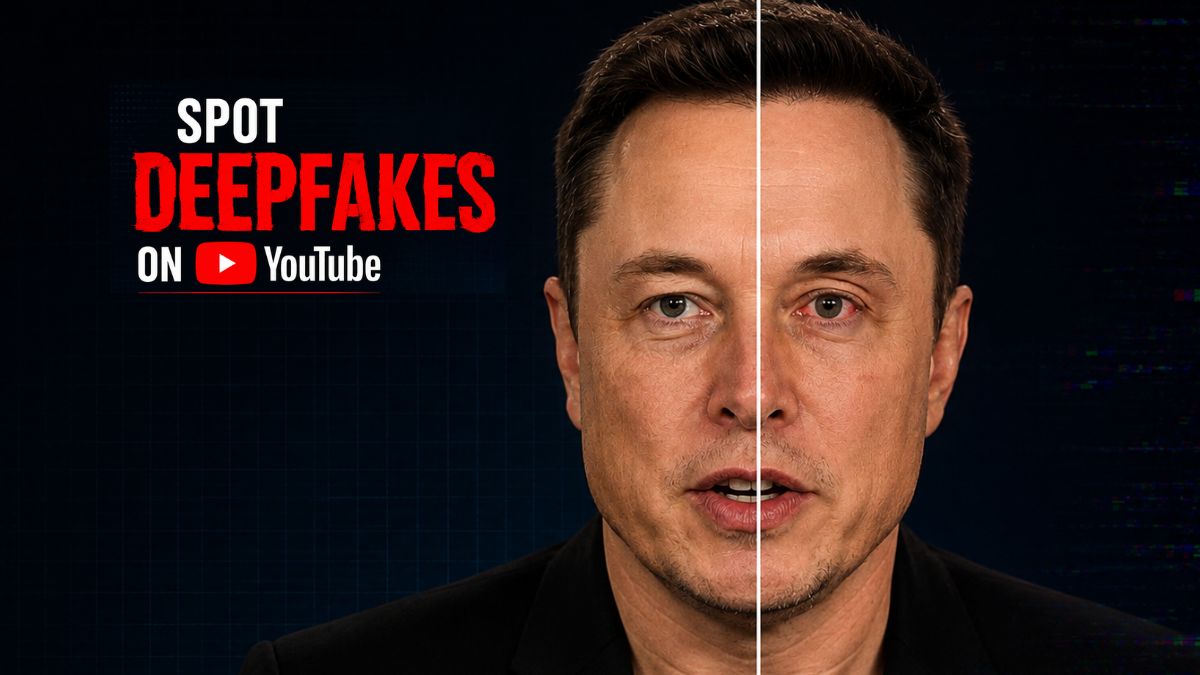
A fake video of you saying something you never said, or pushing a product you’ve never touched, used to sound like science fiction. It isn’t anymore. Deepfakes on YouTube have moved from a theoretical worry to something showing up in courtrooms, scam reports, and ordinary people’s inboxes, and the platform’s own tools are finally starting to catch up.
In response, YouTube built Likeness Detection, a system that scans the platform for AI-generated videos of your face, flags matches, and gives you a path to request removal. For the first time, it’s open to anyone with a channel, not just the celebrities and politicians it was built for.
That’s genuinely useful. It’s also not the whole answer. Here’s what the tool actually does, where it falls short, and what you need to know if you’d rather not wait around hoping you’re not a target.
What Likeness Detection Actually Does
If you’re 18 or older and have a YouTube account, you can enroll now. The sign-up bar is the same one YouTube set for celebrities and politicians: a selfie video plus a government-issued ID, submitted through YouTube Studio under Content Detection → Likeness.
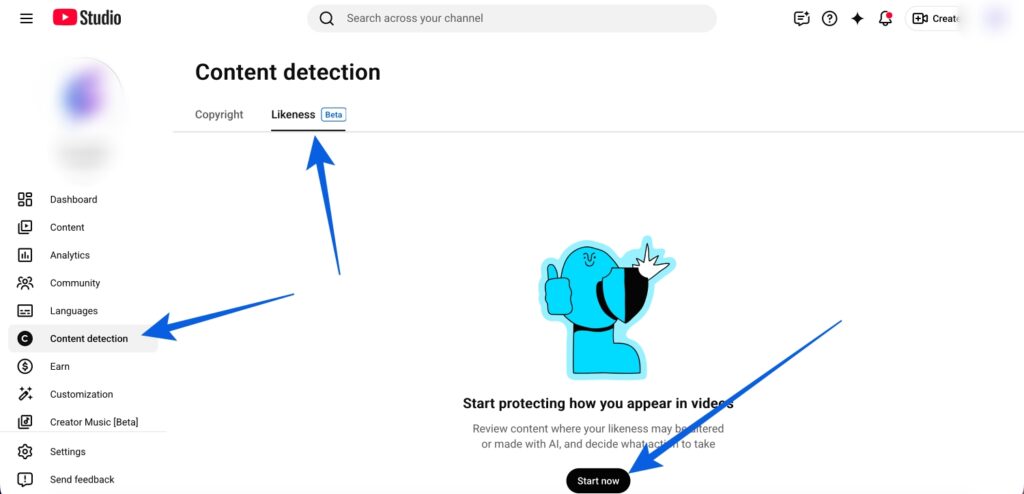
The closest comparison is Content ID, the system YouTube has used for years to catch copyrighted audio and video, except this one is scanning for faces instead of songs. Once you’re enrolled, YouTube creates what it calls a “face template,” a digital reference it uses to compare your face against new uploads going forward. When something matches, you get notified, you review the clip, and you can submit it for removal.
It’s a meaningful shift in how seriously the platform is treating this problem. It’s just not instant, and it’s not a guarantee. More on that shortly.
How YouTube Got Here
The rollout has been gradual, and the pace of it tells you something about how fast this problem has grown. YouTube launched Likeness Detection in December 2024 alongside the Creative Artists Agency, limited at first to celebrities and major talent. By April 2025 it had reached top YouTube Partner Program creators like MrBeast and Marques Brownlee, and by September 2025 it covered all 4 million Partner Program channels. This year brought two more expansions: politicians, journalists, and government officials in March 2026, then Hollywood and entertainment industry accounts in April. Now, for the first time, anyone with a channel can sign up.
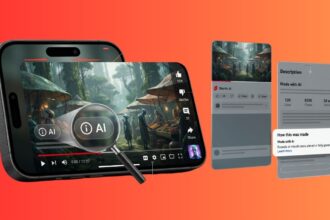
That trajectory, famous faces first and everyone else last, says a lot about how the industry has historically prioritized risk. It’s also part of a wider shift: YouTube is making AI-generated content labels mandatory across the platform, requiring creators to disclose altered or synthetic media in Studio or risk strikes, demonetization, or having the video pulled entirely. YouTube applies the same disclosure standard to its own AI-generated content.
Likeness Detection and mandatory labeling are two halves of the same strategy. One polices what’s already been posted, while the other tries to get ahead of it at upload time.
Your Data, Your Risk
Here’s the part worth slowing down for. When you enroll, you’re handing Google your face and a government ID, and that’s not a small ask regardless of how carefully the policy is worded.
YouTube says the video and ID are used only for verification and likeness detection, not to train generative AI models, and there’s a toggle that lets you opt out of having your face template used to improve YouTube’s detection systems. I’d recommend flipping that off before you finish signing up. Opting out means your data gets deleted rather than retained for model training purposes.
Whether that policy holds matters more than it might seem, because Google’s track record on data handling isn’t spotless. The company has faced a $135 million settlement over claims its Android phones transferred users’ cellular data without consent and paid a $170 million FTC penalty for how YouTube collected children’s data.
None of that means Likeness Detection is unsafe to use. It does mean “trust us” is doing a lot of work here, and policies can change long after you’ve already handed over a selfie and an ID scan.
Why YouTube Is Doing This Now
The honest answer is that the scams got too big to ignore. In early 2024, YouTube pulled more than 1,000 AI-generated ads that used deepfaked versions of Taylor Swift, Steve Harvey, and Joe Rogan to push Medicare scams, ads that had already racked up roughly 200 million views by the time they came down. A year later, in February 2025, a manipulated Tom Hanks ad promoting a fake diabetes “cure” was still live on the platform when someone flagged it.
It’s not just celebrities, either, and this is where the story gets harder to read. Criminal cases involving children are now landing in actual courtrooms: two students at Lancaster Country Day School pleaded guilty this year to creating explicit AI-generated images of their classmates, and a teacher at Corinth Middle School in Mississippi was recently sentenced for using AI to generate pornographic images using students’ faces.
Lawmakers have started catching up, slowly. The TAKE IT DOWN Act, signed in May 2025, covers sexually explicit deepfakes specifically. The broader NO FAKES Act, which would extend federal protection against unauthorized use of someone’s likeness more generally, still hasn’t passed. Groups like the Electronic Frontier Foundation have pushed back on it, arguing the current draft would sweep up legitimate satire and parody along with the harmful material it’s meant to stop.
What Likeness Detection Won’t Do for You
It’s worth being clear-eyed about the limits here, because the tool’s name oversells what it can promise.
Detection isn’t immediate. YouTube hasn’t said how long an initial scan takes, which isn’t much comfort if you’ve just discovered a fake of yourself and are learning about the tool for the first time.
Removal isn’t guaranteed, either. YouTube still permits satire and parody, so a fake of you might legitimately stay up even after you’ve flagged it.
If a deepfake has already spread across several channels, you’ll be filing a separate removal request for each one, with no published timeline and no stated penalty for whoever posted it.
And voice clones aren’t covered at all right now. This is a face-only system, at least for now.
In short, Likeness Detection is a smoke detector, not a fire extinguisher. It tells you something’s wrong faster than you’d otherwise find out. It doesn’t put the fire out for you.
How to Spot Deepfakes on YouTube
Platform tools will keep improving, but they’ll never be the only thing standing between you and a convincing fake. The faster, more reliable skill is training your own eye, and even the most advanced deepfakes still tend to leave tells if you know where to look.
Start with the visuals. Watch for:
- Blurry or distorted faces
- Blinking that looks slightly unnatural
- Lip movements that don’t sync with the audio
- Lighting or shadows that don’t match the scene
- Skin or hair texture that appears overly smooth or artificial
Glitches tend to show up most during fast movement or quick turns of the head. Sometimes the background itself gives it away, with physics that don’t quite add up or a setting that doesn’t match the supposed location.
Audio has its own clues:
- A voice that sounds robotic or flat
- Emotional tone that doesn’t match the words being spoken
- Missing pauses, breaths, or natural speech patterns
Then there’s the content itself. Be wary of anything that feels too polished, too urgent, or designed to provoke an immediate emotional reaction, especially shocking claims that aren’t being reported anywhere else.
A quick context check goes a long way:
- Review the channel’s upload history
- Check when the video was posted
- Read the comments
- Compare reports from trusted news outlets
- Use reverse image search on key frames
One simple trick catches more than you’d expect: slow the video down, or watch it on a bigger screen than your phone. Artifacts that are invisible at normal speed on a small display often become obvious the moment you give yourself a better look.
Practical Ways to Protect Yourself as a Viewer
Spotting a fake in the moment matters, but protecting yourself from YouTube deepfakes is really a set of habits, not a single skill.
Default to Skepticism, Not Reaction
Before you like, share, or act on something alarming or urgent, pause. Cross-check it against a couple of credible sources first. Most viral deepfakes fall apart the moment you look for independent confirmation.
Use Detection Tools as a Second Opinion
Browser extensions like the Resemble AI Deepfake Detector, free scanners such as Deepware or Microsoft’s Video Authenticator, and C2PA provenance validators can all flag manipulation that’s hard to catch by eye.
None of them are infallible, but stacking a tool check on top of your own judgment catches more than either one alone.
Verify Before You Act
If you get an unexpected request, a “family member” needing emergency funds or a “colleague” asking for sensitive details, don’t respond through the same channel it arrived on.
Call the person directly, use a pre-agreed safe word if it’s a close family member, or confirm in person before taking action.
Reduce Your Own Exposure
Limiting how much high-quality video or audio of yourself you post publicly makes you a harder target to clone in the first place. Turning on two-factor authentication everywhere also closes off one of the easiest paths scammers use once they’ve got a convincing fake to work with.
If you spot a deepfake on YouTube, use the report button. If it’s tied to fraud or scams, report it to the FBI’s IC3 as well.
If You’re the One Being Targeted
Report it to the platform and to law enforcement. If it involves intimate or sexual imagery, organizations like the Cyber Civil Rights Initiative specialize in exactly this kind of harm.
It’s also worth speaking with a lawyer, particularly while laws like the NO FAKES Act are still being debated and refined.
Should You Enroll in Likeness Detection?
If you show up in videos with any regularity, even to a modest audience, enrolling means YouTube’s systems are actively watching for fakes of you instead of you finding out by accident, possibly after a fake has already been circulating for days.
The alternative is doing nothing and hoping you never become a target, which isn’t really a strategy.
If you do sign up, opt out of the model-improvement setting before you finish. Your face and your government ID will already be sitting with Google, and YouTube’s current policies are exactly that: current. What looks like a reasonable trade-off today might read very differently in two or three years.
Deepfake technology and deepfake detection are locked in an arms race, and neither side is winning outright. No single tool, YouTube’s or otherwise, is going to be 100% reliable for long.
The realistic approach is layering them: your own judgment, a verification habit, and the platform features now available to you. Policies in this space are moving fast enough that it’s worth checking back periodically. YouTube’s official blog and reputable cybersecurity outlets remain the most reliable places to watch for what changes next.