
Google released the Pixel 10a on February 18, 2026 and within hours, comparisons between the Pixel 10a and Pixel 10 flooded tech forums.
The big question: Is the budget version good enough, or should you stretch for the full Pixel 10 experience? After comparing the Pixel 10a and Pixel 10 spec by spec and reviewing hands-on coverage from launch day, the answer isn’t as obvious as the price difference suggests.
The Pixel 10a costs $499. The Pixel 10 costs $799, though it routinely sells for around $699, and sometimes as low as $600 during sales. That $200 – $300 gulf is real money. But the question isn’t really about dollars. It’s about what you’re willing to give up, and which trade-offs are actually invisible in everyday use versus which ones will haunt you six months from now.
Design: The Flattest Phone in Years vs. Something That Feels Flagship

The Pixel 10a might be the most physically comfortable Android phone released in years. For the first time in what feels like forever, it has a completely flush back, so no camera plateau and no wedge-shaped gap when it rests on a table. It just lies flat. Google apparently invested significant engineering effort to achieve this, and the result looks satisfying.
The Pixel 10, by contrast, sports the protruding camera visor that’s become a Pixel trademark, and for many people, that visor is part of the phone’s identity. It’s a statement piece in a sea of iPhones and Samsung slabs. Both phones share 6.3-inch FHD+ OLED displays with 3,000-nit peak brightness and 120Hz refresh rates, so the viewing experience is essentially identical. The Pixel 10a uses Gorilla Glass 7i up front (a meaningful upgrade over the 9a’s Glass 3), while the Pixel 10 uses Gorilla Glass Victus 2, which is marginally more durable, but neither phone is fragile.
Where the design gap becomes more tangible is in materials and biometrics. The Pixel 10a has a plastic back; the Pixel 10 has a glass back. And the Pixel 10a relies on an optical fingerprint sensor, which tends to be slightly slower and less reliable than the ultrasonic sensor in the Pixel 10. These aren’t dealbreakers, but they’re the kinds of things you notice after a few months of daily use. Both phones are IP68-rated for water and dust resistance—that much, at least, is equal.
Performance and AI: The Chip Gap Nobody Saw Coming

This is where things get interesting and a little contentious. For the first time in Pixel A-series history, Google broke its own rule: the Pixel 10a does not share a chip with the rest of the Pixel 10 family. Instead of the Tensor G5 (a TSMC-manufactured 3nm chip powering the Pixel 10, 10 Pro, and 10 Pro XL), the Pixel 10a runs the older Tensor G4, which is the same processor found in last year’s Pixel 9a.
In raw, everyday performance – scrolling, messaging, streaming – you likely won’t feel the difference. Both chips handle these tasks without complaint. But the G5 brings a reported 34% faster CPU, 60% more powerful neural processing unit (TPU), and access to on-device AI features like Magic Cue and Voice Translate with voice mimicry, none of which are available on the G4.
Then there’s RAM: the Pixel 10a has 8GB; the Pixel 10 has 12GB. In 2026, as AI features grow more demanding and on-device processing becomes the norm, that extra memory isn’t just a spec sheet flex. It’s the difference between a phone that keeps pace with software updates over seven years versus one that starts feeling sluggish by year four. Both phones carry Google’s seven-year update promise, but raw longevity and quality of experience over those seven years aren’t the same thing.
Cameras: Dual vs. Triple, and Why That Third Lens Actually Matters
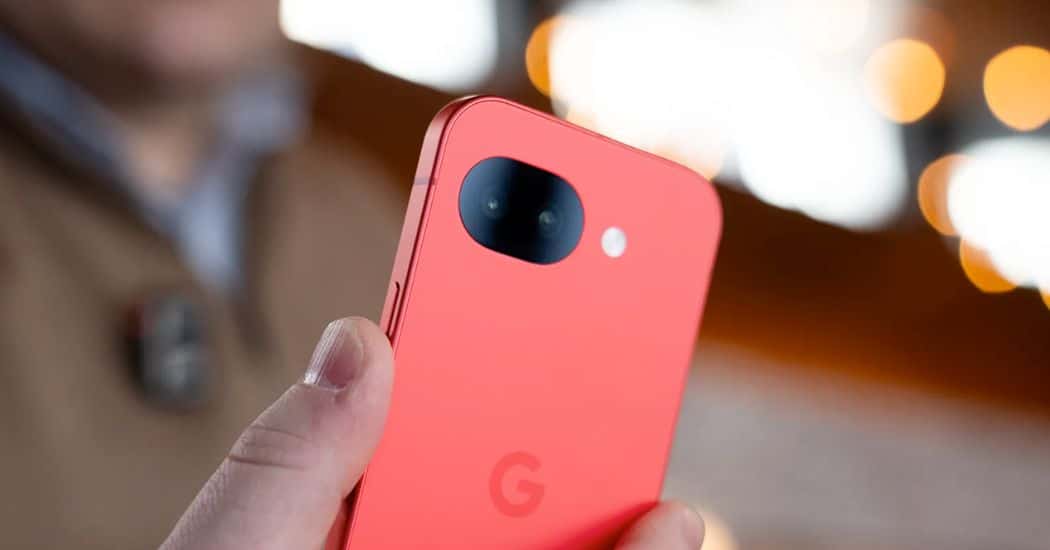
At close range and in ultrawide mode, these two phones are effectively identical. Both carry a 48MP main sensor (f/1.7) and a 13MP ultrawide (f/2.2), and Google’s computational photography engine is exceptional on both. For portraits, food shots, everyday street photography, and social media content, either phone will produce images indistinguishable from the other.
The moment you zoom in, the story changes. The Pixel 10 adds a 10.8MP telephoto lens with 5x optical zoom and Super Res Zoom up to 20x. The Pixel 10a has no telephoto; it tops out at 8x digital zoom, which produces noticeably softer images at a distance. For concert shots, wildlife, sports, travel, or architecture (anything where you’re physically unable to move closer), the Pixel 10’s telephoto is quite transformative. It’s not the sophisticated periscope found on the Pro models, but it’s real optical zoom versus none at all.
The Pixel 10a does get Camera Coach, an AI tool that suggests composition improvements in real time, as well as Auto Best Take. Both are solid additions for casual photographers. But if you regularly find yourself wishing you could pull a distant subject closer without sacrificing image quality, the Pixel 10a will leave you wanting.
Battery, Charging, and the Bottom Line
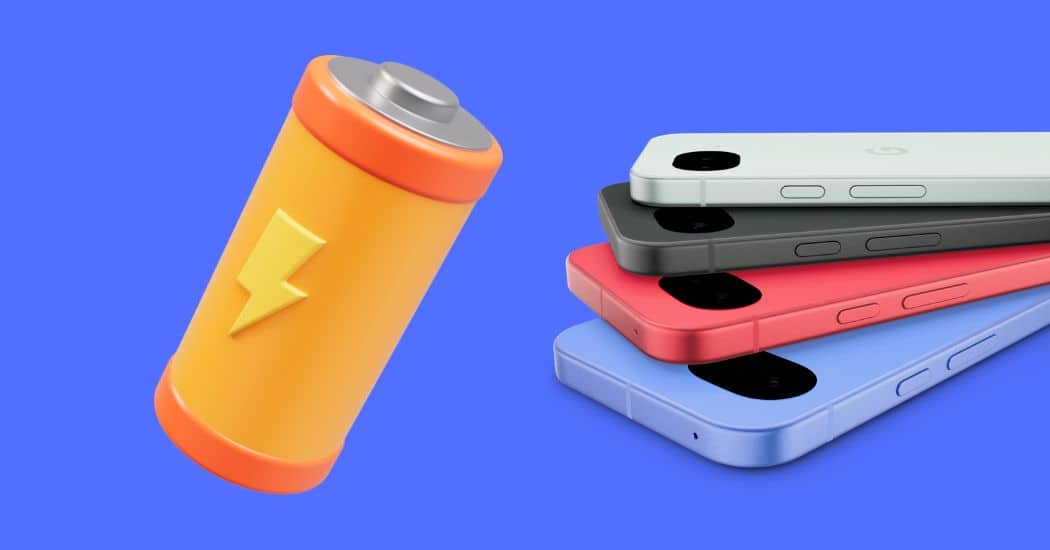
The Pixel 10a packs a 5,100mAh battery, which is slightly larger than the Pixel 10’s 4,970mAh cell, and should offer comparable or marginally better all-day endurance, though the G5’s greater efficiency partially offsets the capacity advantage. More impressive is the charging: the 10a supports 45W wired charging (versus the Pixel 10’s 30W), meaning it replenishes faster when plugged in.
Wireless charging is where the Pixel 10 pulls ahead. It supports Qi2 at 15W with the Pixelsnap magnetic attachment, Google’s answer to MagSafe, and is compatible with the growing ecosystem of magnetic accessories. The Pixel 10a offers 10W Qi wireless charging but no Pixelsnap. If you’re already living with Qi2 accessories such as chargers, mounts, and wallets, the omission stings. If you’re not yet invested in that ecosystem, it’s easy to overlook.
One area where the Pixel 10a surprises: it’s the first A-series Pixel to include Satellite SOS, which is an emergency messaging via satellite when cellular coverage fails. The Pixel 10 has it too, so this isn’t an advantage unique to the budget phone, but it’s a notable inclusion that raises the floor of what a $499 device can do in 2026.
Pixel 10a vs Pixel 10: Which Should You Buy?
So where does that leave us? The Pixel 10a is a competent, honest phone at a fair price. Its flat back is delightful, its camera performs well in everyday scenarios, and 45W wired charging is faster than the Pixel 10’s. For someone upgrading from a Pixel 7 or 8, or from a non-Google Android device, it’s a meaningful step forward.
But the Pixel 10 is the more complete device. The telephoto lens alone is worth serious consideration for anyone who photographs the world beyond arm’s reach. The Tensor G5 and 12GB of RAM give it a longer useful life. Pixelsnap opens a richer accessory ecosystem. And given that the Pixel 10 frequently sells for $699, sometimes $600, the real gap between the two may be closer to $100 or $200 than the MSRP suggests.
The Pixel 10a is not a bad phone. It’s a thoughtful compromise. Whether that compromise works for you depends entirely on which features you’d actually miss and which ones you were never using in the first place.
You might also like: