You’re standing in the Google Store checkout flow, and the Pro model is sitting right there for $200 more. It’s tempting. It always is. Google is very good at making the more expensive phone look like the obviously smarter buy, even when half the upgrades on the spec sheet won’t change a single thing about how you actually use your phone.
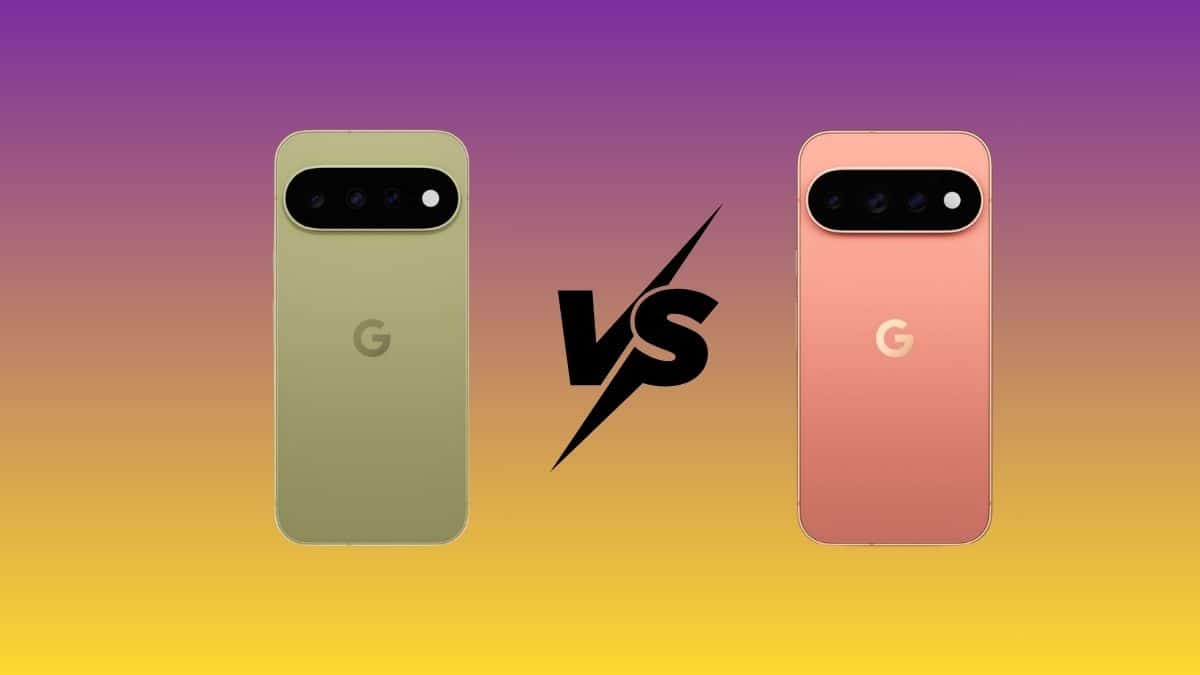
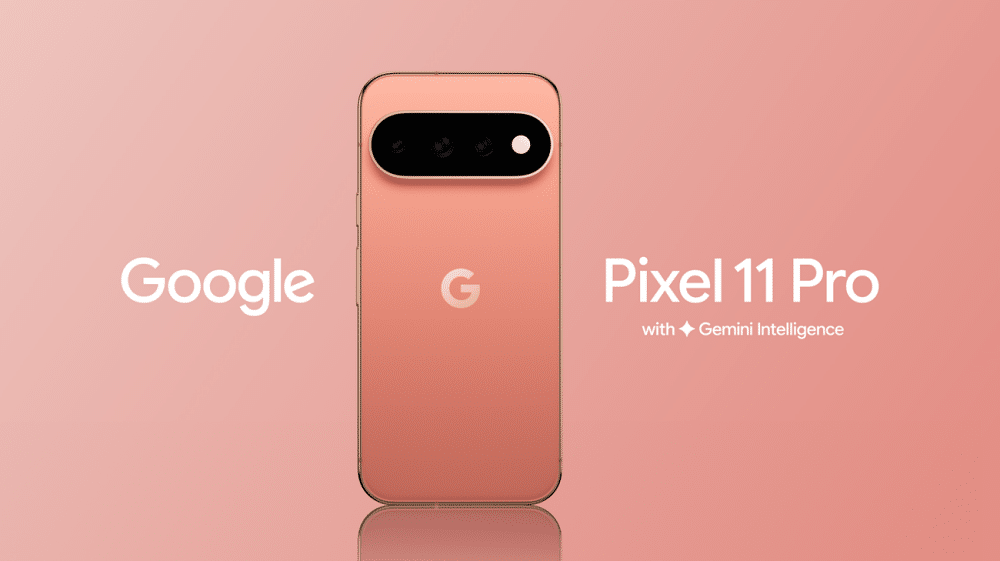
Google made both official on August 12, 2026, unveiling the Pixel 11, Pixel 11 Pro, and Pixel 11 Pro XL at an event in New York City. Pre-orders opened the same evening, with phones shipping to buyers starting August 20. Both the base model and the Pro share the same 6.3-inch screen size and the same Tensor G6 chip, which is exactly why the real differences are easy to miss if you’re just skimming a spec sheet.
Here’s what genuinely separates the two, and what’s just marketing padding you can safely ignore.
Pixel 11 vs Pixel 11 Pro at a Glance
| Feature | Pixel 11 | Pixel 11 Pro |
|---|---|---|
| Starting price | $899 with 256GB storage | $1,099 with 256GB storage |
| Display | 6.3 inch Actua OLED, 1080 x 2424, 60Hz to 120Hz | 6.3 inch Super Actua LTPO OLED, 1280 x 2856, 1Hz to 120Hz |
| Main camera | 48MP wide | 50MP wide |
| Ultrawide camera | 13MP | 48MP |
| Telephoto camera | 10.8MP 5x telephoto | 48MP 5x telephoto |
| RAM options | 12GB | 12GB or 16GB depending on storage |
| Storage options | 256GB and 512GB | 256GB, 512GB, and 1TB |
| Battery | 4,985mAh | 4,850mAh |
| Exclusive features | None | HiLight LED notifications, WiFi 7, Ultra Wideband, Google AI Pro trial |
1. The Camera Gap Is Wider Than the Megapixel Numbers Suggest
This is where your money actually goes. The Pixel 11’s main sensor is 48MP on a 1/1.56-inch sensor. The Pro’s main sensor is 50MP on a 1/1.3-inch sensor, noticeably larger, which is the number that actually determines how much light hits the sensor in a dim restaurant or at a show after sundown.
The ultrawide tells a similar story. The Pixel 11’s 13MP ultrawide is fine for daylight landscape shots, but it has no autofocus, so close-up shots come out soft. The Pro’s 48MP ultrawide adds autofocus and a much bigger 1/2.55-inch sensor, which also doubles as a passable macro lens.
Both phones keep a 5x telephoto lens, but the Pro’s version jumps to 48MP with a larger 1/1.95-inch sensor and roughly 30% better light sensitivity than the standard model’s 10.8MP unit, and it pushes digital zoom out to 120x versus the base model’s 30x. Google also says the Pro’s Instant Night Sight processes low-light shots up to 4.5 times faster, plus it gets 8K video and a 50MP high-resolution manual mode that the standard Pixel 11 doesn’t offer.
Selfies show the same split: 10.5MP on the Pixel 11 versus 42MP with a wider field of view on the Pro, useful if you regularly cram a group into a frame.
Who should care: anyone who shoots a lot of low-light photos, uses zoom regularly, or wants close-up detail shots. If your photography mostly happens in daylight and you rarely zoom past 5x, the standard Pixel 11’s camera is genuinely good enough, and you won’t miss what you’re not using.
We broke down the Pixel 10’s camera stack in a similar level of detail last year, and this generation’s gap follows the same pattern, just with bigger numbers.
2. The Pro Display Is a Real Upgrade, Not a Marketing Bump
Both phones are 6.3 inches, so at a glance they look identical. They aren’t. The Pixel 11 runs a 1080×2424 Actua OLED panel at 422 pixels per inch with a 60-120Hz refresh range. The Pro steps up to a 1280×2856 Super Actua LTPO panel at 495ppi, with true LTPO scaling all the way down to 1Hz.
That lower floor matters more than it sounds: it’s what lets the screen stay bright and responsive during scrolling while sipping less battery when you’re just looking at a static screen, like reading an email.
Peak brightness climbs too, from 3,000 nits on the standard model to 3,600 nits on the Pro, genuinely noticeable the next time you’re trying to read a text message in direct August sun. The Pro also adds an anti-scratch coating Google says offers more than double the scratch resistance of the standard glass.
Is any of this a dealbreaker? Honestly, no. Side by side, most people would need a few minutes of comparing to spot the resolution difference. But if you’re someone who notices banding in gradients or you’re outdoors constantly, the Pro’s screen is a genuine upgrade, not just a bigger number on a spec sheet.
3. RAM and Storage Ceilings Diverge Once You Go Big
Here’s a detail that’s easy to miss because Google buries it in the fine print: both phones start at 12GB of RAM. The Pixel 11 stays at 12GB no matter which storage tier you pick (256GB or 512GB). The Pixel 11 Pro also starts at 12GB on its base 256GB configuration, but bump up to the 512GB or 1TB tiers and RAM jumps to 16GB.
Why does this matter beyond multitasking headroom? Gemini Nano, the on-device AI model powering features like Magic Cue and real-time call summaries, runs faster with more memory to work with, and Google has said Tensor G6 processes Gemini Nano tasks up to 3.5 times faster while using proportionally less power.
More RAM gives the model more room to keep context loaded without swapping, which is the kind of thing you only notice when it fails, like an AI summary that takes a beat too long to appear. We covered the broader rollout of these features in our look at the Pixel 10’s AI capabilities, and Tensor G6 builds directly on that foundation.
Storage matters here too. Neither phone offers a 128GB tier this year; Google dropped it across the whole lineup, so 256GB is now the floor. But only the Pro goes up to 1TB. If you shoot a lot of 8K video or keep a large offline media library, that ceiling is worth the extra cost. If you’re a cloud-storage person who rarely fills a phone past half capacity, it isn’t.
4. The Real Price Gap Is Bigger Than $200
The advertised gap between the two phones is $899 versus $1,099, a $200 difference at the entry tier. But that’s only the starting point. Once you factor in matching storage and RAM, the actual gap widens considerably:
- 256GB: Pixel 11 at $899 vs. Pixel 11 Pro at $1,099 ($200 gap)
- 512GB: Pixel 11 at $1,019 (still 12GB RAM) vs. Pixel 11 Pro at $1,219 (now 16GB RAM) ($200 gap, but the Pro also gets a RAM bump you can’t buy on the base model)
- 1TB: only available on the Pro, at $1,449
So the base Pixel 11 tops out at 512GB for $1,019; no 1TB option exists at any price. If storage headroom matters to you, the Pro isn’t optional; it’s the only way to get there.
Worth knowing: Pro buyers also get six months of Google AI Pro included, a subscription Google separately values at $119.94, which covers expanded Gemini usage, 5TB of cloud storage, and Google Health Premium. That’s a real discount if you were going to subscribe anyway, and worth nothing if you weren’t.
5. Design Touches and Features You Only Get on the Pro
A few things live exclusively on the Pro tier and never trickle down to the standard model. HiLight is the most visible one: a strip of individually colored LEDs built into the camera bar that lights up for incoming calls or when Gemini finishes responding, even while the phone is sitting face-down on a table. It’s a genuinely clever answer to the “I heard my phone buzz but don’t want to flip it over” problem, and it’s Pro-only.
According to Engadget’s hands-on coverage, the Pro also picks up Wi-Fi 7 and ultra-wideband support for more precise device-finding, while the standard Pixel 11 sticks with Wi-Fi 6E. Both phones ship with Google’s Titan M3 security chip and post-quantum cryptography support, so security itself isn’t a differentiator this year, despite some early reports suggesting otherwise.
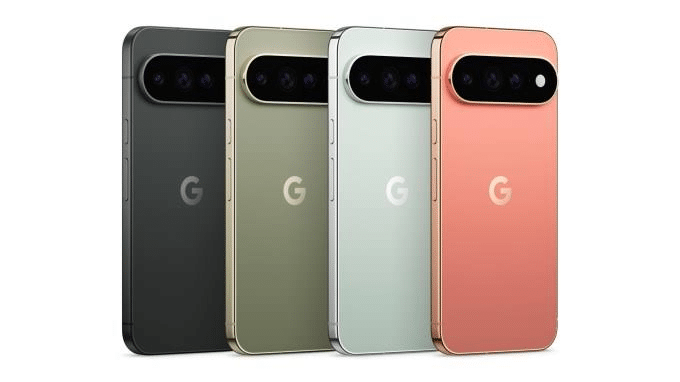
Color options split too: the standard Pixel 11 comes in brighter Frost, Hibiscus, Pistachio, and Obsidian, while the Pro leans into more restrained Canyon, Fog, Olive, and a matte Obsidian finish.
None of these are individually worth $200. Together, if HiLight or the faster Wi-Fi standard genuinely appeals to you, they’re a reasonable tiebreaker once you’ve already decided the camera and display upgrades matter.
Where the Two Phones Are Basically Twins
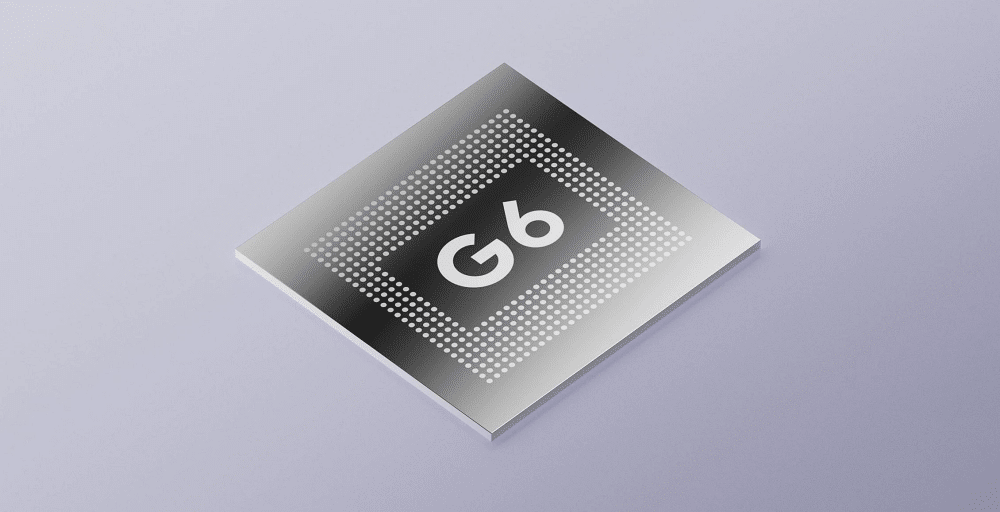
It’s worth spelling out what doesn’t change, because Google’s marketing rarely emphasizes this part. Both phones run the identical Tensor G6 chip built on TSMC’s 2-nanometer process, so raw performance, app launch speed, and everyday responsiveness are effectively the same. That chip is a direct successor to the Tensor G5 Google introduced in the Pixel 10 series, and the generational jump applies equally to both phones this time, not just the Pro.
Charging is identical too: both support up to 55% charge in 30 minutes on a 30W wired charger and up to 25W wireless charging over the new Qi2.2 standard. If you’re shopping for a compatible charger, our PixelSnap charger alternatives guide still applies to either model.
Battery capacity is close enough to be a non-issue, and here’s the genuinely surprising part: the standard Pixel 11’s 4,985mAh cell is actually larger than the Pro’s 4,850mAh battery. Google rates both at roughly 30-plus hours of typical use, so don’t let the Pro’s premium price tag fool you into assuming it wins on battery life. It doesn’t.
Software support is a dead heat as well. Both launch on Android 17 with seven years of OS, security, and Pixel Drop updates, matching the commitment Google made starting with the Pixel 8 series.
If you want to double-check what you’re currently running before deciding whether an upgrade even makes sense, our guide on checking your current Android version walks through it in under a minute.
Final Thoughts
The Pixel 11 and Pixel 11 Pro share a chip, a screen size, and a charging standard, but the camera system is where Google draws the real line between the two, and the RAM ceiling and storage headroom follow close behind.
If you’re a casual shooter who mostly wants a reliable phone that takes good daylight photos and gets timely updates, the standard Pixel 11 covers that without asking you to pay for hardware you won’t use.
If you shoot in low light often, want the biggest zoom range Google offers, or plan to keep the phone long enough that 16GB of RAM and a 1TB ceiling actually matter, the Pro earns its $200-plus premium. Either way, you’re not buying a downgrade this year, just a different set of trade-offs.