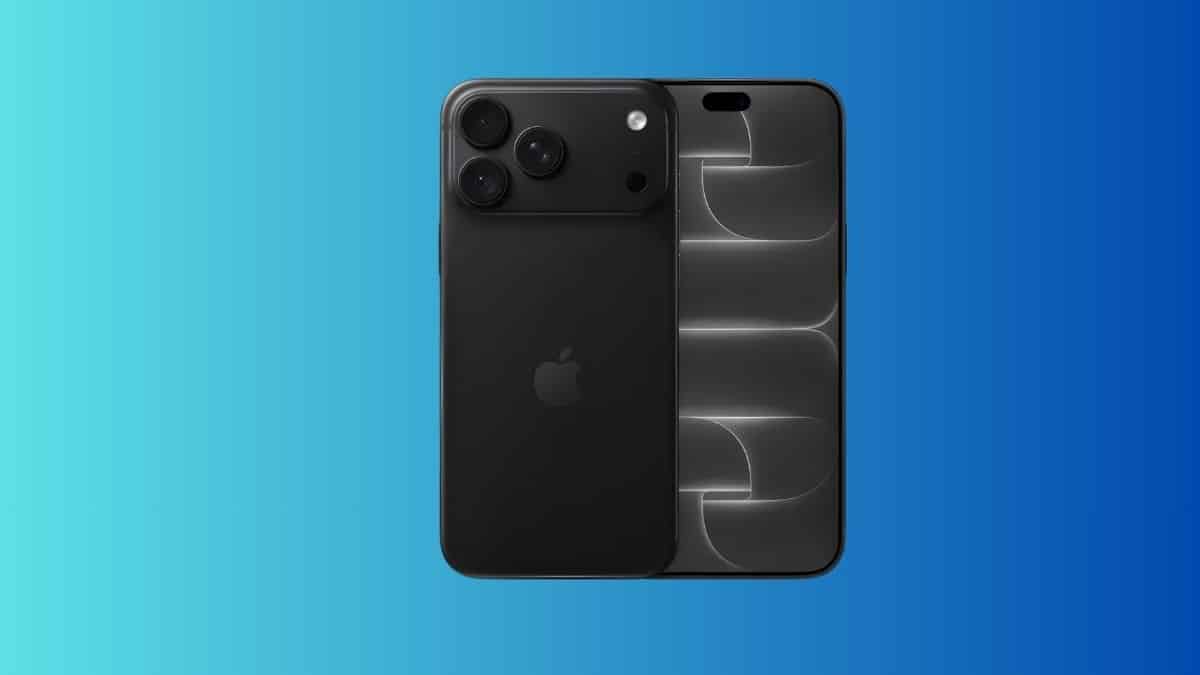
The iPhone 18 Pro Max ships with Ceramic Shield 2, and Apple’s marketing around it is enough to make anyone assume the phone can handle a bare pocket. Independent durability testing tells a more specific story. The glass has consistently scratched at level 6 on the Mohs hardness scale, with deeper grooves showing up at level 7, which is roughly the hardness of quartz and fine sand.
Everyday pocket contents like keys and coins generally will not mark it, but sand, grit, and concrete dust genuinely can. Apple has also never published its own Mohs figure. Its official claim is that Ceramic Shield 2 offers meaningfully better scratch resistance than the previous generation, not a specific hardness number, so any figure you see attached to it comes from third-party lab testing rather than Apple itself.
A screen protector is not there to replace the glass Apple already built. It is there to take the daily abuse instead of the screen underneath it, and to be the ten-dollar part that cracks instead of the several-hundred-dollar one. With a 6.9-inch display and a replacement screen that costs more than most of these protectors combined, picking the right one before the phone leaves the box is worth the five minutes it takes to read this.
5 Best Screen Protectors for iPhone 18 Pro Max
These five cover a real spread of use cases rather than five versions of the same tempered glass. Two are privacy-focused, one leans hard into drop protection, one is the premium pick, and one is the no-frills option for people who just want their screen covered without thinking about it further. Pricing below reflects current Amazon listings.
1. Spigen GlasTR EZ Fit Privacy
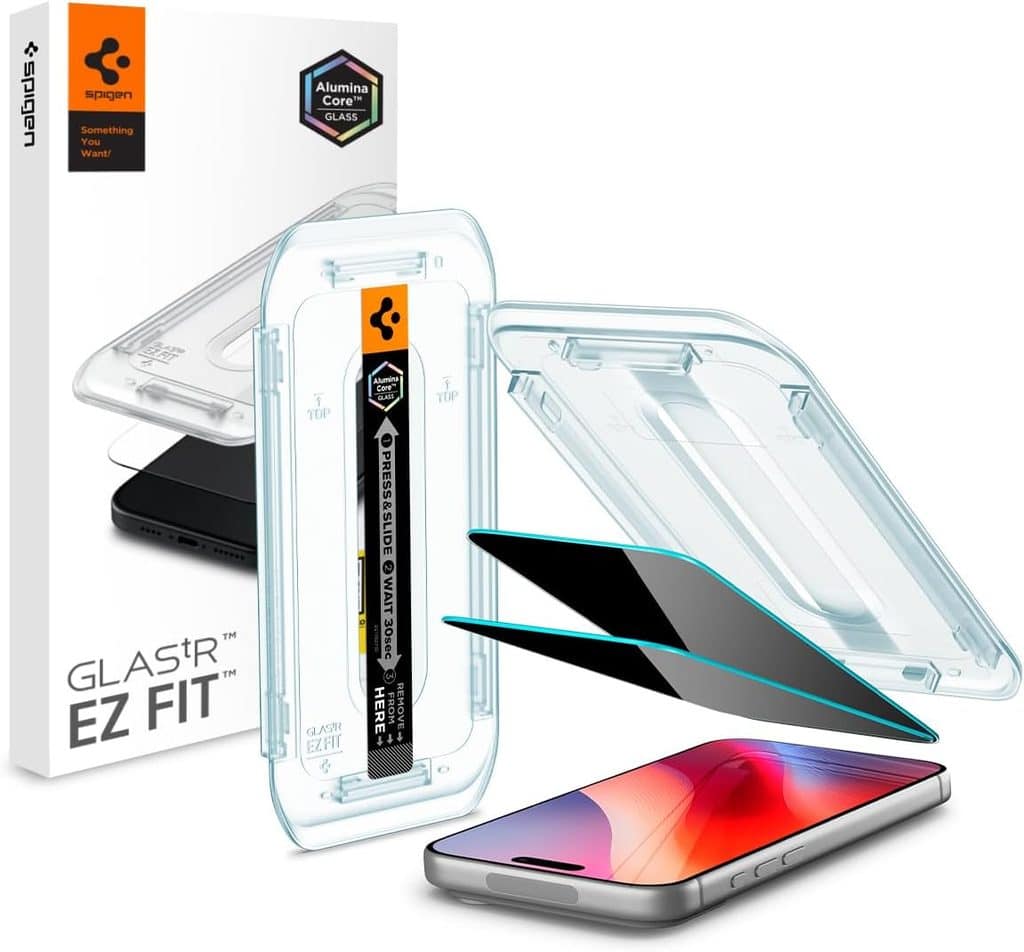
If you work in a shared office, commute on public transit, or just do not love the idea of a stranger reading your messages over your shoulder, this is the one built for that. Spigen’s GlasTR line uses an AluminaCore aluminium-enhanced glass rated 10H+, and the privacy filter blackens the screen at an angle so only you, looking straight on, can see what is on it.
The part that actually matters day-to-day is the EZ Fit tray. Spigen’s installation trays auto-align the protector to your camera cutouts and edges, so you are not eyeballing placement and hoping it lands straight. That is worth something on a phone this size, where a slightly crooked first attempt usually means peeling it off and starting over.
The trade-off with any privacy protector is brightness and clarity. You are looking through a filter layer, so outdoor visibility takes a small hit compared to clear glass, and it is a harder sell if privacy is not something you actually need. At $22.99, it is priced like the privacy-specific tool it is, not like a basic tempered glass.
Best for: Shared offices, public transit, and anyone who wants screen privacy.
2. ESR Military-Grade Tempered Glass
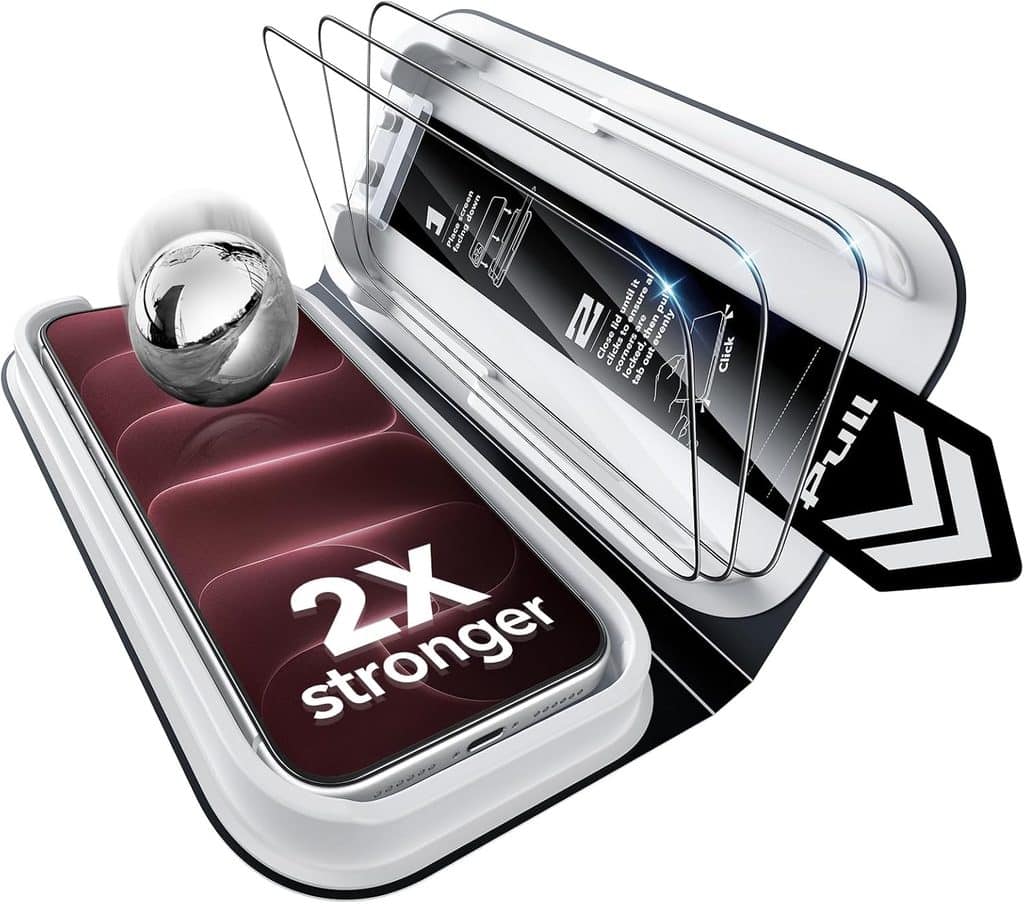
ESR’s pitch here is straightforward drop protection at a price that does not ask you to think twice. This is a 9H tempered glass with a full-coverage cut and ESR’s UltraFit installation tray, built around the same one-pull application method ESR uses across its higher-tier Armorite line, just without the extra impact-absorption layer that pushes those up in price.
Where this makes sense is if you are rougher on your phone than the average person, someone who drops it on concrete more than carpet, and you would rather replace a $12 protector every few months than baby a $30 one. It comes as a multi-pack, so a cracked protector does not mean an Amazon reorder and a few days without coverage.
What you are not getting is ESR’s top-tier impact absorption or the anti-reflective coating that shows up on their premium Armorite Pro line. This is the dependable middle option, not the one built to survive a six-foot concrete drop. At $11.89, it is hard to argue with as a first protector while you figure out how careful you actually are with this phone.
Best for: Rougher daily use without premium pricing.
3. TORRAS Unbreakable
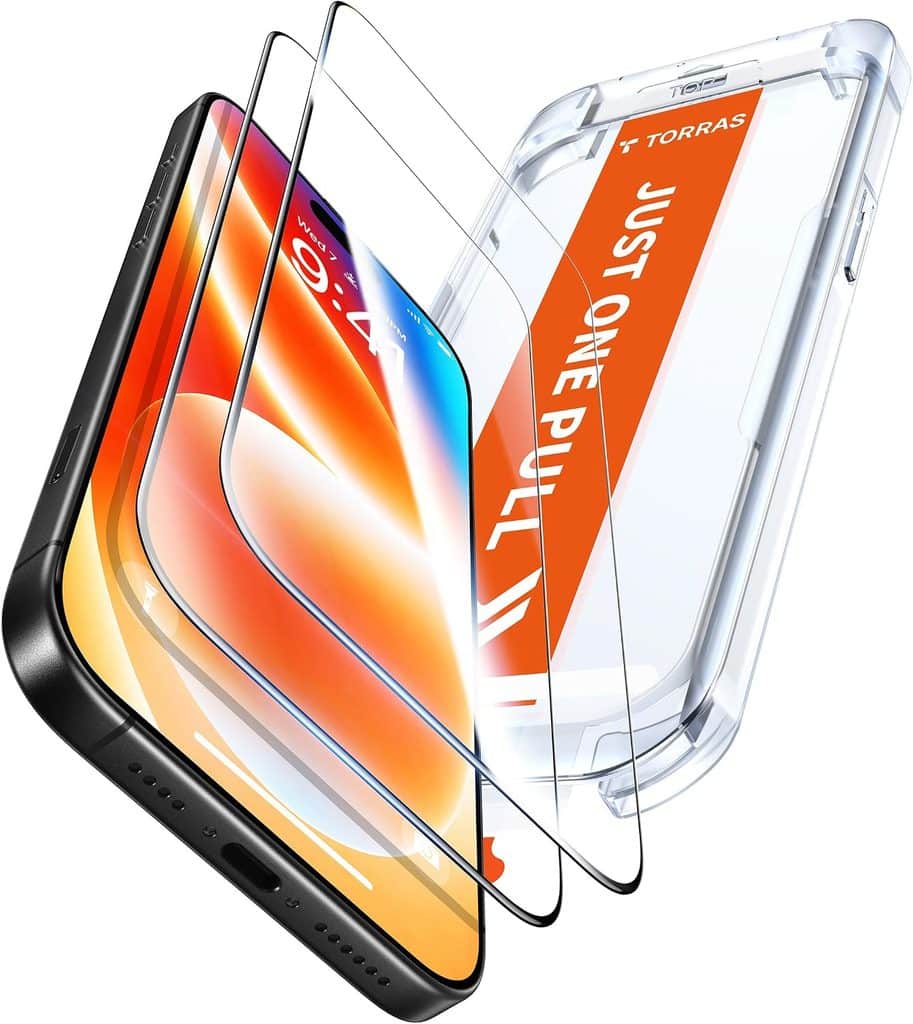
TORRAS built its name on drop protection marketing, and this protector leans all the way into it, with a claimed 12-foot shatterproof rating and 9H+ aerospace-grade tempered glass. It is a full-coverage, two-pack protector, which matters here because it means one crack does not leave you protector-less while you wait on a replacement order.
The installation is a pull-tab, dust-free tray setup rather than the sticker-and-squeegee method older protectors used, which cuts down on the bubbles that used to be the biggest complaint about tempered glass. TORRAS also backs this with a 365-day replacement policy, which is longer than most competitors in this price range bother to offer.
The honest limitation is that a 12-foot shatterproof rating and 9H+ aerospace glass are TORRAS’s own marketing language, and drop ratings from any brand are best-case numbers from controlled testing, not a guarantee on your specific tile floor. Treat it as a strong option in this category rather than a phone-proof forcefield. At $29.99 for the pair, it is mid-pack on price for what is positioned as a premium drop-focused protector.
Best for: Frequent droppers who want a safety net.
4. ZAGG Glass Elite
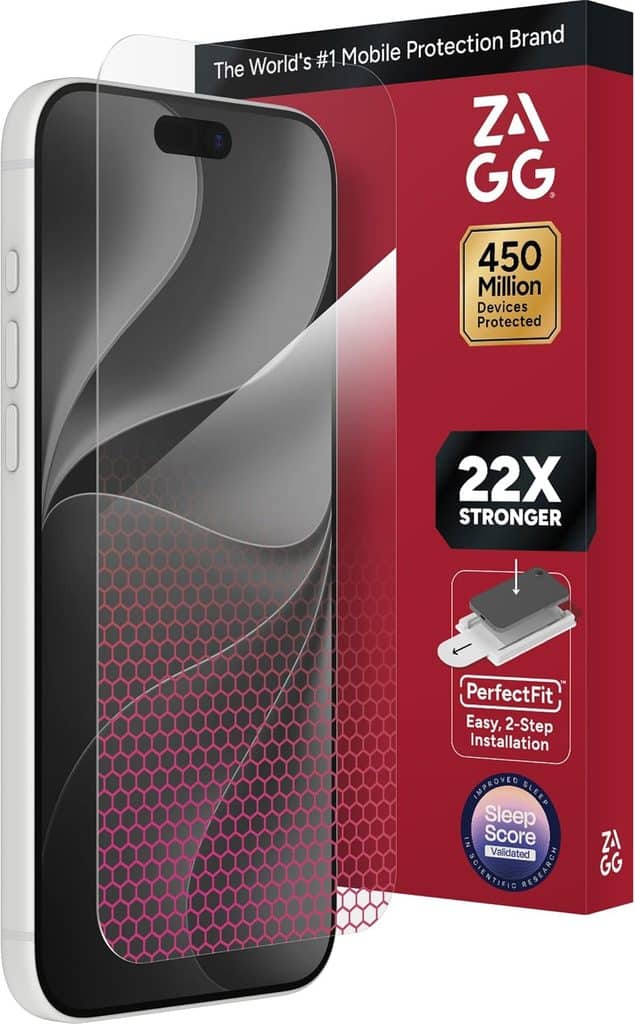
ZAGG has been in the screen protector business longer than most of the brands on this list, and Glass Elite is their flagship tempered glass, built around a reinforced-edge design meant to survive corner drops, which is where most cracked screens start. It carries ZAGG’s 5X strength claim over standard glass and an anti-smudge coating that holds up better over months of use than the cheaper coatings on this list.
What sets ZAGG apart from the others here is not the glass itself so much as the brand’s InvisibleShield warranty program, a long-standing replacement guarantee that is rare among screen protector makers and genuinely useful if you crack the phone’s actual screen while the protector is on. That is a different kind of coverage than simply sending you a new piece of glass.
That backing is also why this is the most expensive option on the list by a wide margin. At $59.99, you are paying roughly double what the other premium options cost, and unless the warranty program itself is the reason you are buying, that price gap is hard to justify on glass quality alone.
Best for: People who value a real replacement guarantee over glass specs alone.
5. Supershieldz Tempered Glass
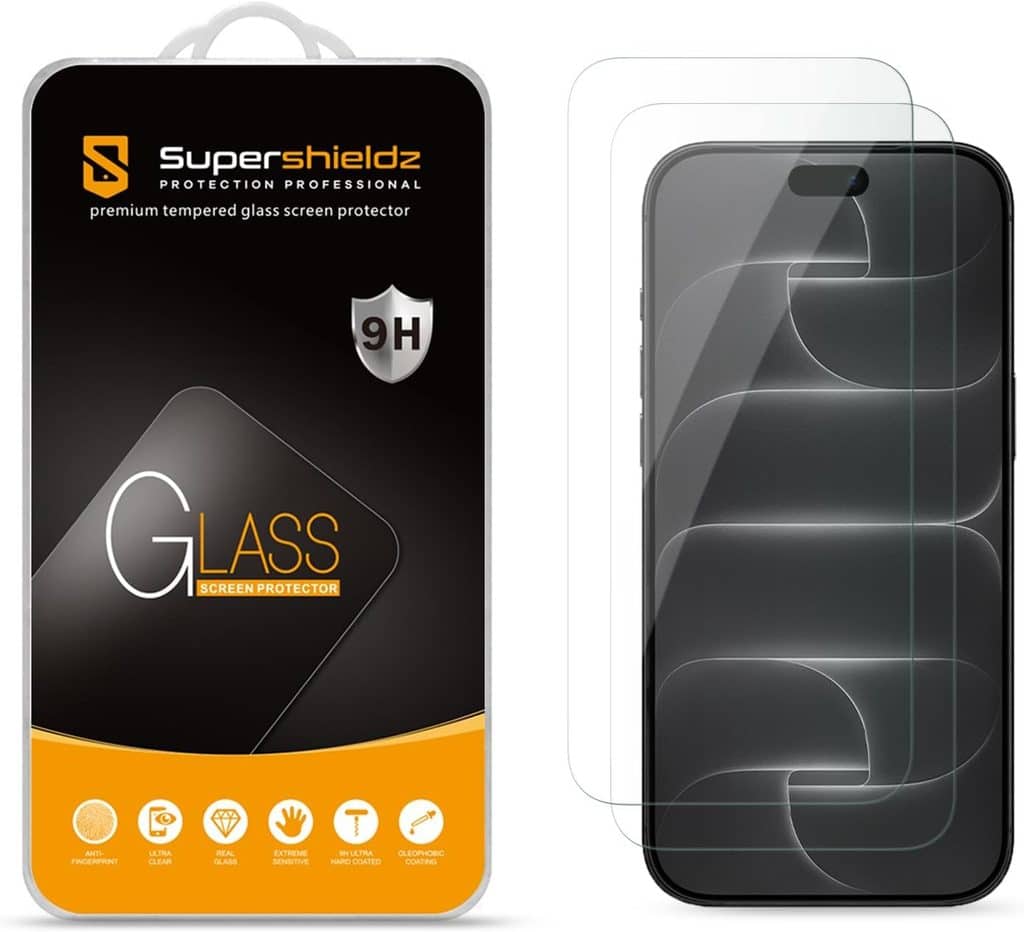
Supershieldz does not try to be anything other than what it is: basic tempered glass, anti-scratch, bubble-free, done. There is no proprietary coating name, no aerospace material claim, no warranty program. It is the protector you buy when you just want the screen covered and do not want to spend more thought or money on it than that.
That simplicity is also the appeal. It comes in a multi-pack, which for a lot of people is the real value here, since you are not left scrambling for a replacement the first time one cracks or scratches badly. The installation tray is a basic version of what pricier brands offer, functional but without the auto-align precision of Spigen’s or TORRAS’s trays.
The limitation is exactly what you would expect at this price. There is no drop-rating marketing to point to, no privacy option in this listing, and a feel that is noticeably more basic than the others once you have used a premium protector. But at $9.99, it is the cheapest way to make sure your screen is not bare while you decide if you want to spend more on something else later.
Best for: A first protector, backup stock, or minimal fuss.
Final Thoughts
If privacy is the actual problem you are solving, the Spigen is the only one on this list built for it, and the auto-align tray makes it easy to install straight the first time. If you just want solid drop coverage without spending thirty dollars, the ESR covers that at nearly a third of the price. If you drop your phone more than you would like to admit, the TORRAS and its 365-day replacement policy is the one with an actual safety net behind it.
The ZAGG only makes sense once the warranty program itself is worth paying double for, not for the glass alone. And if you just want the screen covered while you figure out what you actually need, the Supershieldz gets that done for ten dollars.
None of these are wrong choices. The only real mistake is picking based on price alone and ignoring what you actually do with your phone every day. Match the protector to how you use your phone, not to whichever one has the biggest number on the box.
If you are still deciding whether the upgrade was worth it, our comparison of the iPhone 18 Pro against the iPhone 17 Pro breaks down the price increase, the new variable-aperture camera, and everything else that changed. And once you have picked a case to pair with whichever protector you choose here, make sure the two fit together without the case pushing against the glass and lifting an edge.