Apple switched the 18 Pro’s frame from titanium back to aluminum this year, and the camera plateau grew about half a millimeter taller than the 17 Pro’s. That half-millimeter is why a case built for last year’s phone doesn’t reliably fit this one, and it’s the detail most case roundups skip while they’re busy ranking brands.
You spent well over a thousand dollars on this phone. The last thing you want is a hairline crack across that plateau three weeks in because you grabbed a case based on star ratings alone. What actually matters is narrower: does the case fit your hand, does it protect the parts Apple redesigned, and does it get in the way of anything you do daily, like wireless charging or reaching the Camera Control button. Here are 5 best iPhone 18 Pro cases that take different approaches to that problem, and where each one falls short.
What should you look for in an iPhone 18 Pro case?
A case for this phone needs a precise cutout for the Camera Control button on the side rail. Apple simplified the button this year, dropping the touch-sensitive strip and haptics in favor of a straight pressure click, but a misaligned cutout can still make it mushy or unresponsive. The case should also raise a lip above both the screen and the camera plateau, since the housing sits proud enough that a face-down drop lands on the lenses before it lands on the frame.
Beyond that, you’re choosing a material trade-off. Kevlar and aramid-fiber weaves protect well while staying thin, but cost more. TPU and polycarbonate hybrids are cheaper and thicker for similar protection. Clear and translucent cases show off the phone’s finish but yellow under UV exposure unless the coating is genuinely UV-resistant rather than just labeled that way.
Why does the right case matter this year?
Apple didn’t just carry over the 17 Pro’s design. The 18 Pro’s camera housing is roughly 0.5mm taller to accommodate a new variable-aperture main camera (a six-blade rotor mechanism that adjusts between four aperture settings), and the phone itself is about 7 grams heavier (211g versus 204g), mostly from the A20 Pro chip, updated cellular hardware, and a vapor chamber. Rokform has already confirmed its older 17 Pro case lineup doesn’t fit the 18 Pro because of that plateau difference, while a few brands with looser tolerances, including OtterBox and Mous, say their 17 Pro cases still work. Don’t assume compatibility either way, check the listing.
MagSafe compatibility isn’t a given either. Some budget cases use weaker magnet rings that hold well enough for a car mount but slip during wireless charging on a flat pad, especially once you add a PopSocket or wallet attachment. If you use MagSafe daily, check the magnet spec before you check the price.
5 Best iPhone 18 Pro Cases
These five were picked for genuinely different reasons to choose one over another: material and build quality, water resistance, price, added functionality like a stand, and color variety.
1. BENKS Knight Case, Kevlar
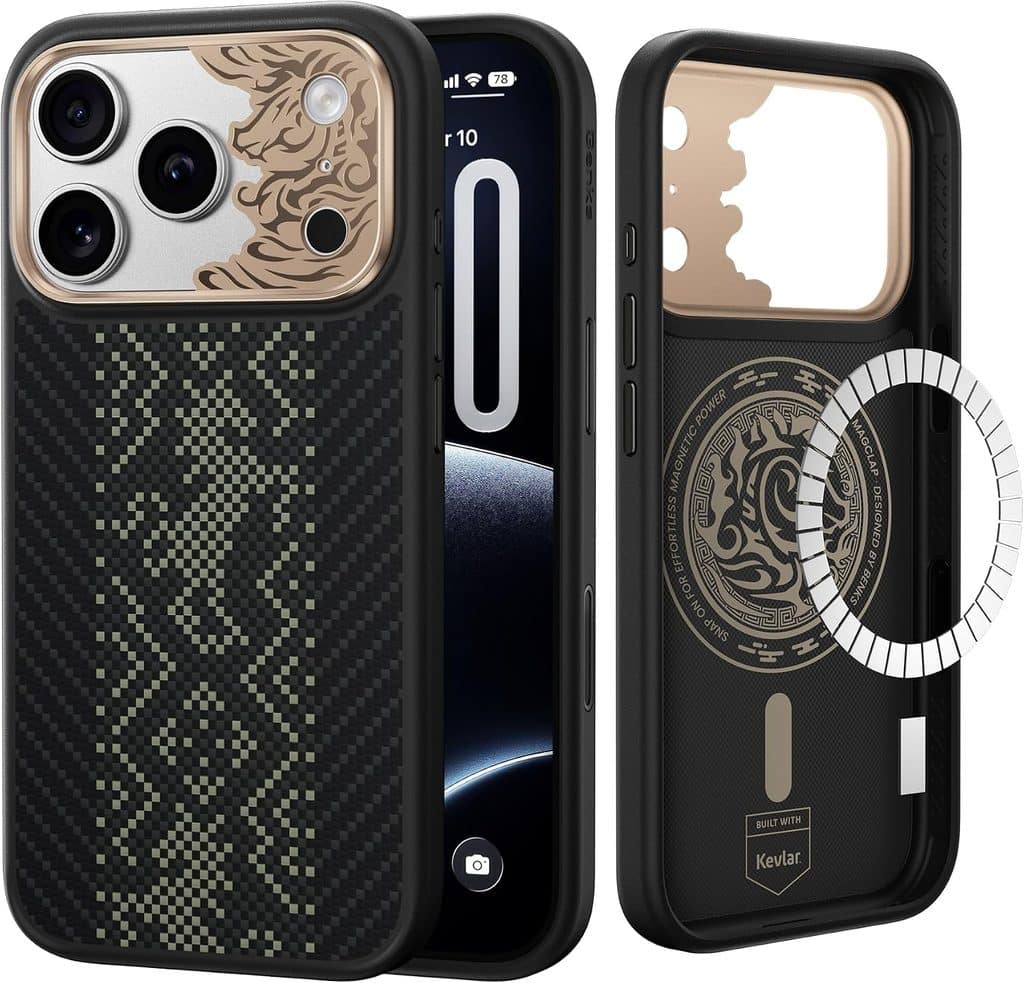
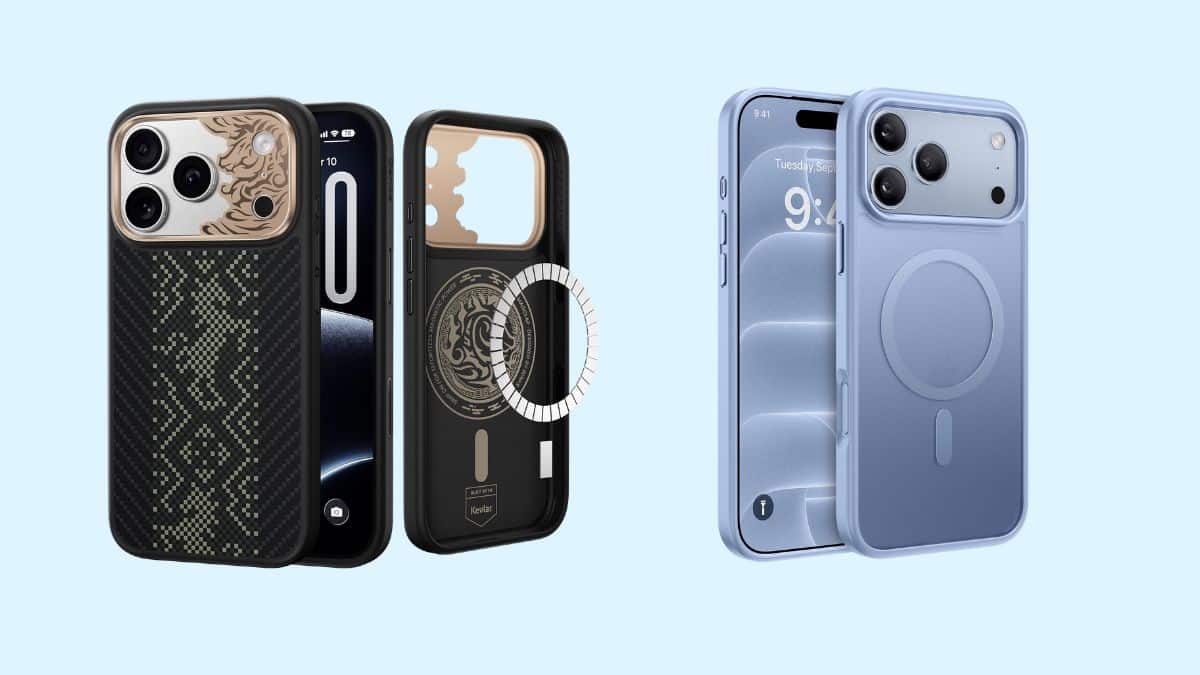
If you want the thinnest case that still meaningfully protects an aluminum phone, this is the one to look at closely. BENKS builds the Knight Pro around a woven DuPont Kevlar shell instead of the usual TPU or polycarbonate, which is how it holds up to drops at around 32 grams with a back panel roughly 1.27mm thick. The weave carries the color itself, black, red, or blue, so the finish won’t scratch through to a different shade underneath the way a painted case eventually does.
The camera housing gets its own aluminum lens frame, engraved with a cloud pattern, rather than a molded plastic lip, and it sits proud enough to keep the lenses off the ground on a flat drop. BENKS rates the magnet ring at 9.2 newtons on its own and 11.4 newtons once the case is on the phone, noticeably stronger than what you get from most cases at half the price, so MagSafe chargers and mounts actually grip instead of sliding around.
None of that is cheap. At $59.99, this is the most expensive case here, and you’re paying for the Kevlar and the aluminum camera frame specifically, there’s no stand or wallet slot. If you want a case that disappears in the hand on a phone that’s already large, it’s worth the price. If you just want reliable drop protection for less, keep reading.
Best for: Thinnest premium protection.
2. Oterkin Magnetic Waterproof Case
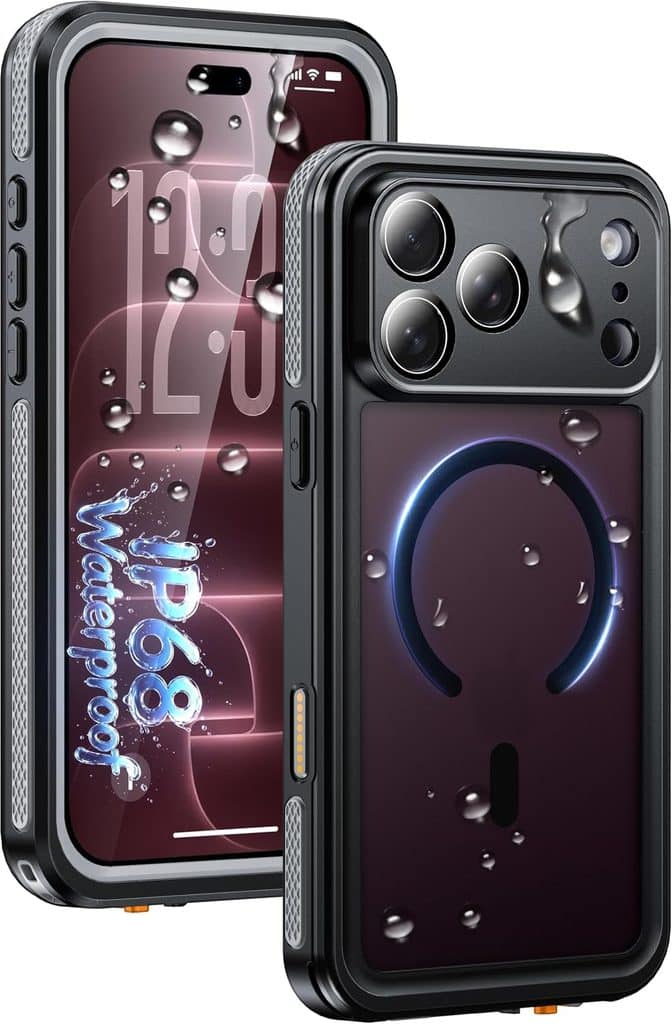
Oterkin has run this same waterproof, translucent, MagSafe-compatible design across the last several iPhone Pro generations, and the 18 Pro version keeps the formula: a sealed, IP68-rated body, a built-in screen protector so you’re not applying a separate tempered-glass layer, and a fold-out stand for propping the phone up. Because the whole thing is sealed, it’s the case to reach for at the pool, in the rain, or if you don’t trust yourself around a kitchen sink.
The translucent shell shows the phone’s actual color rather than hiding it under an opaque back, which matters more this year since the 18 Pro’s colorways are part of Apple’s pitch. The trade-off is bulk. A sealed, waterproof case with a built-in screen protector is never going to be as slim as the Kevlar option above, and the port covers you flip open to charge or plug in headphones are one more thing to remember to close. For around $24, you’re getting what’s essentially two accessories, a case and a screen protector, in one purchase.
Best for: Water and dust exposure.
3. ESR Classic Hybrid Case, Clear
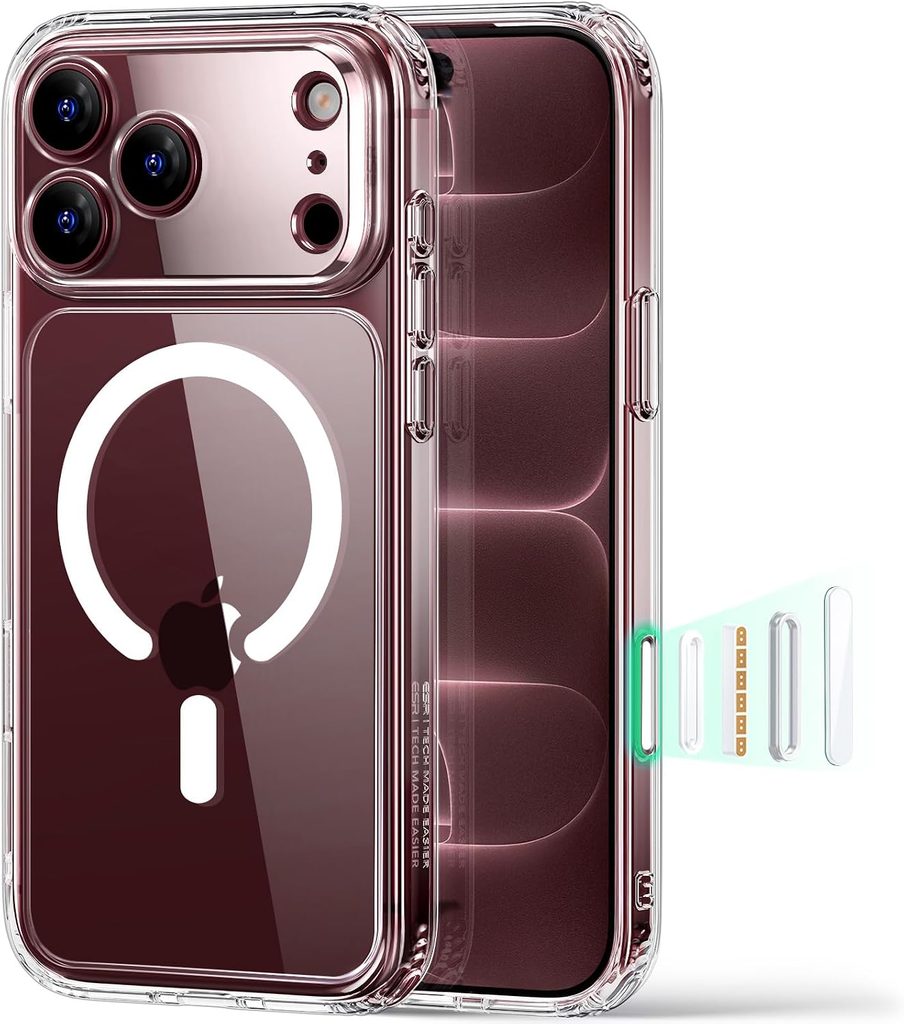
This is the case to buy if you want to see the phone you paid for. ESR built the Classic Hybrid from a TPE and TPU blend specifically so it stays clear rather than fogging or yellowing after a few months in a pocket, treated with a PU anti-yellowing coating that resists UV exposure and oxidation (the actual failure point of most cheap clear cases). The Camera Control cutout is precise enough that the button doesn’t feel recessed or mushy, which is easy to get wrong on a case this thin.
Worth knowing: ESR sells this as a shared listing for the 17 Pro and 18 Pro chassis, with a separate listing for the Pro Max size, so double-check you’re ordering the Pro-specific version. MagSafe works through the case, backed by the 1,500 gram-force magnet ring ESR uses across its lineup, so you’re not losing charging speed for a thin build.
At roughly $15, it’s the cheapest case here, and the honest limitation is that clear TPU, even treated, is softer than Kevlar or hard polycarbonate. It’ll protect against drops fine, but it won’t feel as premium in hand as the BENKS case, and after a year of heavy use it’ll show more wear at the corners.
Best for: Showing off the phone’s finish on a budget.
4. FNTCASE Case with 360 Spin Stand
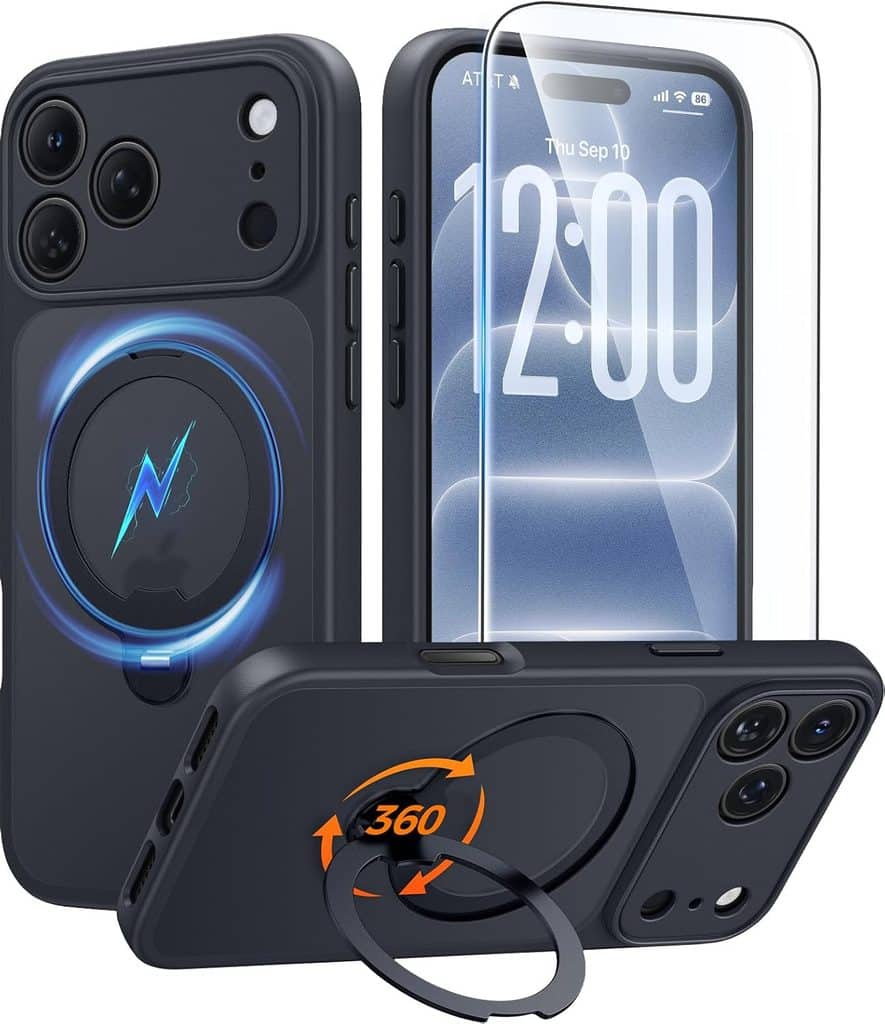
FNTCASE is the pick if you actually prop your phone up to watch videos or sit on calls, built around a metal ring kickstand that rotates a full 360 degrees rather than locking to one angle. It ships with a built-in screen protector, covers the camera housing fully, and carries a 20-foot military-grade drop rating, well past what most people will ever test it against.
The translucent matte finish is worth a second look if glossy clear cases have burned you before. Matte hides fingerprints and micro-scratches far better than gloss, so it looks presentable longer without a separate protective film on the back.
The stand is also the case’s biggest limitation. A built-in ring kickstand adds noticeably more bulk than any other case here, and it’s not something you’ll want to slip in and out of a tight jeans pocket repeatedly. If you mostly use your phone propped on a desk or nightstand, that trade-off is worth it. If you carry it loose in a pocket all day, it’ll feel like the biggest case on this list, because it is.
Best for: Frequent video watching or desk use.
5. Miracase Translucent Matte Case
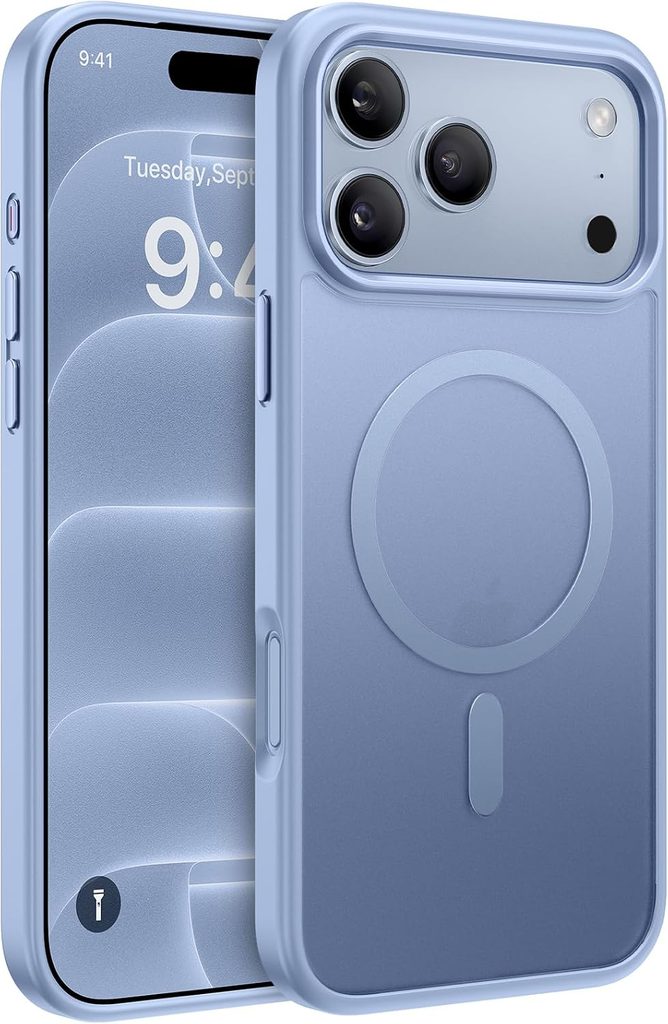
Miracase’s angle is choice: this case ships in at least eight colorways, including Clear, Black, Light Blue, Purple, Green, Burgundy, Deep Gray, and Light Pink, all in the same translucent matte finish and sized specifically for the 18 Pro’s 6.3-inch body. If you want a case that matches an outfit or a desk setup instead of defaulting to black or clear, this is the easiest way to get there without hunting across brands.
It carries the same military-grade drop rating and MagSafe compatibility as most of the cases here, and the matte anti-fingerprint coating holds up well against the smudging that plain glossy TPU shows within days. Because it’s a thin, single-layer TPU shell rather than a reinforced hybrid build, it sits closer to the ESR case in protection level than to the BENKS or FNTCASE options. It’s a fine daily case for normal handling, but if you’re genuinely accident-prone or your job puts the phone through real abuse, it’s not the most rugged option here.
Best for: Matching a case to your style.
Final Thoughts
If protection quality is the only thing you care about, the BENKS Knight Pro earns its price with materials the rest of this list doesn’t use. If you want insurance against water and don’t mind the extra bulk, Oterkin is built for that specifically. The ESR is the easiest recommendation if you just want the phone to look like the phone, for the least money. FNTCASE only makes sense once you know you’ll actually use a stand, and Miracase is the pick when color matters as much as the drop rating on the box.
Match the case to how you actually use your phone, not to whichever one has the longest spec list. A stand you never use or waterproofing you never need is just extra bulk you’re carrying around for nothing.
Aluminum. Apple moved the 18 Pro and 18 Pro Max to an aluminum unibody for 2026, the second straight year the Pro line has dropped titanium. It’s now reserved for the iPhone Air and the foldable Duo. The switch wasn’t about weight: the aluminum Pro models are slightly heavier than last year’s titanium ones.
Sometimes. The camera plateau is about 0.5mm taller this year, which is enough that brands with tight tolerances, like Rokform, say their 17 Pro cases don’t fit. A few others with more forgiving designs claim compatibility. Check the specific listing rather than assuming either way.
Only if the cutout is misaligned. Apple simplified the button this year to a straight pressure click, without the touch-sensitive strip from the 16 and 17 Pro, so a case doesn’t need to accommodate swipe gestures the way older cases did, but a cutout that’s off by even a millimeter can still make the press feel mushy.