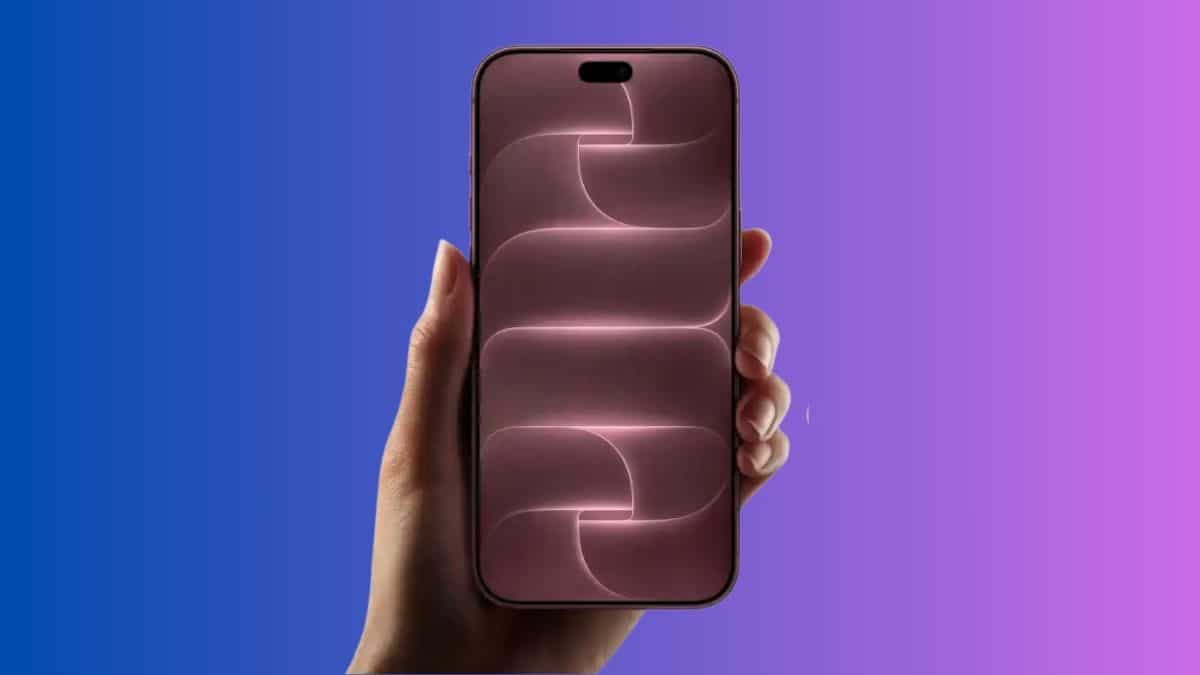
A few days into owning an iPhone 18 Pro, and the display is already the part of the phone you touch the most, hundreds of times before lunch. Apple carries over Ceramic Shield 2 on the front this generation, the tougher glass it introduced last year with the iPhone 17 Pro, and it still shrugs off more than the Ceramic Shield on older iPhones did. But more scratch-resistant isn’t the same as scratch-proof. A phone riding in the same pocket as your keys, or set face down on a granite counter, still comes away with hairline marks after a few weeks. Ceramic Shield has never been the thing standing between your screen and a face-first drop onto concrete.
You just paid iPhone 18 Pro money for this thing. A screen protector is the cheapest insurance you’ll buy for it, but only if you pick one that doesn’t dull the display, throw off Face ID, or start lifting at the corner after a month in your pocket. These five hold up better than the shrink-wrapped glass sold at a mall kiosk.
What a Screen Protector Actually Does
A screen protector is a sacrificial layer that absorbs scratches and impacts before they reach your actual display, and the two specs that matter are hardness and drop rating, which measure different things.
At its simplest, a screen protector is a sacrificial layer of tempered glass or film that sits between your fingers, the pavement, and the display underneath. Glass protectors are rated by hardness, usually written as 9H or 10H, which describes how well the surface resists a scratch from something roughly that hard. It says nothing about how well the glass survives a drop. Drop resistance is a separate spec, usually expressed as a certified fall height, and it matters more than hardness if you’ve already cracked a screen once.
From there, the category splits by the problem you’re solving. Clear glass is for people who just want the display to look untouched. Privacy glass narrows the viewing angle so the screen goes dark to anyone sitting next to you on a train or across from you at a coffee shop. A few protectors lean hard into drop certification instead, marketed with a foot rating, on the logic that if something has to shatter, better a ten-dollar sheet of glass than the phone underneath it.
Why This Matters More on the iPhone 18 Pro
The iPhone 18 Pro keeps the same 6.3-inch panel as the 17 Pro, so most fit issues come down to one thing: the redesigned, smaller Dynamic Island.
Apple kept the same 6.3-inch display and largely the same body it used on last year’s model. For screen protectors, that’s a genuine advantage. The panel size and camera layout are ones accessory makers have already spent a year refining molds and laser cutters around, instead of guessing from leaked CAD files.
The one real change worth knowing is a smaller Dynamic Island. Apple confirmed the redesign when it unveiled the iPhone 18 Pro on September 9, and despite the tighter footprint, Face ID still works through that same cutout. It wasn’t moved beneath the display, as some pre-launch rumors had predicted. That’s still a small but real difference from the iPhone 17 Pro’s cutout, so a protector cut specifically for the new dimensions sits flush, while an older listing may leave a sliver of extra clearance even if the rest of the glass fits the panel perfectly. It’s not a dealbreaker on its own, but it’s worth checking a listing’s photos closely around the Dynamic Island before you buy, especially on anything still carrying last year’s branding.
The 5 Best iPhone 18 Pro Screen Protectors
We compared these five on glass hardness, installation method, and what each one gives up to hit its price, not just what’s printed on the packaging. All five now have dedicated iPhone 18 Pro listings with the updated Dynamic Island cutout.
1. Spigen GlasTR EZ Fit Privacy
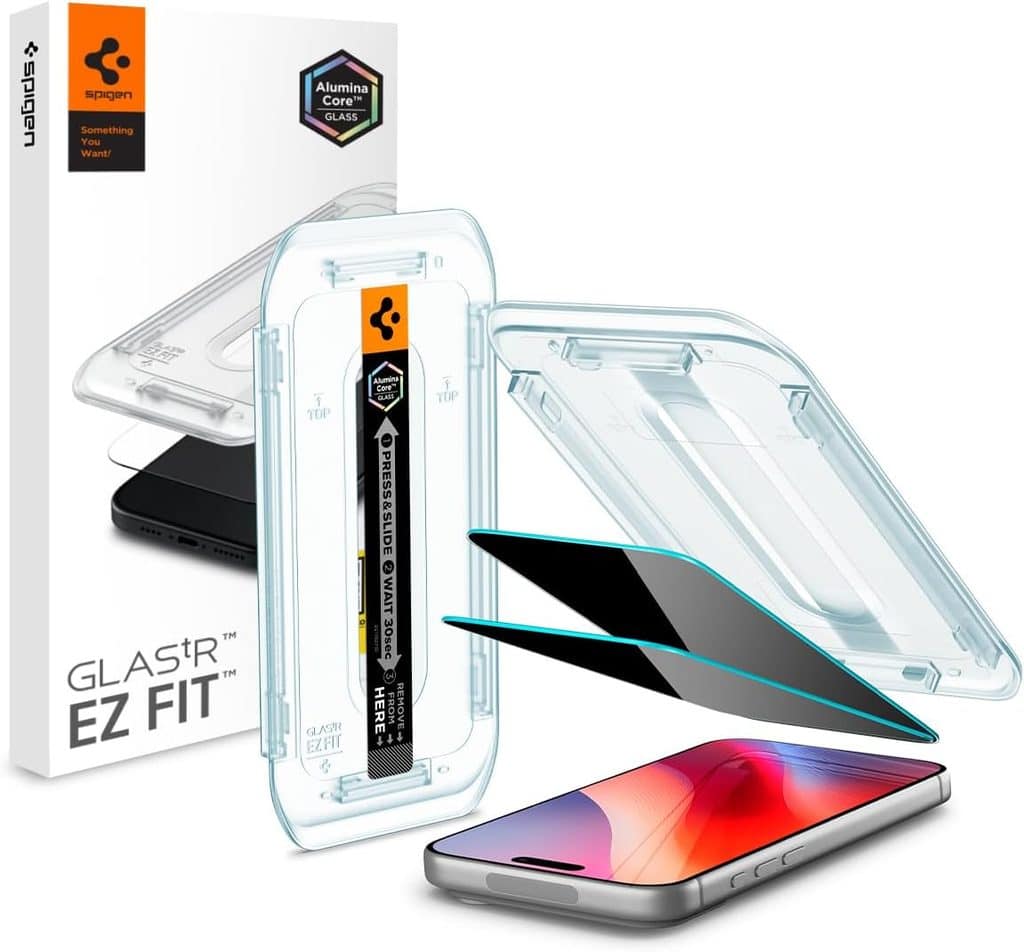
Spigen’s EZ Fit line has been the easiest tempered glass to install correctly on the first try for a few generations now, and the iPhone 18 Pro version keeps that same auto-align tray. You drop the phone into the frame, the tray lines the glass up over the display and the new Dynamic Island cutout for you, and you peel a tab to seal it down. No air bubbles trapped under one edge because your hand shook.
The glass itself uses Spigen’s AluminaCore construction, rated 10H+, and this specific version adds a privacy filter that blacks the screen out to anyone viewing from the side. That’s the point of buying it. If you read messages on the subway or work from a coffee shop, this is the one item on this list built around that specific problem rather than general scratch resistance.
The trade-off is the same one every privacy protector makes. Viewing the screen straight on is barely different from bare glass, but tilt the phone even slightly and colors shift and dim, which matters if you use your phone outdoors a lot or care about color accuracy on camera. It ships two to a box, cut for the 6.3-inch display and the new, smaller Dynamic Island.
Best for: Reading messages in public.
2. ESR Classic Shatterproof, 3-Pack
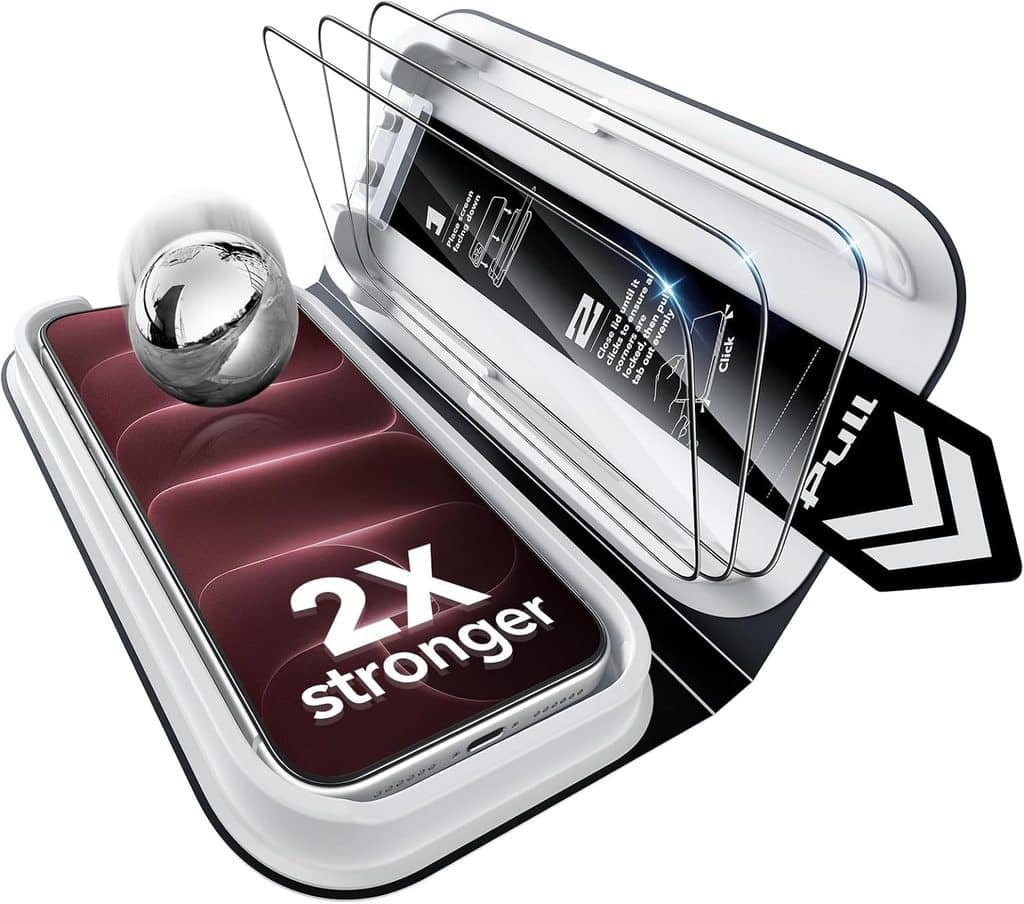
ESR’s UltraFit Classic is the one to buy if you just want clear, full-coverage glass without paying for extras. It’s rated for everyday scratch protection, built edge-to-edge, and comes with ESR’s UltraFit tray so alignment is a one-pull install rather than a freehand guess. At three protectors per box, you have backups built in for the inevitable day you scratch one taking it out of a case.
What you’re not getting is anything beyond that baseline: no privacy filter, no drop-rating headline, no antimicrobial coating, just clear, hard glass rated to resist roughly 33 pounds of pressure before cracking, according to ESR’s own spec sheet. ESR now sells this specific SKU cut for the iPhone 18 Pro’s updated cutout, so you don’t need to hunt down an older listing and hope the fit carries over.
If you want more, ESR also sells a pricier UltraFit Armorite Pro version (Corning glass, around $30 to $36) and a matching privacy version of the Classic for a few dollars more. But for a straightforward first protector, the plain Classic is the one to start with.
Best for: Budget buyers who want backups.
3. TORRAS Unbreakable
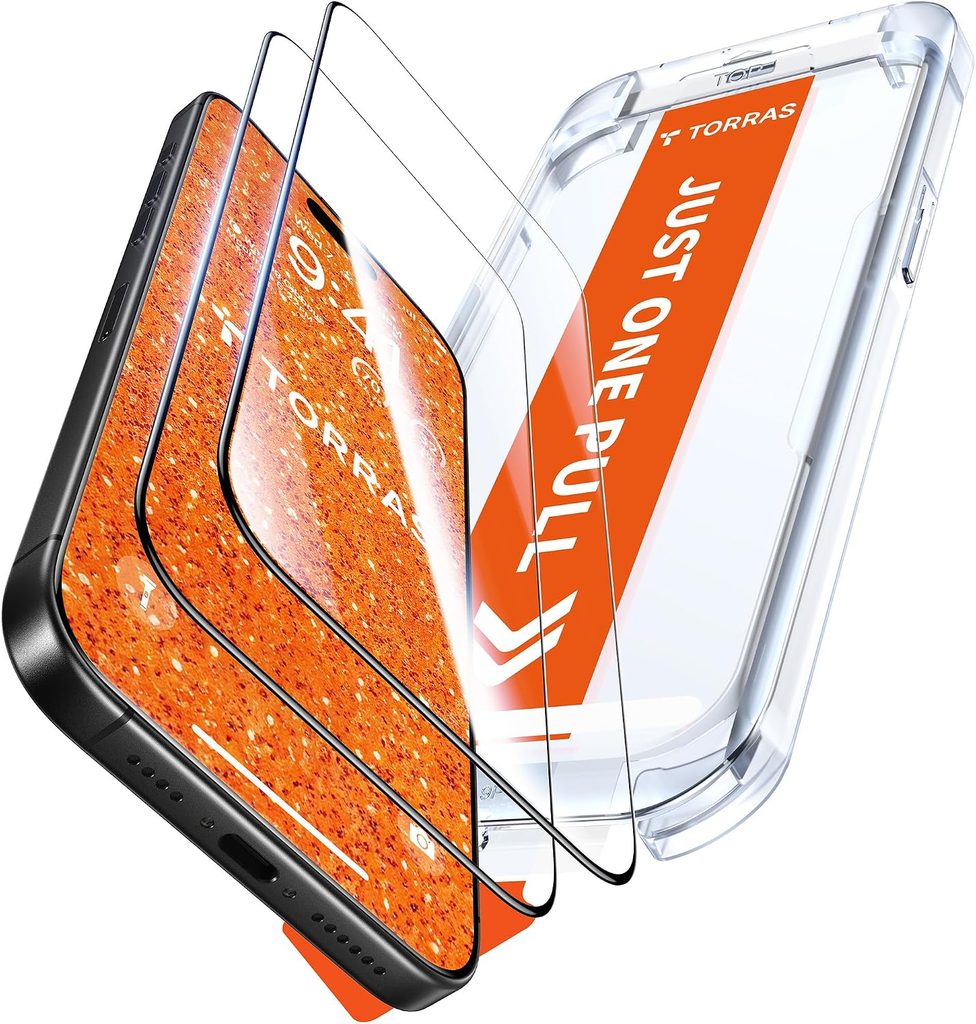
TORRAS built its whole reputation on drop certification, and the Unbreakable line is the proof. It’s rated to survive a 12-foot drop on 9H+ aerospace-grade glass, which is well past what you’ll actually put a phone through unless you’re genuinely accident-prone. If you’ve cracked more than one screen in your life, this is the one on the list aimed squarely at you rather than at scratch prevention.
Installation is a bubble-free process with a frame, and the coverage runs edge to edge with HD clarity, so you’re not trading drop protection for a hazy or tinted display. It comes two to a box, sized for the iPhone 18 Pro’s 6.3-inch panel.
One thing worth knowing if you shop directly on TORRAS’s own site rather than Amazon: its current storefront sells the same 12-foot-rated, 9H+ glass under newer line names like HD Shield Ultra and SunView AR Ultra instead of “Unbreakable.” It’s the same drop-tested construction, just relabeled depending on where you buy it, and pricing on TORRAS’s own site for that tier runs from about $25 to $40 depending on the finish. Check the listing photos to confirm you’re getting a 12-foot-rated sheet either way.
The catch is price. You’re paying a premium for a drop rating most people will never test, and there’s no privacy option in this particular line if that’s what you’re after instead.
Best for: Serial screen crackers.
4. ZAGG Glass Elite
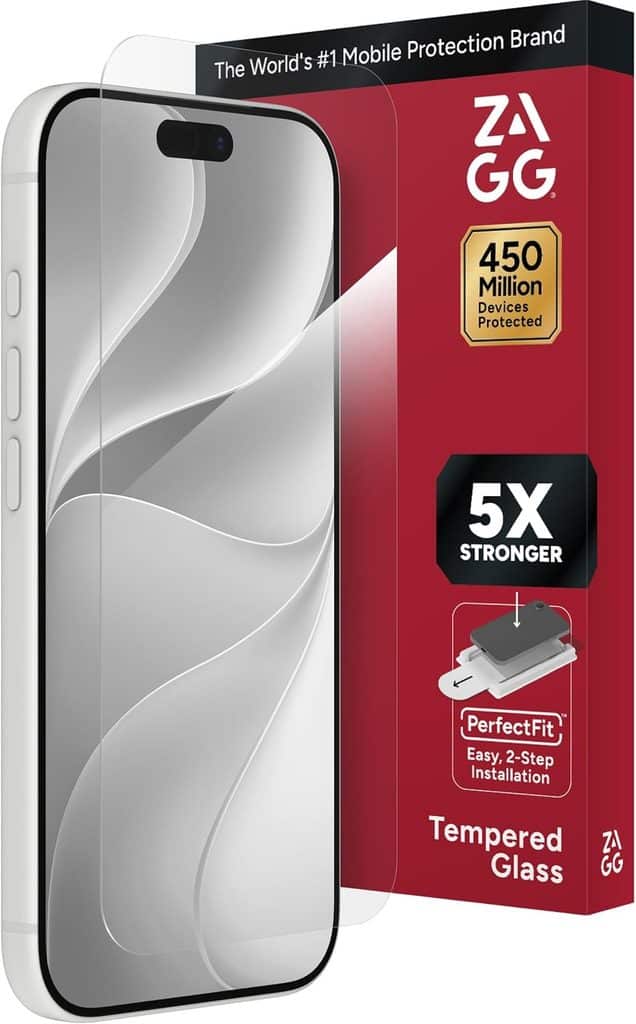
ZAGG’s Glass Elite has been the brand’s mainstream pick for years, and the pitch hasn’t changed: reinforced edges, tempered glass rated well past standard hardness, and a scratch-and-smudge-resistant coating that holds up to daily handling better than the cheaper glass on this list. ZAGG confirmed Glass Elite as part of its iPhone 18 lineup at launch, priced at $39.99, sitting below the brand’s new flagship XTR6 tier ($59.99) that adds extra blue-light filtering and edge reinforcement.
It’s backed by ZAGG’s limited lifetime warranty: if it ever cracks or wears out, ZAGG will replace it for the life of your device. You do pay shipping and handling on the replacement, so it isn’t entirely free, but you’re not buying a second protector at full price either.
What sets it apart from the rest of this roundup isn’t a gimmick feature, it’s fit and finish. The edges sit flush against the curve of the display instead of leaving a noticeable lip, which is the detail people usually only notice on the cheaper options once it’s too late to return them.
The honest downside is that you’re paying single-unit pricing for that polish. At $39.99, it’s tied with the Spigen for the most expensive item here, and it isn’t sold as a multi-pack the way the others are, so there’s no built-in backup if you botch the install or crack it early.
Best for: Long-term daily use.
5. Supershieldz Tempered Glass, 3-Pack
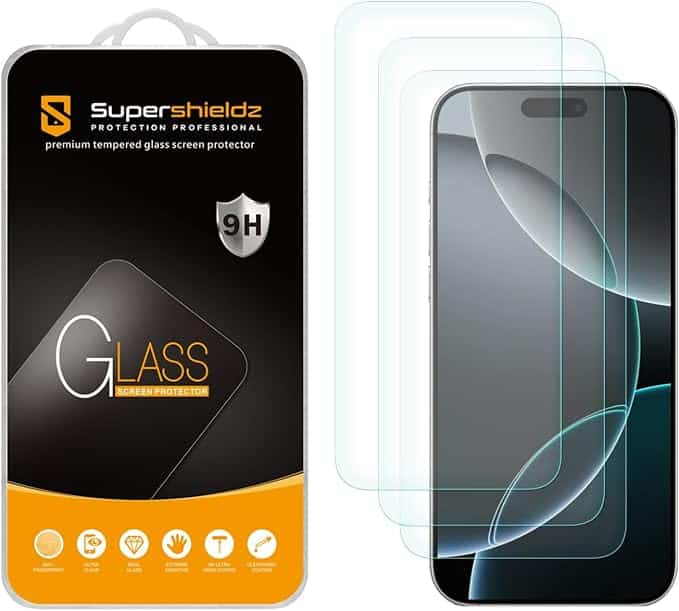
Supershieldz doesn’t try to sell you on a feature. It’s tempered glass, cut to fit, anti-scratch, bubble-free installation, and that’s the entire pitch. There’s no proprietary hardness branding, no drop foot rating, no privacy option, just the basic job done for less money than a few cups of coffee.
That plainness is actually the appeal if you go through screen protectors quickly, whether from a toddler, a job that’s hard on phones, or just a habit of swapping cases often. At roughly $9.99 for three, you can replace one the moment it scratches without feeling like you overpaid the first time. Supershieldz’s current listings are explicitly sized for the iPhone 18 Pro’s 6.3-inch display and updated cutout, alongside the 17 Pro and 16 Pro.
What you give up is everything the pricier options above build in: no reinforced edges, no certified drop rating, and an installation tray that’s noticeably more basic than ESR’s or Spigen’s, so expect a slightly higher chance of a stray bubble on your first try.
Best for: Frequent replacers.
Final Thoughts
If privacy is the actual problem you’re solving, the Spigen is the only one on this list built for it. If you’ve cracked a screen before and don’t want to relive it, the TORRAS carries the drop rating to back that up. Want something you can forget about for a year and have replaced if it fails? ZAGG earns the higher price tag, even with a small shipping fee on the replacement.
If you’re just trying to keep a fresh sheet of glass on the phone without overthinking it, ESR and Supershieldz both do that job, with ESR adding a bit more rigidity and coverage for the cost and Supershieldz stripping it down further still.
None of these are the right pick just because they’re on this list. Match the protector to how you actually use your phone: in public a lot, prone to drops, or just looking to spend as little as possible, rather than reaching for whichever one has the longest spec sheet. And if you’re outfitting a different iPhone in the house, our iPhone 17e screen protector roundup covers that lineup the same way.
Mostly, but not perfectly. The panel is the same 6.3 inches, but Apple redesigned the Dynamic Island to be smaller on the 18 Pro. A protector cut for the 17 Pro’s larger cutout will usually still stick down, but may leave extra clearance around the cutout instead of sitting flush. Buy a listing that specifically names the iPhone 18 Pro when you can.
Not if it’s designed for the phone. Face ID on the iPhone 18 Pro still operates through the Dynamic Island cutout rather than from underneath the display, so any protector cut to match that cutout won’t block it. Avoid off-brand film that doesn’t leave the cutout area exposed.
Tempered glass gives a more authentic touch feel and better scratch resistance, which is why all five picks here use it. Plastic film is thinner and sometimes cheaper, but it scratches more easily and can feel noticeably different to swipe on.
All five are marketed as case-friendly, meaning the glass is sized to sit inside most case lips rather than overlapping them. If you use an especially thick case or a case with a raised edge, check that specific case and protector combination, since fit can vary by case brand.
It’s a genuine upgrade over older iPhone glass and resists scratches better, but it isn’t rated for drop protection the way a certified screen protector like the TORRAS is. Ceramic Shield 2 and a screen protector solve different problems, and using both is the more complete approach if you’ve ever cracked a screen before.