
Anthropic just announced something that doesn’t happen often in the AI world: a model so capable, so potentially disruptive, that they’ve decided the public shouldn’t have access to it. Not yet, anyway.
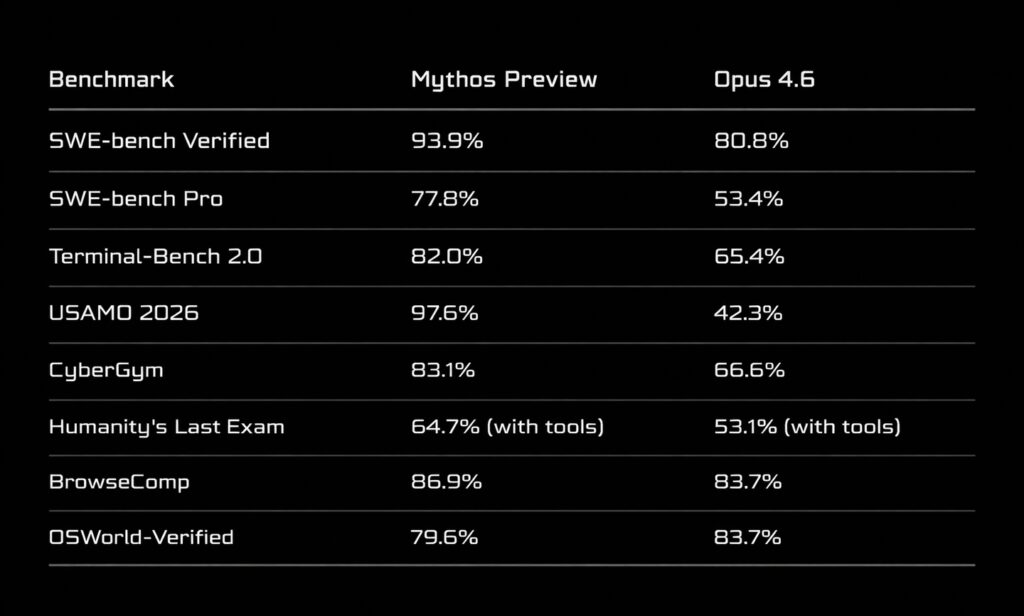
The model is called Claude Mythos. And if early testing is anything to go by, it’s in a different league from anything the company has built before.
A Model Built for the Problems Humans Take Months to Solve
What makes Claude Mythos stand out isn’t just raw performance. It’s what the model can actually do with that performance.
In controlled testing, the Claude Mythos AI model autonomously identified thousands of serious vulnerabilities across major operating systems, web browsers, and enterprise software, including flaws that had quietly existed for decades without anyone catching them. Security researchers who spend months hunting for a single critical bug are now looking at a system that can scan entire codebases and flag weaknesses at roughly ten times the speed of previous tools.
That’s not a small upgrade. That’s a fundamental shift in how fast the gap between “vulnerability discovered” and “vulnerability exploited” can close.
Why Anthropic Is Keeping Claude Mythos Away from the Public
Here’s where it gets complicated.
The same Claude AI features that make Mythos extraordinary for defenders, scanning infrastructure, reasoning through complex code, spotting patterns humans miss, are exactly what would make it dangerous in the wrong hands. Anthropic knows this. So instead of a standard commercial release, the company has launched a restricted preview through a new cybersecurity initiative called Project Glasswing.
Under this program, access to Claude Mythos is limited to a carefully vetted group: major tech firms, critical infrastructure operators, and established cybersecurity organizations. The logic is straightforward: let defenders patch vulnerabilities before similar capabilities become available to anyone with a browser and a subscription.
Anthropic is also in active conversations with government agencies and industry groups to map out the risks before any broader deployment happens. For a company that has always talked openly about AI safety, this is putting that philosophy into practice.
Related: Perplexity Computer: What It Is, How It Works and Who It’s For
The Harder Question This Raises
There’s a dilemma sitting at the center of all this that nobody in the AI industry has cleanly resolved.
Advanced AI systems are genuinely brilliant at finding security flaws. That makes them invaluable for defense. But the same capability, pointed in the other direction, becomes a powerful attack tool. As models grow more autonomous and better at reasoning through technical complexity, that line between “security tool” and “hacking tool” gets thinner with every new generation.
What Claude Mythos introduces, and what makes Project Glasswing feel like a test run for something bigger, is the real possibility that sophisticated cyberattacks no longer require sophisticated attackers. A model that can generate working exploits could hand real destructive capability to someone with almost no technical background. That’s the scenario keeping security experts up at night.
What This Means for the Industry
Traditionally, finding a zero-day vulnerability was painstaking work. It required deep expertise, focused effort, and often months of analysis. AI is compressing that timeline aggressively.
The concern isn’t just speed. It’s scale. Autonomous AI agents can run multiple attack simulations simultaneously, reason through defenses, write code on the fly, and iterate, all with minimal human direction. For organizations already struggling to keep pace with existing threats, this is a serious escalation.
There’s also the quieter risk inside organizations themselves. As companies rush to integrate AI agents into internal workflows, connecting them to databases and corporate systems, poorly configured deployments can inadvertently create new attack surfaces. The tool meant to protect the system becomes an entry point into it.
Anthropic’s decision to restrict Claude Mythos reflects a genuine reckoning with these stakes. It’s a rare moment of restraint in an industry that more often rewards speed to market.
Claude Mythos is Anthropic’s most advanced AI model to date, designed for complex reasoning, coding, and autonomous cybersecurity analysis. It can identify software vulnerabilities across operating systems and browsers far faster than traditional tools.
No. Anthropic has restricted access to a limited group of tech companies, infrastructure operators, and security organizations through its Project Glasswing initiative, citing the model’s potential for misuse if released without safeguards.
Check out more AI posts: